

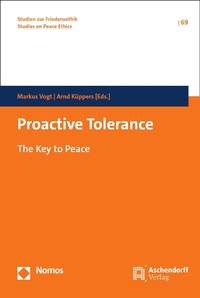
Proactive Tolerance
Description

Dieses Buch eröffnet seinen Lesern auch eine umfassendere Perspektive auf das Thema Toleranz. Während Toleranz im politischen Diskurs häufig auf Duldung Andersdenkender und -lebender oder auf ziviles Engagement gegen Intoleranz reduziert wird, stellt dieses Buch eine grundlegende Wertschätzung der Vielfalt, den proaktiven Dialog und einen Lernprozess ins Zentrum. Positive Erfahrungen aus einem gelungenen Dialog mit dem Anderen sind Ressourcen für gesellschaftliche Toleranz und nachhaltigen Frieden. Vor diesem Hintergrund ist der melting pot Ukraine eine erfahrungs- und ressourcenreiche Region, von der weltweit Philosophen, Theologen, Ethiker, Historiker, Politikwissenschaftler eine Menge lernen können.Mit Beiträgen vonKatrin Boeckh, Alois Buch, Michael Fetko, Sarah Herbst, Rolf Husmann, Arnd Küppers, Lisa-Marie Mansfeld, Daniel Munteanu, Helmuth Pree, Lars Schäfers, Andreas Schoch, Pavlo Smytsnyuk, Ihor Vehesh, Berthold Vogel und Markus Vogt.
More details
Other editions
Additional editions
Content
- Cover
- Introduction
- Further development of the concept of tolerance
- Ukraine as a Test Laboratory for the Challenges of Proactive Tolerance
- The threat to freedom
- Religious conflicts as a focal point of (in)tolerance
- Fratelli tutti as an encyclical for dialogue and proactive tolerance
- Tolerance and truth in the media society
- Tolerance needs rules and social places
- References
- Conceptual Clarification
- Proactive Tolerance as a Way to Peace
- A Christian Social Ethical Definition of Tolerance as a conceptual basis for the project "Tolerance at the Borders of Europe - the Ukrainian Dimension"
- A. Aim of the text
- B. Systematic Development of the term
- B.1 Differentiations concerning the term "tolerance"
- B.2 Ethical assumptions and rules of the concept of tolerance
- C. Practical Reasoning
- C.1 Analysis of agents
- C.1.1 Agent state
- C.1.2 Agent citizens
- C.1.3 Agent science
- C.1.4 Agent churches, religious communities and theology
- C.2 Resources and motivation for a tolerant behavior
- D. The tolerance-concept and the situation in Ukraine
- D.1 See & evaluate
- D.2 Act: Perspectives for implementation of tolerance
- References
- Tolerance - An Issue of Christian Social Thought
- Contexts, approaches, prospects
- I. Contexts: framing the understanding and acceptance of tolerance
- II. Approaches: Christian interpretation and encouragement of tolerance
- III. Prospects: practising tolerance, spurred by virtues
- Conclusion
- References
- Online Sources
- Proactive Tolerance
- A Deeper Understanding of Proactivity
- Proactive tolerance as distinct from passive and active tolerance
- Proactive tolerance as exemplified by Gandhi
- Proactive tolerance and response
- The special role of religions in proactive tolerance
- References
- The Duty of Tolerance as Duty of Public Civility
- Religious and philosophical insights for a culture of convivence and political responsibility
- Introductory remarks on the meaning and understanding of tolerance
- 1 Religious tolerance as "business of true religion" according to John Locke
- 1.1 Boundaries of ecclesiastical power as logical reasons for a culture of tolerance
- 1.2 Civil tolerance as "business of magistrate
- i.e. laws"
- 2 Justice as fairness and tolerance. John Rawls' contribution to a public culture of tolerance
- 2.1 The nature of the rational social world
- 2.2 Human dignity and the moral powers of rationality
- 2.3 Tolerance as "duty of civility" and public reason
- 2.4 Tolerance as public reason and public use of rationality
- 3 Religious resources for a culture of tolerance
- 3.1 Tolerance as an emergence process
- 3.2 Tolerance as an intersubjective attitude
- 3.3 The ability of people to relate and their obligation to relate
- 3.4 The human being as cultural creation and creator of culture
- 3.5 Ecumenical culture of proactive tolerance
- 3.6 Social and self-conditioning for tolerance
- 3.7 Tolerance for understanding - tolerance as creative power for responsible shaping of the society's social structure
- 3.8 Tolerance as ethical disposition to structure intersubjective relations
- References
- Tolerance, Peace and Democracy
- Christian Peace Ethics and Its Relevance for Tolerance and Reconciliation in Ukraine
- 1. The difference between ideal and reality
- 2. For an enlightened religion
- 3. Won wars do not mean that the peace has been won
- 4. Biblical Perspectives
- 5. On the history of the Christian ethics of peace in the papal magisterium
- 6. Christian commitment to peace in practice
- 7. Humanitarian intervention and "Responsibility to protect"
- 8. Paths and priorities of peacekeeping in relation to Ukraine
- References
- Tolerance, Political Liberty and Democracy: Social Recognition and Belonging
- 1. Four concepts of tolerance in relation to democracy
- 2. The classical-liberal understanding of democracy and the limits of public tolerance
- 2.1 The right to be intolerant
- 2.2 Power must be limited - also democratic power
- 2.3 Negative freedom and the egalitarian temptation
- 3. Positive freedom, social recognition and democracy
- 3.1 Positive freedom as a precondition of living democracy
- 3.2 Esteem, social recognition and belonging
- 3.2.1 Spheres of recognition and tolerance
- 3.2.2 Politics of recognition and esteem-tolerance for democratic togetherness
- Conclusion
- References
- Proactive Tolerance as a Social Resilience Factor in the Context of an Anti-Identitarian Social Ethics
- An Exploration on the Basis of a Social Psychological Understanding of Identity
- Social-psychologically determined personal identity
- Resilience according to Clemens Sedmak: An identity-practical and individual-ethical grounded...
- ...and social-ethically advanced concept of resilience.
- Right-Wing Identity Politics as a Challenge to Social Resilience
- Excursus: Brague's narrative identity of Europe as a counter-draft to the right-wing populist concept of the Occident
- Conclusion: Proactive tolerance as a social resilience factor
- References
- Tolerance as a Question of Public Goods and Social Places
- Tolerance as a relational skill
- The value of public goods
- Perspectives on public goods
- The Concept of Social Places: New Infrastructures for Social Cohesion
- References
- Tolerance and (Social) Market Economy
- 1. Discrimination and exclusion in the market
- 2. Economic liberalisation as liberation and anti-discrimination program
- 3. Discriminating mechanisms and effects in free market economies
- a) Rawls and the injustice of the liberal meritocracy
- b) Piketty and the problem of growing inequality
- 4. The concept of Social Market Economy
- a) Ordoliberalism: fair competition and the limitation of economic power.
- b) Welfare policy and social irenics
- 5. Conclusions
- References
- Religious Tolerance in Eastern Europe
- Religious Plurality as a Socio-Political Factor in the Ukraine
- Introduction
- 1. No Religious Tolerance in the Soviet Union and the Soviet Ukraine
- 2. The institutionalization of post-Soviet religious tolerance in the Ukraine
- References
- The Concept of Tolerance and its Relevance in Ukraine
- References
- Interreligious Dialogue as a Power of Ukrainian Civil Society
- 1. Religions in Public Discourse
- 2. Religious Affiliations in Ukraine
- 3. Interreligious Dialogue as a Power of Ukranian Civil Society
- References
- Tolerance for Ukraine: Interreligious Insights
- Age of Confusion
- Can tolerance be grounded theologically?
- References
- Tolerance, Law, Media and Education
- Tolerance - From a Canon Law Perspective
- 1. Introductory Remarks
- 2. Tolerance - its basic elements from a juridical point of view
- 3. The roots of the idea of tolerance
- a) In the history of Canon Law
- aa) Catholic tradition
- bb) Orthodox tradition
- b) Biblical and other theological roots
- c) Human dignity as the basis of tolerance
- 4. Tolerance in present Canon Law
- 5. Resume and Prospect
- a) Tolerance in present Canon Law
- b) What tolerance in Canon Law stands for - Consequences
- (1) Tolerance as a moral attitude
- (2) Tolerance as a moral-juridical principle
- aa) Ad intra
- bb) Ad extra
- References
- Constructive (Peace) Journalism as a Mediator of Proactive Tolerance - a Media-ethical Perspective
- Introduction: The societal functions of journalism
- The big brother: Constructive journalism as a reporting pattern
- The older sister: the peace journalistic idea as a constructive reporting pattern
- Responsible Peace Journalism - explication of the ethical perspective
- Constructive (Peace) Journalism and Proactive Tolerance in the Context of the Ukrainian Conflict - Attempt at a Synthesis
- References
- Dialogue and Perspective
- Thoughts on Interaction between Interreligious Learning and Proactive Tolerance
- 1. Introduction
- 2. Context of interreligious learning
- 3. Developments in religious education - From the difference to the common
- 4. Interreligious learning as a contribution to proactive tolerance
- 4.1 Of encounters and testimonies
- 4.2 Tolerance as a condition and goal
- 4.3 A Change of perspective as the goal of the learning process
- 5. Limits of the concepts
- 5.1 Excessive expectations: Interreligious learning as the sole savior
- 5.2 The question of identity: interreligious learning and the concept of home
- 5.3 Actual results? The problem of the measurability of attitudes and values
- 6. Summary
- References
- Index of Contributors
- Abbreviations
