

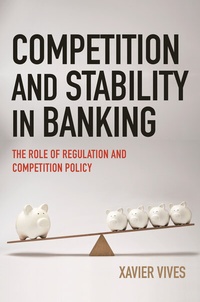
Competition and Stability in Banking
The Role of Regulation and Competition Policy
1st Edition
Published on 2. August 2016
344 pages
978-1-4008-8090-4 (ISBN)
Description

A distinguished economist examines competition, regulation, and stability in today's global banks
Does too much competition in banking hurt society? What policies can best protect and stabilize banking without stifling it? Institutional responses to such questions have evolved over time, from interventionist regulatory control after the Great Depression to the liberalization policies that started in the United States in the 1970s. The global financial crisis of 2007-2009, which originated from an oversupply of credit, once again raised questions about excessive banking competition and what should be done about it. Competition and Stability in Banking addresses the critical relationships between competition, regulation, and stability, and the implications of coordinating banking regulations with competition policies.
Xavier Vives argues that while competition is not responsible for fragility in banking, there are trade-offs between competition and stability. Well-designed regulations would alleviate these trade-offs but not eliminate them, and the specificity of competition in banking should be accounted for. Vives argues that regulation and competition policy should be coordinated, with tighter prudential requirements in more competitive situations, but he also shows that supervisory and competition authorities should stand separate from each other, each pursuing its own objective. Vives reviews the theory and empirics of banking competition, drawing on up-to-date analysis that incorporates the characteristics of modern market-based banking, and he looks at regulation, competition policies, and crisis interventions in Europe and the United States, as well as in emerging economies.
Focusing on why banking competition policies are necessary, Competition and Stability in Banking examines regulation's impact on the industry's efficiency and effectiveness.
Does too much competition in banking hurt society? What policies can best protect and stabilize banking without stifling it? Institutional responses to such questions have evolved over time, from interventionist regulatory control after the Great Depression to the liberalization policies that started in the United States in the 1970s. The global financial crisis of 2007-2009, which originated from an oversupply of credit, once again raised questions about excessive banking competition and what should be done about it. Competition and Stability in Banking addresses the critical relationships between competition, regulation, and stability, and the implications of coordinating banking regulations with competition policies.
Xavier Vives argues that while competition is not responsible for fragility in banking, there are trade-offs between competition and stability. Well-designed regulations would alleviate these trade-offs but not eliminate them, and the specificity of competition in banking should be accounted for. Vives argues that regulation and competition policy should be coordinated, with tighter prudential requirements in more competitive situations, but he also shows that supervisory and competition authorities should stand separate from each other, each pursuing its own objective. Vives reviews the theory and empirics of banking competition, drawing on up-to-date analysis that incorporates the characteristics of modern market-based banking, and he looks at regulation, competition policies, and crisis interventions in Europe and the United States, as well as in emerging economies.
Focusing on why banking competition policies are necessary, Competition and Stability in Banking examines regulation's impact on the industry's efficiency and effectiveness.
All prices
More details
Language
English
Place of publication
Princeton, NJ
United States
Publishing group
De Gruyter
Target group
Professional and scholarly
Edition type
Digital original
Product notice
Reflowable
Illustrations
20 line illus.
File size
1,19 MB
ISBN-13
978-1-4008-8090-4 (9781400880904)
Schweitzer Classification
Other editions
Additional editions
Book
11/2020
Princeton University Press
€35.50
Shipment within 10-20 days
Book
08/2016
Princeton University Press
€51.50
Shipment within 10-20 days
Person
Xavier Vives is professor of economics and finance at the IESE Business School in Barcelona. His books include Information and Learning in Markets (Princeton) and Oligopoly Pricing.
Content
List of Figures and Tables xi
Preface xiii
Abbreviations xvii
Chapter 1 Introduction 1
Chapter 2 Trends in Banking 7
2.1 The Expansion of the Financial Sector, Economic Growth, Financial Innovation, and Systemic Risk 10
2.1.1 Financial Sector Growth and Economic Growth 10
2.1.2 Financial Innovation and Systemic Risk 12
2.2 Business Models and the Challenge to Traditional Banking 18
2.2.1 Business Models and New Competitors 18
2.2.2 The Evolution of Competition 21
2.3 Consolidation and the Evolution of Concentration 27
Chapter 3 Fragility in Banking and the Role of Regulation 37
3.1 The Uniqueness of Banks and Fragility 37
3.1.1 The Roots of Fragility 38
3.1.2 Contagion and Systemic Risk 40
3.1.3 Social Cost of Failure 43
3.2 Shadow Banking and the 2007-2009 Crisis 44
3.3 Regulation and Financial Stability Facilities 47
3.3.1 Regulatory Aims and Tools 47
3.3.2 Prudential Regulation and the Safety Net 48
3.3.3 Bailout Distortions 50
3.3.4 Resolution 51
3.4 The 2007-2009 Crisis, Regulatory Failure, and Regulatory Reform 53
3.4.1 The 2007-2009 Crisis and Regulatory Failure 53
3.4.2 Macroprudential Regulation 56
3.4.3 Regulatory Reform 57
3.5 Regulation in Emerging/Developing Economies 64
Chapter 4 The Analysis of Competition in Banking: Theory and Empirics 70
4.1 Theoretical Models 72
4.1.1 Pricing 72
4.1.2 Product Differentiation 73
4.1.3 Frictions: Switching Costs and Asymmetric Information 74
4.1.4 Network Externalities and Two-Sided Markets 76
4.1.5 Market Structure, Entry, and New Competitors 79
4.1.6 Mergers 83
4.2 Empirical Studies 85
4.2.1 The SCP Paradigm 85
4.2.2 The New Empirical IO 88
4.2.3 The Impact of Deregulation 91
4.2.4 Asymmetric Information and Relationship Banking 93
4.2.5 Mergers 94
4.3 Behavioral Industrial Organization and Banking 97
4.3.1 Behavioral Biases and Their Impact on Consumer Behavior 98
4.3.2 Biases in Financial Markets 100
Chapter 5 Competition, Regulation, and Stability in Banking: Theory and Evidence 106
5.1 Competition and Stability: The Theory 106
5.1.1 Competition and Runs 106
5.1.2 Competition and Risk Taking 109
5.2 Competition and Stability: The Evidence 115
5.2.1 Competition and Systemic Risk 115
5.2.2 Liberalization, Risk Taking, and Systemic Risk 116
5.2.3 Concentration, Competition, and Stability 118
5.2.4 Consolidation, Diversification, Internationalization, and Stability 121
5.2.5 Lessons from the Subprime Financial Crisis 122
5.3 Interaction of Competition Policy and Regulation 124
5.3.1 The Competition-Stability Trade-Off and Regulation 124
5.3.2 The Competition-Stability Trade-Off in Emerging Economies 129
5.3.3 Coordination of Competition Policy and Prudential Regulation 130
5.4 Assessment of the Regulatory Reform Post 2007-2009 Crisis 134
Chapter 6 An Overview of Competition Policy Practice 141
6.1 The Concerns of the Competition Authorities in the EU and the UK 142
6.1.1 The EU 142
6.1.2 The UK 143
6.2 Market Definition 146
6.3 Mergers 149
6.3.1 The United States 150
6.3.2 The EU 151
6.4 Cartels and Restrictive Agreements 154
6.4.1 International Cartels 156
6.4.2 Credit Cards and Two-Sided Markets 159
6.5 State Aid in the EU 161
6.6 Consumer Protection and Behavioral Banking 163
6.6.1 The United States 166
6.6.2 The EU 168
6.7 Banking Competition Policy in Emerging Economies 170
6.7.1 Brazil 170
6.7.2 China 172
6.7.3 India 174
6.7.4 Mexico 175
6.7.5 Russian Federation 178
6.7.6 Southern Mediterranean Countries 180
Chapter 7 Competition Policy, Regulatory Architecture, and Public Intervention in the Crisis 183
7.1 Regulatory Architecture and the Competition Authority 183
7.1.1 The Design of the Financial Regulatory Architecture 183
7.1.2 The EU 190
7.1.3 The UK 195
7.2 Public Intervention, State Ownership, and Competition Distortions 199
7.2.1 Systemic Crisis, State Aid, and Competitive Distortions 199
7.2.2 State Ownership in Banking 201
7.2.3 Savings Banks 202
7.3 Competition Policy and State Aid in the EU 205
7.3.1 The 2007-2009 Crisis and Banking Resolution Tools 206
7.3.2 State Aid and Competition Distortions 209
7.3.3 Competition Policy, TBTF, and Moral Hazard 213
7.4 Merger Policy and the "Failing-Firm Defense" Doctrine 215
7.4.1 The United States 215
7.4.2 The UK 216
7.4.3 The "Failing-Firm Defense" in Banking 217
7.4.4 Spain 218
Chapter 8 Summary of Findings and Policy Implications 222
8.1 Summary of Findings 222
8.1.1 Evolution of Banking 223
8.1.2 The Role of Regulation and the Response to the 2007-2009 Crisis 224
8.1.3 The Nature of Competition in Banking 227
8.1.4 The Trade-Off between Competition and Stability 229
8.1.5 Competition Policy Practice in the Banking Sector 231
8.2 Policy Implications 233
8.2.1 Competition Policy Recommendations 233
8.2.2 Assessment of Regulatory Reform 235
8.2.3 Regulation and Competition Policy Must Be Coordinated 237
8.2.4 Regulatory Architecture 239
8.3 Challenges 241
Notes 245
References 283
Index 315
Preface xiii
Abbreviations xvii
Chapter 1 Introduction 1
Chapter 2 Trends in Banking 7
2.1 The Expansion of the Financial Sector, Economic Growth, Financial Innovation, and Systemic Risk 10
2.1.1 Financial Sector Growth and Economic Growth 10
2.1.2 Financial Innovation and Systemic Risk 12
2.2 Business Models and the Challenge to Traditional Banking 18
2.2.1 Business Models and New Competitors 18
2.2.2 The Evolution of Competition 21
2.3 Consolidation and the Evolution of Concentration 27
Chapter 3 Fragility in Banking and the Role of Regulation 37
3.1 The Uniqueness of Banks and Fragility 37
3.1.1 The Roots of Fragility 38
3.1.2 Contagion and Systemic Risk 40
3.1.3 Social Cost of Failure 43
3.2 Shadow Banking and the 2007-2009 Crisis 44
3.3 Regulation and Financial Stability Facilities 47
3.3.1 Regulatory Aims and Tools 47
3.3.2 Prudential Regulation and the Safety Net 48
3.3.3 Bailout Distortions 50
3.3.4 Resolution 51
3.4 The 2007-2009 Crisis, Regulatory Failure, and Regulatory Reform 53
3.4.1 The 2007-2009 Crisis and Regulatory Failure 53
3.4.2 Macroprudential Regulation 56
3.4.3 Regulatory Reform 57
3.5 Regulation in Emerging/Developing Economies 64
Chapter 4 The Analysis of Competition in Banking: Theory and Empirics 70
4.1 Theoretical Models 72
4.1.1 Pricing 72
4.1.2 Product Differentiation 73
4.1.3 Frictions: Switching Costs and Asymmetric Information 74
4.1.4 Network Externalities and Two-Sided Markets 76
4.1.5 Market Structure, Entry, and New Competitors 79
4.1.6 Mergers 83
4.2 Empirical Studies 85
4.2.1 The SCP Paradigm 85
4.2.2 The New Empirical IO 88
4.2.3 The Impact of Deregulation 91
4.2.4 Asymmetric Information and Relationship Banking 93
4.2.5 Mergers 94
4.3 Behavioral Industrial Organization and Banking 97
4.3.1 Behavioral Biases and Their Impact on Consumer Behavior 98
4.3.2 Biases in Financial Markets 100
Chapter 5 Competition, Regulation, and Stability in Banking: Theory and Evidence 106
5.1 Competition and Stability: The Theory 106
5.1.1 Competition and Runs 106
5.1.2 Competition and Risk Taking 109
5.2 Competition and Stability: The Evidence 115
5.2.1 Competition and Systemic Risk 115
5.2.2 Liberalization, Risk Taking, and Systemic Risk 116
5.2.3 Concentration, Competition, and Stability 118
5.2.4 Consolidation, Diversification, Internationalization, and Stability 121
5.2.5 Lessons from the Subprime Financial Crisis 122
5.3 Interaction of Competition Policy and Regulation 124
5.3.1 The Competition-Stability Trade-Off and Regulation 124
5.3.2 The Competition-Stability Trade-Off in Emerging Economies 129
5.3.3 Coordination of Competition Policy and Prudential Regulation 130
5.4 Assessment of the Regulatory Reform Post 2007-2009 Crisis 134
Chapter 6 An Overview of Competition Policy Practice 141
6.1 The Concerns of the Competition Authorities in the EU and the UK 142
6.1.1 The EU 142
6.1.2 The UK 143
6.2 Market Definition 146
6.3 Mergers 149
6.3.1 The United States 150
6.3.2 The EU 151
6.4 Cartels and Restrictive Agreements 154
6.4.1 International Cartels 156
6.4.2 Credit Cards and Two-Sided Markets 159
6.5 State Aid in the EU 161
6.6 Consumer Protection and Behavioral Banking 163
6.6.1 The United States 166
6.6.2 The EU 168
6.7 Banking Competition Policy in Emerging Economies 170
6.7.1 Brazil 170
6.7.2 China 172
6.7.3 India 174
6.7.4 Mexico 175
6.7.5 Russian Federation 178
6.7.6 Southern Mediterranean Countries 180
Chapter 7 Competition Policy, Regulatory Architecture, and Public Intervention in the Crisis 183
7.1 Regulatory Architecture and the Competition Authority 183
7.1.1 The Design of the Financial Regulatory Architecture 183
7.1.2 The EU 190
7.1.3 The UK 195
7.2 Public Intervention, State Ownership, and Competition Distortions 199
7.2.1 Systemic Crisis, State Aid, and Competitive Distortions 199
7.2.2 State Ownership in Banking 201
7.2.3 Savings Banks 202
7.3 Competition Policy and State Aid in the EU 205
7.3.1 The 2007-2009 Crisis and Banking Resolution Tools 206
7.3.2 State Aid and Competition Distortions 209
7.3.3 Competition Policy, TBTF, and Moral Hazard 213
7.4 Merger Policy and the "Failing-Firm Defense" Doctrine 215
7.4.1 The United States 215
7.4.2 The UK 216
7.4.3 The "Failing-Firm Defense" in Banking 217
7.4.4 Spain 218
Chapter 8 Summary of Findings and Policy Implications 222
8.1 Summary of Findings 222
8.1.1 Evolution of Banking 223
8.1.2 The Role of Regulation and the Response to the 2007-2009 Crisis 224
8.1.3 The Nature of Competition in Banking 227
8.1.4 The Trade-Off between Competition and Stability 229
8.1.5 Competition Policy Practice in the Banking Sector 231
8.2 Policy Implications 233
8.2.1 Competition Policy Recommendations 233
8.2.2 Assessment of Regulatory Reform 235
8.2.3 Regulation and Competition Policy Must Be Coordinated 237
8.2.4 Regulatory Architecture 239
8.3 Challenges 241
Notes 245
References 283
Index 315

