

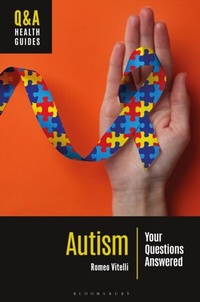
Autism
Your Questions Answered
1st Edition
Published on 4. April 2024
136 pages
978-1-4408-8157-2 (ISBN)
Description

Research suggests that about 1% of the world's population is on the autism spectrum. Discover the answers to common questions about living with neurodiversity.Part of the Q&A Health Guides series, this book offers a broad introduction to autism spectrum disorder (ASD). The book's 47 questions cover what ASD is and its common characteristics, the biological and environmental factors that may lead to ASD, how autism is diagnosed and managed, and how those living with ASD can reach their full potential. Autism: Your Questions Answered addresses these and other topics in a way that both celebrates neurodiversity and acknowledges the many challenges that those with ASD face.Augmenting the main text, a collection of 5 case studies illustrate key concepts and issues through relatable stories and insightful recommendations. The common misconceptions section at the beginning of the volume dispels 5 long-standing and harmful myths about ASD, directing readers to additional information in the text. The glossary defines terms that may be unfamiliar to readers, while the directory of resources curates a list of the most useful books, websites, and other materials. Finally, whether they're looking for more information about this subject or any other health-related topic, readers can turn to the guide to health literacy section for practical tools and strategies for finding, evaluating, and using credible sources of health information both on and off the Internet.
More details
Series
Language
English
Place of publication
New York
United States
Publishing group
Bloomsbury Publishing Plc
Target group
Primary & secondary/elementary & high school
College/higher education
Illustrations
1 bw illus
ISBN-13
978-1-4408-8157-2 (9781440881572)
Copyright in bibliographic data and cover images is held by Nielsen Book Services Limited or by the publishers or by their respective licensors: all rights reserved.
Schweitzer Classification
Other editions
Person
Content
- Cover
- Contents
- Series Foreword
- Introduction
- Guide to Health Literacy
- Common Misconceptions about Autism
- 1. Autism is a mental illness or disease
- 2. Autism is caused by bad parenting
- 3. Vaccines cause autism
- 4. Autistic people are unable to communicate or form relationships
- 5. Autistic people lack empathy
- Questions and Answers
- The Basics
- 1. What is autism?
- 2. What are the primary symptoms or characteristics of autism?
- 3. What exactly is the autism spectrum? Why are there different types or degrees of autism?
- 4. What is Asperger's syndrome?
- 5. What is neurodiversity, and how has this concept impacted conversations around autism?
- 6. How common is autism, and are autism diagnoses on the rise?
- 7. Are certain people more likely to be diagnosed with autism?
- 8. Are there any famous autistic individuals?
- 9. What is the Autism Rights Movement?
- Autism Causes
- 10. What role does genetics play in autism?
- 11. Which factors during pregnancy and birth might be linked to autism?
- 12. Is autism caused by vaccines?
- 13. Is there a connection between autoimmune disease and autism?
- 14. Is autism caused by bad parenting?
- 15. Can autism be prevented?
- Features of Autism
- 16. Are the brains of people with autism "wired differently"?
- 17. How does autism affect language development and communication?
- 18. How does autism affect an individual's social skills and ability to form interpersonal relationships?
- 19. How does autism affect a person's emotions?
- 20. How does autism affect a person's ability to learn?
- 21. How do sensory issues impact individuals with autism?
- 22. How does autism impact cognitive development?
- 23. Why do people with autism often struggle with changes in their routine?
- 24. Why do people with autism often have very strong but narrow interests?
- 25. Why do people with autism often engage in repetitive behaviors?
- 26. Why do some people with autism self-harm?
- 27. Does having autism give individuals special abilities in other areas?
- Diagnosing and Managing Autism
- 28. How is autism diagnosed?
- 29. Why is it important to diagnose autism early?
- 30. What other conditions tend to occur alongside autism?
- 31. Can autism be cured?
- 32. What medications can be used to manage autism?
- 33. What nondrug therapies and interventions can help individuals with autism?
- 34. Can alternative medicine help those with autism?
- 35. What types of assistive technology are available for individuals with autism?
- Living with Autism
- 36. How does autism affect a person's daily life?
- 37. Can people with autism live independently?
- 38. How can parents and caregivers support autistic children at home?
- 39. What is the impact of autism on family members and caregivers?
- 40. Can people with autism form meaningful relationships?
- 41. What's the best way to communicate with and support a friend or partner with autism?
- 42. What is an IEP, and how can it help autistic students?
- 43. How can teachers and school staff support students with autism in the classroom?
- 44. What are the challenges faced by adults with autism in the workplace? Can individuals with autism have successful careers?
- 45. How can employers create an autism-friendly work environment?
- 46. How does social media impact individuals with autism?
- 47. How can the media and society as a whole become more inclusive of individuals with autism?
- Case Studies
- 1. Emily's Personalized Treatment Plan
- 2. James's Experience at a Residential Care Facility
- 3. How Lily's Autism Affects Her Family
- 4. Max Is Diagnosed with Autism as an Adult
- 5. Jake Has Undiagnosed Asperger's
- Glossary
- Directory of Resources
- Index
- About the Author
