

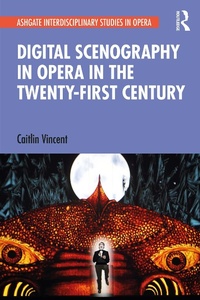
Digital Scenography in Opera in the Twenty-First Century
1st Edition
Published on 15. September 2021
212 pages
978-1-000-44073-7 (ISBN)
Description

Digital Scenography in Opera in the Twenty-First Century is the first definitive study of the use of digital scenography in Western opera production. The book begins by exploring digital scenography's dramaturgical possibilities and establishes a critical framework for identifying and comparing the use of digital scenography across different digitally enhanced opera productions. The book then investigates the impacts and potential disruptions of digital scenography on opera's longstanding production conventions, both on and off the stage. Drawing on interviews with major industry practitioners, including Paul Barritt, Mark Grimmer, Donald Holder, Elaine J. McCarthy, Luke Halls, Wendall K. Harrington, Finn Ross, S. Katy Tucker, and Victoria 'Vita' Tzykun, author Caitlin Vincent identifies key correlations between the use of digital scenography in practice and subsequent impacts on creative hierarchies, production design processes, and organisational management. The book features detailed case studies of digitally enhanced productions premiered by Dutch National Opera, Komische Oper Berlin, Opera de Lyon, The Royal Opera, Covent Garden, San Francisco Opera, Santa Fe Opera, Theatre Royal de la Monnaie, The Metropolitan Opera, Victorian Opera, and Washington National Opera.
More details
Series
Edition
1. Auflage
Language
English
Place of publication
London
United Kingdom
Publishing group
Taylor & Francis Ltd
Target group
College/higher education
Product notice
Reflowable
Illustrations
2 Tables, black and white; 8 Line drawings, black and white; 18 Halftones, black and white; 26 Illustrations, black and white
ISBN-13
978-1-000-44073-7 (9781000440737)
Copyright in bibliographic data and cover images is held by Nielsen Book Services Limited or by the publishers or by their respective licensors: all rights reserved.
Schweitzer Classification
Other editions
Additional editions
Caitlin Vincent
Digital Scenography in Opera in the Twenty-First Century
Book
05/2023
1st Edition
Routledge
€63.10
Shipment within 15-20 days
Caitlin Vincent
Digital Scenography in Opera in the Twenty-First Century
Book
09/2021
1st Edition
Routledge
€206.20
Shipment within 15-20 days
Person
Caitlin Vincent researches the future of work in the arts. Key areas of focus include opera, cultural labour, performance and technology, and equity and diversity. An acclaimed opera librettist, Vincent has been commissioned for Washington National Opera, the Schubert Club of Minnesota, the University of Connecticut, and Carnegie Hall.
Content
Introduction Chapter One - Digitally-enhanced opera in the twenty-first century and the modes of synthesis Chapter Two - Digitally-enhanced opera in the twenty-first century and the variants of causal interplay Chapter Three - The lineage of digital scenography: Baroque origins to the twentieth century Chapter Four - The lineage of digital scenography: multimedia opera in the twentieth century Chapter Five - The projection designer and evolving creative hierarchies in opera Chapter Six - Digital scenography and evolving production design processes in opera Conclusion Bibliography
Introduction to digital scenography in opera
What is digital scenography?
Why opera?
Research methods
The modes of synthesis
Examples of practice
Interviews
Chapter outline
References
Chapter One - A new classification system for digital scenography: the modes of synthesis
Articulating the modes of synthesis: non-synthesis, partial-synthesis, and full- synthesis
Non-synthesis-San Francisco Opera, The Magic Flute (2012)
Partial-synthesis-Theatre Royal de la Monnaie, The Magic Flute (2005)
Full-synthesis-Komische Oper Berlin, The Magic Flute (2012)
A comparison of critical responses to the three productions
Conclusion
References
Chapter Two - The variants of causal interplay
Agency: the screen as 'performer'
Dutch National Opera, The Magic Flute (2012)-partial-synthesis
Victorian Opera, Four Saints in Three Acts (2016)-partial-synthesis
Augmentation: extension and transformation through digitalisation
The Royal Opera, Covent Garden, Don Giovanni (2014)-partial-synthesis
Victorian Opera, The Flying Dutchman (2015)-partial-synthesis
Full-synthesis extremes of agency and augmentation
Opera de Lyon, L'Enfant et les Sortileges (2016)-full-synthesis
Autonomy: faux-interactivity versus functional interactivity
The Metropolitan Opera, Das Rheingold (2010)-partial-synthesis
Implications for performers and audiences
References
Chapter Three - The lineage of digital scenography in opera: Baroque origins to the twentieth century
The origins of the Baroque opera paradigm
The Baroque paradigm and the interplay between performer, stage setting, and spectator
New perspectives: the scenic reforms of Ferdinando Galli-Bibiena (1657-1743)
The scenographic transition to 'grand opera'
The 'mystic chasm': Richard Wagner (1813-1883) and the Bayreuth Festspielhaus
Adolphe Appia (1862-1928) and dynamic light
Looking towards the twentieth century
References
Chapter Four - The lineage of digital scenography in opera: multimedia developments in the twentieth century
Avant-garde origins
Edward Gordon Craig (1872-1966) and Enrico Prampolini (1894-1956): 'a thousand scenes in one' and 'luminous forms'
Josef Svoboda (1920-2002) and the dynamic setting of the Laterna Magika
The Tales of Hoffmann (1962)
Guenther Schneider-Siemssen (1926-2015) and the holograms of the Salzburg Marionette Theatre
The Tales of Hoffmann (1985)
Looking towards the twenty-first century
References
Chapter Five - The projection designer and evolving creative hierarchies
Industry recognition and acknowledgement
The traditional theatrical hierarchy: director as ultimate authority
The lateral hierarchy: collective directorate
Hierarchical variation: projection designers as the directorial authority
The evolving role of the projection designer
References
Chapter Six - Digital scenography and evolving production design processes
A benchmark of organisational and funding models
The twentieth-century standard for production design
Washington National Opera's Das Rheingold (2016)-non-synthesis
Theatre Royal de la Monnaie's The Magic Flute (2005)-partial-synthesis
Dutch National Opera's The Magic Flute (2012)-partial-synthesis
Santa Fe Opera's The (R)evolution of Steve Jobs (2017)-non-synthesis
Komische Oper Berlin's The Magic Flute (2012)-full-synthesis
Commonalities across the five production design processes
Production design processes and the modes of synthesis
References
Conclusion - The future evolution of digital scenography
References
Appendix 1
Appendix 2
Appendix 3
Introduction to digital scenography in opera
What is digital scenography?
Why opera?
Research methods
The modes of synthesis
Examples of practice
Interviews
Chapter outline
References
Chapter One - A new classification system for digital scenography: the modes of synthesis
Articulating the modes of synthesis: non-synthesis, partial-synthesis, and full- synthesis
Non-synthesis-San Francisco Opera, The Magic Flute (2012)
Partial-synthesis-Theatre Royal de la Monnaie, The Magic Flute (2005)
Full-synthesis-Komische Oper Berlin, The Magic Flute (2012)
A comparison of critical responses to the three productions
Conclusion
References
Chapter Two - The variants of causal interplay
Agency: the screen as 'performer'
Dutch National Opera, The Magic Flute (2012)-partial-synthesis
Victorian Opera, Four Saints in Three Acts (2016)-partial-synthesis
Augmentation: extension and transformation through digitalisation
The Royal Opera, Covent Garden, Don Giovanni (2014)-partial-synthesis
Victorian Opera, The Flying Dutchman (2015)-partial-synthesis
Full-synthesis extremes of agency and augmentation
Opera de Lyon, L'Enfant et les Sortileges (2016)-full-synthesis
Autonomy: faux-interactivity versus functional interactivity
The Metropolitan Opera, Das Rheingold (2010)-partial-synthesis
Implications for performers and audiences
References
Chapter Three - The lineage of digital scenography in opera: Baroque origins to the twentieth century
The origins of the Baroque opera paradigm
The Baroque paradigm and the interplay between performer, stage setting, and spectator
New perspectives: the scenic reforms of Ferdinando Galli-Bibiena (1657-1743)
The scenographic transition to 'grand opera'
The 'mystic chasm': Richard Wagner (1813-1883) and the Bayreuth Festspielhaus
Adolphe Appia (1862-1928) and dynamic light
Looking towards the twentieth century
References
Chapter Four - The lineage of digital scenography in opera: multimedia developments in the twentieth century
Avant-garde origins
Edward Gordon Craig (1872-1966) and Enrico Prampolini (1894-1956): 'a thousand scenes in one' and 'luminous forms'
Josef Svoboda (1920-2002) and the dynamic setting of the Laterna Magika
The Tales of Hoffmann (1962)
Guenther Schneider-Siemssen (1926-2015) and the holograms of the Salzburg Marionette Theatre
The Tales of Hoffmann (1985)
Looking towards the twenty-first century
References
Chapter Five - The projection designer and evolving creative hierarchies
Industry recognition and acknowledgement
The traditional theatrical hierarchy: director as ultimate authority
The lateral hierarchy: collective directorate
Hierarchical variation: projection designers as the directorial authority
The evolving role of the projection designer
References
Chapter Six - Digital scenography and evolving production design processes
A benchmark of organisational and funding models
The twentieth-century standard for production design
Washington National Opera's Das Rheingold (2016)-non-synthesis
Theatre Royal de la Monnaie's The Magic Flute (2005)-partial-synthesis
Dutch National Opera's The Magic Flute (2012)-partial-synthesis
Santa Fe Opera's The (R)evolution of Steve Jobs (2017)-non-synthesis
Komische Oper Berlin's The Magic Flute (2012)-full-synthesis
Commonalities across the five production design processes
Production design processes and the modes of synthesis
References
Conclusion - The future evolution of digital scenography
References
Appendix 1
Appendix 2
Appendix 3
