

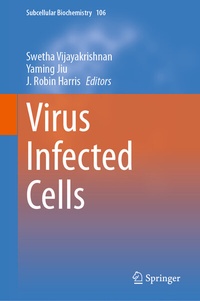
Virus Infected Cells
Description

Virus-infected Cells is a comprehensive and technical exploration of the intricate interactions between viruses and host cells. This book delves into the molecular and cellular aspects of viral infections, providing a wealth of knowledge about various viruses and their effects on cellular mechanisms.
The first part of the book covers general/technical aspects, introducing the reader to the field of virology and providing an overview of the techniques used to study virus-infected cells. It covers topics such as the visualisation of virus-infected cells by cryo-electron tomography and the assessment of necroptosis, a type of programmed cell death, in virus-infected cells. In addition, the book explores the role of apoptosis and phagocytosis as antiviral mechanisms, as well as the intricate process of viral membrane fusion and penetration. It also discusses the tracking of viral entry into living cells and the use of correlative cryo-imaging to study the biology of virusesin cells and tissues. Finally, the book examines the cytopathic effect induced by viruses, shedding light on the damage caused to infected cells.
The second section of the book explores specific viruses and their interactions with host cells. Each chapter focuses on a specific virus and provides an in-depth look at its behaviour within infected cells. The book covers a wide range of viruses, including human papillomavirus, respiratory syncytial virus, Japanese encephalitis virus, African swine fever virus, coronavirus, influenza A virus and human endogenous retroviruses. Each chapter examines unique aspects of virus-host interactions, such as viral assembly, impact on the cytoskeleton, critical host-virus interactions mediated by viral RNA, mechanisms of cell entry, and the involvement of cholesterol in virus budding and scission.
This volume in the Subcellular Biochemistry series is a valuable resource for researchers, virologists and students interested in understanding the complex dynamics between viruses and the cells they infect. With its detailed exploration of general and specific aspects of virus-host interactions, this book provides a comprehensive understanding of the molecular and cellular mechanisms involved in viral infections.
More details
Other editions
Additional editions
Persons
Dr Yaming Jiu is a Principal Investigator at the Institute Pasteur of Shanghai, Chinese Academy of Sciences, Unit of Cell Biology and Imaging Study of Pathogen Host Interaction. She has broad research interests in the fields of cytoskeleton- and intracellular trafficking- centric view of the world at both cellular and behavior level to understand (1) how pathogens target to the cytoskeletal system and membrane trafficking of hosts to regulate their invasion, duplication, and mobility between host cells; (2) the molecular mechanisms of cytoskeletal interaction andthe regulation to cell migration, polarity and mechanosensing; (3) related bioimaging methods.
Professor Dr J. Robin Harris is an Honorary Professor of the University of Mainz, who specialized in macromolecular electron microscopy. He has been the Series Editor for the Springer Subcellular Biochemistry book series for many years and has personally edited and co-edited several books in this series.
