

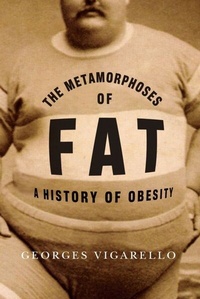
The Metamorphoses of Fat
A History of Obesity
1st Edition
Published on 27. November 2015
296 pages
978-0-231-53530-4 (ISBN)
Description

Georges Vigarello maps the evolution of Western ideas about fat and fat people from the Middle Ages to the present, paying particular attention to the role of science, fashion, fitness crazes, and public health campaigns in shaping these views. While hefty bodies were once a sign of power, today those who struggle to lose weight are considered poor in character and weak in mind. Vigarello traces the eventual equation of fatness with infirmity and the way we have come to define ourselves and others in terms of body type.
Vigarello begins with the medieval artists and intellectuals who treated heavy bodies as symbols of force and prosperity. He then follows the shift during the Renaissance and early modern period to courtly, medical, and religious codes that increasingly favored moderation and discouraged excess. Scientific advances in the eighteenth century also brought greater knowledge of food and the body's processes, recasting fatness as the "relaxed" antithesis of health. The body-as-mechanism metaphor intensified in the early nineteenth century, with the chemistry revolution and heightened attention to food-as-fuel, which turned the body into a kind of furnace or engine. During this period, social attitudes toward fat became conflicted, with the bourgeois male belly operating as a sign of prestige but also as a symbol of greed and exploitation, while the overweight female was admired only if she was working class. Vigarello concludes with the fitness and body-conscious movements of the twentieth century and the proliferation of personal confessions about obesity, which tied fat more closely to notions of personality, politics, taste, and class.
Vigarello begins with the medieval artists and intellectuals who treated heavy bodies as symbols of force and prosperity. He then follows the shift during the Renaissance and early modern period to courtly, medical, and religious codes that increasingly favored moderation and discouraged excess. Scientific advances in the eighteenth century also brought greater knowledge of food and the body's processes, recasting fatness as the "relaxed" antithesis of health. The body-as-mechanism metaphor intensified in the early nineteenth century, with the chemistry revolution and heightened attention to food-as-fuel, which turned the body into a kind of furnace or engine. During this period, social attitudes toward fat became conflicted, with the bourgeois male belly operating as a sign of prestige but also as a symbol of greed and exploitation, while the overweight female was admired only if she was working class. Vigarello concludes with the fitness and body-conscious movements of the twentieth century and the proliferation of personal confessions about obesity, which tied fat more closely to notions of personality, politics, taste, and class.
All prices
More details
Other editions
Additional editions
Book
06/2013
Columbia University Press
€37.17
Shipment within 10-20 days
Persons
Georges Vigarello is research director at the École des hautes études en sciences sociales (EHESS) in Paris. He has published prolifically on topics ranging from Concepts of Cleanliness: Changing Attitudes in France Since the Middle Ages (1988) to The History of Rape: Sexual Violence in France from the Sixteenth to the Twentieth Century (2001) and The History of the Body: From the Renaissance to the Enlightenment (2011).
C. Jon Delogu is university professor in the Department of English at the Université Jean Moulin, Lyon 3 in France. He is also the translator of the Columbia University Press books Murder in Byzantium: A Novel (2006) by Julia Kristeva and After the Empire: The Breakdown of the American Order (2003).
C. Jon Delogu is university professor in the Department of English at the Université Jean Moulin, Lyon 3 in France. He is also the translator of the Columbia University Press books Murder in Byzantium: A Novel (2006) by Julia Kristeva and After the Empire: The Breakdown of the American Order (2003).
Content
Introduction
Part 1
1. The Prestige of the Big Person
2. Liquids, Fat, and Wind
3. The Horizon of Fault
4. The Fifteenth Century and the Contrasts of Slimming
Part 2
5. The Shores of Laziness
6. The Plural of Fat
7. Exploring Images, Defining Terms
8. Constraining the Flesh
Part 3
9. Inventing Nuance
10. Stigmatizing Powerlessness
11. Toning Up
Part 4
12. The Weight of Figures
13. Typology Fever
14. From Chemistry to Energy
15. From Energy to Diets
Part 5
16. The Dominance of Aesthetics
17. Clinical Obesity and Everyday Obesity
18. The Thin Revolution
19. Declaring "The Martyr"
Part 6
Conclusion
Notes
Index
Part 1
1. The Prestige of the Big Person
2. Liquids, Fat, and Wind
3. The Horizon of Fault
4. The Fifteenth Century and the Contrasts of Slimming
Part 2
5. The Shores of Laziness
6. The Plural of Fat
7. Exploring Images, Defining Terms
8. Constraining the Flesh
Part 3
9. Inventing Nuance
10. Stigmatizing Powerlessness
11. Toning Up
Part 4
12. The Weight of Figures
13. Typology Fever
14. From Chemistry to Energy
15. From Energy to Diets
Part 5
16. The Dominance of Aesthetics
17. Clinical Obesity and Everyday Obesity
18. The Thin Revolution
19. Declaring "The Martyr"
Part 6
Conclusion
Notes
Index
Read the introduction to The Metamorphoses of Fat (to view in full screen, click on icon in bottom right-hand corner)

