

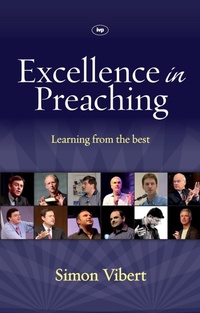
Excellence in Preaching
Published on 17. December 2012
176 pages
978-1-84474-693-4 (ISBN)
Description

What makes some preaching gripping - unforgettable even?
What can we learn from the best preachers?
How can we appreciate great preaching, often at the click of a mouse, without devaluing the role of the local church minister?
'Without creating a guru mentality, I focus on one positive aspect from each preacher and offer hints on how other preachers might emulate them.' says author Simon Vibert. He also looks at the Bible's own take on good preaching, and focuses on the exemplary models of Jesus and Paul.
This is not a how-to manual, nor a biblical theology of preaching, nor even a critique of the subjects. Rather, it is a focus on modern-day practitioners, from whom all preachers can form a composite picture of excellence, and from whom all preachers would do well to learn.
What can we learn from the best preachers?
How can we appreciate great preaching, often at the click of a mouse, without devaluing the role of the local church minister?
'Without creating a guru mentality, I focus on one positive aspect from each preacher and offer hints on how other preachers might emulate them.' says author Simon Vibert. He also looks at the Bible's own take on good preaching, and focuses on the exemplary models of Jesus and Paul.
This is not a how-to manual, nor a biblical theology of preaching, nor even a critique of the subjects. Rather, it is a focus on modern-day practitioners, from whom all preachers can form a composite picture of excellence, and from whom all preachers would do well to learn.
More details
Language
English
Place of publication
Nottingham
United Kingdom
Product notice
Reflowable
ISBN-13
978-1-84474-693-4 (9781844746934)
Copyright in bibliographic data and cover images is held by Nielsen Book Services Limited or by the publishers or by their respective licensors: all rights reserved.
Schweitzer Classification
Other editions
Additional editions
Person
Simon Vibert is Vice Principal and Director of the School of Preaching at Wycliffe Hall, Oxford. Prior to that he was the minister of St. Luke's Church of England, in Southwest London. He studied in the USA, taught at Bible School in Haiti and is Chairman of Fellowship of Word & Spirit in Southwark Diocese. Simon is a preaching facilitator with Lanham Partnership and is married with 3 children.
Content
- Intro
- Excellence in Preaching
- Contents
- Preface
- Introduction: Preaching the Bible way
- The priorities of preaching
- Preaching should be pervasively biblical
- Preaching should be both Christ- and gospel-focused
- Preaching should be urgent and applied
- Daily bread and sumptuous feasts
- 1. Jesus Christ, the preacher: Setting the supreme standard
- The Sermon on the Mount
- Audience
- Theme and content
- Structure
- Manner
- Authority
- Rhetorical techniques
- Movement
- Lessons for preachers today
- 2. Tim Keller: Be aware of cultural and philosophical challenges to the gospel
- Who is Tim Keller?
- What makes Tim Keller a good communicator?
- Maintain a sustained and substantiated argument
- Read the culture and its books
- Use memorable and challenging illustrations
- Preach in order to persuade
- Lessons for preachers
- 3. John Piper: Inspire a passion for the glory of God
- Who is John Piper?
- What makes John Piper a good communicator?
- Seek your own joy
- Use arresting and shocking language
- Be God-centred
- Find historical associations
- Continue to refine central themes to make them clearer
- Lessons for preachers
- 4. Vaughan Roberts: Let the Bible speak with simplicity and freshness
- Who is Vaughan Roberts?
- What makes Vaughan Roberts a good communicator?
- Help the congregation see where you are heading
- Use a good introduction
- Make three points using mnemonic, alliteration and repetition
- 1. The conclusion of God's plan - that all Israel will be saved (11:25-27)
- 2. The goal of God's plan - that all people may receive mercy (11:28-32)
- 3. The response to God's plan - that all glory goes to God (11:33-36)
- Application
- Sermon outline on Romans 11:25-36
- Lessons for preachers
- 5. Simon Ponsonby: Be a Word-and-Spirit preacher
- Who is Simon Ponsonby?
- What makes Simon Ponsonby a good communicator?
- Tell the congregation what is on your mind
- Establish the parameters for your talk
- Build a theological case for a big-themed sermon
- 1. Consecration brings visitation
- 2. Consecration must begin at the house of God
- 3. We have tried everything but consecration
- 4. A holy church can create a holy society
- Illustrate from history and contemporary media
- Ask the practical question: How do we do it?
- Lessons for preachers
- 6. J.John: Use humour and story to connect and engage, and dismantle barriers
- Who is J.John?
- What makes J.John a good communicator?
- Tell memorable one-liners
- Seek resonance with your audience through human story
- Do more than tell a good story
- draw out the specific analogy
- Make good use of repetition and alliteration
- 1. In a changing world, the nature of God has not changed
- 2. In a changing world, human nature has not changed
- 3. In a changing world, the way to change hasn't changed
- Make a direct appeal and expect a response
- Lessons for preachers
- 7. David Cook: Create interest
- apply well
- Who is David Cook?
- What makes David Cook a good communicator?
- Remember: beginnings and endings matter
- Introduce a single Bible text and return to it at the end
- Introduction
- Conclusion
- Draw people in through a great human-interest story
- Ask questions of the passage which the congregation may already be considering
- Lessons for preachers
- 8. John Ortberg: Preach with spiritual formation in mind
- Who is John Ortberg?
- What makes John Ortberg a good preacher?
- Sermon one: Preaching the resurrection
- Help the congregation stay with you
- Find illustrations that resonate and help you reinforce your point
- Make good use of apologetic arguments
- Make personal application
- Sermon two: Preaching redemption
- Tell the big Bible story in a way that relates to the audience's own story
- Identify with, and recognize, 'the mess' of our lives
- Use illustrations that connect at the level of the affections
- 1. Piano playing
- 2. Redemption stamps
- 3. Schindler's List
- Conclusion
- How does John Ortberg think 'spiritual formation' happens?
- Lessons for preachers
- 9. Nicky Gumbel: Make much of Jesus Christ
- Who is Nicky Gumbel?
- What makes Nicky Gumbel a good communicator?
- Start in the world and begin with felt needs
- Speak to society's needs
- Link your general remarks to the specific theme of the sermon
- Build your case around cumulative points
- 1. The need is urgent
- 2. The motive is love
- 3. The trigger is prayer
- 4. The potential is vast
- Use statistics and quotes to build your case
- Keep talking about Jesus Christ
- Lessons for preachers
- 10. Rico Tice: Preach with urgency and evangelistic zeal
- Who is Rico Tice?
- What makes Rico Tice a good communicator?
- Speak with passion
- Let your sermon structure serve you
- Set your sermon in the broader context of the sermon series
- Illustrate continually
- Recount self-deprecating stories that enable the hearer to grasp the reality of following Jesus
- Use urgent language
- Apply the same sense of urgency to Christian and non-Christian alike
- Non-Christian
- Christian
- Do the work of an evangelist 7
- Lessons for preachers
- 11. Alistair Begg: Persuade people by passionate argument from the Bible
- Who is Alistair Begg?
- What makes Alistair Begg a good communicator?
- Take a single text, and expound, apply and lodge it in people's minds
- Apply your own current reading directly into the sermon
- Demonstrate how this main point is also made elsewhere in the Bible
- Point to an external historical event which backs up your point
- Help the congregation think through your thoughts with you
- Use measured and exact language with passion backed up by demonstration
- Gather the disparate parts of the message into a coherent conclusion
- Lessons for preachers
- 12. Mark Driscoll: Teach with directness, challenge and relevance
- Who is Mark Driscoll?
- What makes Mark Driscoll a good communicator?
- Speak freely and with few notes
- Define biblical words and context in a way the congregation can relate to
- Use high-quality multimedia presentations which do not distract from the preaching
- Give contemporary descriptions of biblical places
- Help the congregation to keep focused by reminding them of your central point
- Nuance application with a sense of urgency, but without condemnation
- Tell human stories of your own contact with people
- Conclude in a way which applies the points of the sermon directly
- Lessons for preachers
- 13. Mark Dever: Expose all of God's Word to all of God's people
- Who is Mark Dever?
- What makes Mark Dever a good communicator?
- Develop the art of synthesis
- Take time to establish the relevance and significance of your subject matter
- Specifically apply the sermon to the range of people present
- Mark addresses practical concerns relating to being in God's will
- He acknowledges real anxieties and problems
- Mark offers specific help for praying
- Pay careful attention to the detail of the biblical text
- 1. 'Who is Jesus?'
- 2. 'Who is Jesus talking to?'
- 3. 'What is prayer?'
- 4. 'What does faith look like?'
- Engagement means allowing both yourself and the text to interact with individuals as you prepare
- Don't fake emotion, but if you feel it, show it
- Summarize your key points
- Lessons for preachers
- Conclusion: Preaching that changes lives
- A composite picture of a good preacher
- Wherein lies the power of good preaching?
- For some the power resides in 'The Word'
- For others the power resides in the preacher
- For others the power resides in the role of God the Holy Spirit
- The preacher, the Word and the Spirit
- The intermarriage of preacher, Word and Spirit is found in biblical models of preaching
- The intermarriage of preacher, Word and Spirit is illustrated in the great revivals of history
- The intermarriage of preacher, Word and Spirit is assumed to be necessary by all those who observe powerful preaching
- To sum up
- Appendix: The survey and online resources
- Methodology
- 90-second preaching survey
- Notes
- Preface
- Introduction: Preaching the Bible way
- 1. Jesus Christ, the preacher: Setting the supreme standard
- 2. Tim Keller: Be aware of cultural and philosophical challenges to the gospel
- 3. John Piper: Inspire a passion for the glory of God
- Sources
- 4. Vaughan Roberts: Let the Bible speak with simplicity and freshness
- 5. Simon Ponsonby: Be a Word-and-Spirit preacher
- 6. J.John: Use humour and story to connect and engage, and dismantle barriers
- 7. David Cook: Create interest
- apply well
- 8. John Ortberg: Preach with spiritual formation in mind
- 9. Nicky Gumbel: Make much of Jesus Christ
- 10. Rico Tice: Preach with urgency and evangelistic zeal
- 11. Alistair Begg: Persuade people by passionate argument from the Bible
- 12. Mark Driscoll: Teach with directness, challenge and relevance
- 13. Mark Dever: Expose all of God's Word to all of God's people
- Conclusion: Preaching that changes lives
