

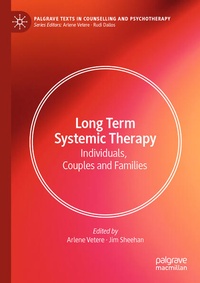
Long Term Systemic Therapy
Description

Systemic psychotherapy has long been conceptualised and practiced as brief psychotherapy, in both the public sector and in independent practice, but it is now increasingly becoming a longer term practice.
This ground-breaking book examines the ways in which systemic theory can accommodate and formulate long term practice, and locates the boundaries of the systemic theories that both help to explain and give direction to such work. In doing so, it asks important questions such as: at what point might a practitioner need to incorporate and integrate other explanatory models into their systemic thinking? What does this mean for systemic practice? How does the relative longevity of the work impact the way practitioners build and maintain therapeutic relationships with the relational systems they assist? And what implications does such longevity have on, and for, the supervisory needs of systemic psychotherapists at the heart of the work? Given the absence of a rigorous evidence base for long term systemic therapy and practice, this book explores how practitioners can hold themselves ethically accountable for what they do and think.
Written by some of the leading names in systemic thinking, this book provides an important new resource for both students and experienced professionals in family therapy seeking to enhance their practice and research.
Reviews / Votes
"Although the iThrive model (Wolpert et al., 2015) has redressed the balance somewhat by suggesting a service framework for UK Child and Adolescent Mental Health Services that include very short, brief, medium and long-term therapeutic interventions, there has been a startling lack of focus in the therapeutic literature on long-term work, in recent years. . This is an enjoyable, highly relevant and timely addition to the literature, and addresses an important and much neglected aspect of systemic practice and consultation." (Percy Aggett, Journal of Family Therapy, August 16, 2020)
More details
Other editions
Additional editions
Persons
Jim Sheehan is Professor of Family Therapy and Systemic Practice at the VID Specialized University, Oslo, Norway and Adjunct Senior Lecturer in the School of Medicine, University College Dublin, Ireland. He is a social worker, family therapist, trainer, consultant and systemic supervisor. His previous publications include Supervision of Family Therapy and Systemic Practice (2017) co-edited with Arlene Vetere, and Family Conflict After Separation and Divorce (2018) published by Palgrave.
