

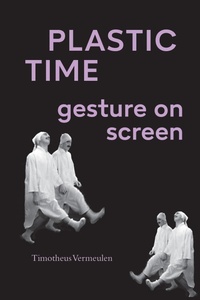
Plastic Time
Description

Challenges dominant approaches in screen studies by rethinking time not as a function of narrative or montage, but as something actively constructed through performance-through the expressions, gestures, and movements of bodies on screen.
Plastic Time radically rethinks how we experience time in screen media-not through plot or montage but through performance. The book explores how actors shape time through the movements and manipulations of their bodies: a quick glance, a recurrent shrug, an awkward embrace. Drawing on examples ranging from Duck Soup to This Is America and from Father Knows Best to Friday Night Lights, it shows how bodily gestures and facial expressions sculpt history and contemporaneity, age, rhythm, and tense. Combining media theory, philosophy, and performance studies, Plastic Time argues that performance doesn't merely represent time-it actively figures it, stretching here and contracting there, now folding together, then tearing apart. Time in film, TV, and video is not fixed but elastic, not given but constantly made and remade, molded anew; it is as plastic as the actors' bodies that enact it.
More details
Other editions
Additional editions
Person
Timotheus Vermeulen is Professor of Media, Culture, and Society at the University of Oslo. He has published widely on critical theory, aesthetics, and screen media. His previous books include ReFocus: The Films of Richard Linklater, coedited with Kim Wilkins, and Scenes from the Suburbs: The Suburb in Contemporary US Film and Television.
Content
List of Illustrations
Acknowledgments
Introduction: Plastic Time
1. The Gestural Sphere
2. History Against Historicization (This Is America)
3. Supercontemporaneity
4. Joints Out of Time: Toward a Performative Theory of Tragedy
5. The Plain Face
6. An Awkward Gesture
Afterword: Not a Gesture-Image
Notes
Bibliography
Screenography
Index
