

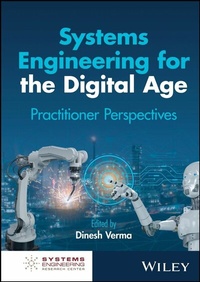
Systems Engineering for the Digital Age
Practitioner Perspectives
1st Edition
Published on 22. September 2023
896 pages
978-1-394-20329-1 (ISBN)
Description

Systems Engineering for the Digital Age
Comprehensive resource presenting methods, processes, and tools relating to the digital and model-based transformation from both technical and management views
Systems Engineering for the Digital Age: Practitioner Perspectives covers methods and tools that are made possible by the latest developments in computational modeling, descriptive modeling languages, semantic web technologies, and describes how they can be integrated into existing systems engineering practice, how best to manage their use, and how to help train and educate systems engineers of today and the future. This book explains how digital models can be leveraged for enhancing engineering trades, systems risk and maturity, and the design of safe, secure, and resilient systems, providing an update on the methods, processes, and tools to synthesize, analyze, and make decisions in management, mission engineering, and system of systems.
Composed of nine chapters, the book covers digital and model-based methods, digital engineering, agile systems engineering, improving system risk, and more, representing the latest insights from research in topics related to systems engineering for complicated and complex systems and system-of-systems. Based on validated research conducted via the Systems Engineering Research Center (SERC), this book provides the reader a set of pragmatic concepts, methods, models, methodologies, and tools to aid the development of digital engineering capability within their organization.
Systems Engineering for the Digital Age: Practitioner Perspectives includes information on:
* Fundamentals of digital engineering, graphical concept of operations, and mission and systems engineering methods
* Transforming systems engineering through integrating M&S and digital thread, and interactive model centric systems engineering
* The OODA loop of value creation, digital engineering measures, and model and data verification and validation
* Digital engineering testbed, transformation, and implications on decision making processes, and architecting tradespace analysis in a digital engineering environment
* Expedited systems engineering for rapid capability and learning, and agile systems engineering framework
Based on results and insights from a research center and providing highly comprehensive coverage of the subject, Systems Engineering for the Digital Age: Practitioner Perspectives is written specifically for practicing engineers, program managers, and enterprise leadership, along with graduate students in related programs of study.
Comprehensive resource presenting methods, processes, and tools relating to the digital and model-based transformation from both technical and management views
Systems Engineering for the Digital Age: Practitioner Perspectives covers methods and tools that are made possible by the latest developments in computational modeling, descriptive modeling languages, semantic web technologies, and describes how they can be integrated into existing systems engineering practice, how best to manage their use, and how to help train and educate systems engineers of today and the future. This book explains how digital models can be leveraged for enhancing engineering trades, systems risk and maturity, and the design of safe, secure, and resilient systems, providing an update on the methods, processes, and tools to synthesize, analyze, and make decisions in management, mission engineering, and system of systems.
Composed of nine chapters, the book covers digital and model-based methods, digital engineering, agile systems engineering, improving system risk, and more, representing the latest insights from research in topics related to systems engineering for complicated and complex systems and system-of-systems. Based on validated research conducted via the Systems Engineering Research Center (SERC), this book provides the reader a set of pragmatic concepts, methods, models, methodologies, and tools to aid the development of digital engineering capability within their organization.
Systems Engineering for the Digital Age: Practitioner Perspectives includes information on:
* Fundamentals of digital engineering, graphical concept of operations, and mission and systems engineering methods
* Transforming systems engineering through integrating M&S and digital thread, and interactive model centric systems engineering
* The OODA loop of value creation, digital engineering measures, and model and data verification and validation
* Digital engineering testbed, transformation, and implications on decision making processes, and architecting tradespace analysis in a digital engineering environment
* Expedited systems engineering for rapid capability and learning, and agile systems engineering framework
Based on results and insights from a research center and providing highly comprehensive coverage of the subject, Systems Engineering for the Digital Age: Practitioner Perspectives is written specifically for practicing engineers, program managers, and enterprise leadership, along with graduate students in related programs of study.
More details
Other editions
Additional editions
Book
09/2023
1st Edition
Wiley
€101.50
Shipment within 15-20 days
Person
Dinesh Verma is the Executive Director of the Systems Engineering Research Center (SERC), the first University Affiliated Research Center established by the DoD for Systems Engineering Research. He is also a Professor in Systems Engineering at Stevens Institute of Technology as well as the Scientific Advisor to the Director of the Embedded Systems Institute in Eindhoven, Holland. He is a Fellow of INCOSE and Senior Member of SOLE.
Content
- Cover
- Title Page
- Copyright Page
- Contents
- List of Contributors
- Foreword
- Preface
- Acknowledgment
- Acronyms
- About the Companion Website
- Part I Transforming Engineering Through Digital and Model-Based Methods
- Chapter 1 Fundamentals of Digital Engineering
- Background
- Surrogate Pilot Experiment Called Skyzer
- Problem
- New Approach
- Skyzer Pilot Context
- Results
- NAVAIR and Skyzer
- Interoperability and Integration Framework (IoIF)
- Related Chapters
- Chapter 2: Mission and Systems Engineering Methods
- Chapter 3: Transforming Systems Engineering Through Integrating M&S and Digital Thread
- Chapter 4: Digital Engineering Visualization Technologies and Techniques
- Chapter 5: Interactive Model-Centric Systems Engineering
- Future Work
- Notes
- References
- Biographical Sketches
- Chapter 2 Mission and Systems Engineering Methods
- Problem
- Background
- New Approach
- Skyzer Surrogate Pilot Experiment
- OpenMBEE, DocGen, and View Editor
- NAVSEM
- Model Management and Modularization
- Digital Signoff
- How to Create Digital Signoffs
- Multidisciplinary Design Analysis and Optimization (MDAO)
- Collaborative Management of Research Projects in SysML
- Ontologies
- Results
- Application of DE Metrics to Skyzer Pilot Lessons Learned
- Future Work
- Notes
- References
- Biographical Sketches
- Chapter 3 Transforming Systems Engineering Through Integrating Modeling and Simulation and the Digital Thread
- Introduction
- Background and Motivating Use Case
- Integration Methodology
- Digital Engineering Framework for Integration and Interoperability
- Reasoning and Rules
- Assessment Flow Diagram
- Interoperability and Integration Framework
- Discussion
- Conclusion
- Future Expansion
- Final Thoughts
- Notes
- References
- Biographical Sketches
- Chapter 4 Digital Engineering Visualization Technologies and Techniques
- Problem
- Background
- Operational Concepts
- Gaming Engines
- Early Research into Graphical CONOPs
- IoIF Ontology-Based Decision Framework
- New Approach
- Semantic DE Environment with Digital Thread Visualizations
- Impact Analysis
- Composing the Visualization
- Passing Results Back to IoIF
- Decision Support Dashboard
- Results
- Workflows
- IoIF-Enabled Dashboards
- Graphical CONOPs
- Eliciting Requirements Using Graphical CONOPs
- Future Work
- References
- Biographical Sketches
- Chapter 5 Interactive Model-Centric Systems Engineering
- Introduction
- Background
- Motivation
- Selected Highlights of IMCSE Research
- Model-Centric Decision-Making and Trust
- Multi-Stakeholder Negotiation Through Models
- Model Choice and Trade-off
- Model Curation
- Summary
- Note
- References
- Biographical Sketches
- Part II Executing Digital Engineering
- Chapter 6 Systems Engineering Transformation Through Digital Engineering
- Systems Engineering Transformation
- Systems Trends
- Transformation of Systems Engineering
- Systems Engineering Gap Analysis
- Systems Engineering Framework
- Value, Project, and Environment Attributes
- Attribute Impact
- Summary of Gap and Opportunity Areas
- Transformation Through Digital Engineering
- Foundation of Digitalization
- New Paradigm for Systems Engineering
- Innovation Objectives and Philosophy
- Digital Transformation Concept
- Digital Capabilities
- Epilogue
- The End State
- The Old Model
- The Challenge
- Critical Insights
- The Change
- Conclusion
- References
- Biographical Sketches
- Chapter 7 Measuring Systems Engineering Progress Using Digital Engineering
- Motivation
- The Benefits of DE
- Realizing the Benefits
- Measuring DE Activities
- DE/MBSE Should Reduce Errors and Cycle Time
- DE/MBSE Will Improve Functional Completeness and Correctness
- Model-Based Review Artifacts Will Improve Efficiency
- Reduced Cost Is a Lagging Indicator
- Causal Analysis of DE/MBSE Benefits and Adoption Approaches
- Linking to Systems Engineering Metrics
- Summary
- Note
- References
- Biographical Sketches
- Chapter 8 Digital Engineering Implications on Decision-Making Processes
- Introduction
- Define Problem
- Relevant Background
- New Approaches to Decision Process
- Augmenting the Decision Process with Digital Technology
- Technical Improvements to Digital Twin
- Models of Decision-Making
- Conceptual System
- Future Work
- Acknowledgements
- References
- Biographical Sketches
- Chapter 9 Expedited Systems Engineering for Rapid Capability
- Introduction
- Methodology
- Findings/Analysis
- Direct Responses for Organizational Best Practices (Group 1)
- Direct Observations for Rapid Best Practices (Group 2)
- Inferred Organizational Characteristics for "Go Fast" Cultural Best Practices (Group 3)
- Conclusions and Future Research
- References
- Biographical Sketches
- Chapter 10 Scaling Agile Principles to an Enterprise
- Introduction
- The Challenge
- Why Agile and Dev*Ops?
- Scaling Agile
- Agile and DevSecOps Review
- Challenges with Scaling Agile
- Internal Dependencies, External Dependencies, and the Need for Some Up-Front Engineering - Understanding the Complexity of the Enterprise
- Sprint Teams and Structure
- Minimum Viable Products (MVPs), Minimal Marketable Products (MMPs), Sprints, and Increments
- Recommendations
- No Single Approach Addresses All Systems
- Increment Planning
- Focus on MVP/MMPs
- Up-Front Requirements Decomposition and Initial Systems Engineering
- Tailoring of Tools
- Contract Incentives
- Near Operational Environments
- Scrum vs. Kanban
- Understand the Change Request Process
- Need for On-Boarding Training
- Get Licensing and IP Issues Resolved as Early as Possible
- Project Owner and Communicating with Other Teams
- Project Team Capacity Planning
- Working Groups
- Conclusion
- Acknowledgments
- References
- Biographical Sketches
- Chapter 11 System Behavior Specification Verification and Validation (V&V)
- Introduction
- Background
- Monterey Phoenix
- Emergent Behavior Analysis
- Search and Rescue Examples
- Select the Behavior Model to V&V
- Prepare Models for V&V
- Expand the Model with Alternative Flows
- Probe the Model for Emergent Behaviors
- Conclusions
- References
- Biographical Sketches
- Chapter 12 Digital Engineering Transformation: : A Case Study
- Case Study of Digital Engineering from Scratch: a DoD and JPEO Journey
- Understanding the Needs
- Tailoring Products for User's Needs
- State-of-the-Art in Digital Transformation and "Clash with Reality"
- Digital Engineering Transformation and Directives (DE for AM)
- Additive Manufacturing - Technical Analysis: Additive Manufacturing (AM) vs. Traditional Manufacturing (TM)
- Additive Manufacturing - Management/Other JPEO-Specific Considerations
- What Can DE Do for JPEO?
- What Does JPEO Need to Do to Prepare for DE in AM?
- Lessons Learned: How to Evaluate Digital Transformation
- The Path Forward
- Acknowledgments
- References
- Biographical Sketches
- Part III Tradespace Analysis in a Digital Engineering Ecosystem - Context and Implications
- Chapter 13 A Landscape of Trades: The Importance of Process, Ilities, and Practice
- Levels of Trades
- Defense Enterprise Levels of Concern
- System Design and Development Analytics
- Mission and Operational Effectiveness
- Common Challenges
- System Qualities: The Nonfunctional Requirements
- Ontology Foundations and Application
- Synergies, Conflicts, and Architecture Analysis
- Value and Affordability
- Mission and Operational Trades in Context
- Character of Mission and Operational Considerations
- Role of M&S in Operational Tradespace Data Creation and Analysis
- Future Systems: New Methods of Design, Evaluation, and Relation to Trades
- Discussion and Conclusion
- References
- Biographical Sketches
- Chapter 14 Architecting a Tradespace Analysis Framework in a Digital Engineering Environment
- Introduction
- The Hierarchy of Meaning
- Elements of a Digital Engineering Tradespace Analysis Framework
- Considerations in the Design
- Questions to Be Answered
- Measures of Success
- Users
- Demonstrate Value Then Build in Robustness
- Analytical Workflow with DETAF
- Workflow Assumptions
- Workflow Overview
- Lesson Learned
- What Has Led to a Successful DETAF
- Software Scoping
- Trade Between Model Fidelity and Cost
- Key Takeaways
- Stakeholder Involvement
- Iteration
- Outcomes
- References
- Biographical Sketches
- Chapter 15 Set-Based Design: Foundations for Practice
- What Is Set-Based Design?
- The Set-Based Design Difference
- When to Use Set-Based Design
- Knowledge Development
- Relation to Development Phase
- Stakeholder Preferences and Requirements Assessment
- Increasing Knowledge Through Testing
- Design Alternative Analysis Methods and Metrics
- Stakeholder Preferences and Valuation
- Selecting Alternatives on the Basis of Value and Relation to Pareto Optimality
- Evaluation Based on Risk and Resilience within the SBD Process
- Conclusion and Discussion
- References
- Biographical Sketches
- Chapter 16 Exploiting Formal Modeling in Resilient System Design: Key Concepts, Current Practice, and Innovative Approach
- Introduction
- Problem Statement and Enabling Methods
- Disruptions, Rare Events, and High-Impact Rare Events
- Design by Contract
- Markov Process
- Actions, Rewards, and Policies
- State-of-the-Practice
- Resilience Metamodels
- Post-Disruption Recovery Models
- Dynamic Flow Models
- Resilience-Related Machine Learning
- Best Practice Approach
- Illustrative Example
- Chapter Summary
- Note
- References
- Biographical Sketches
- Chapter 17 Augmented Intelligence: A Human Productivity and Performance Amplifier in Systems Engineering and Engineered Human-Machine Systems
- Introduction
- AugI in Systems Engineering
- AugI in Engineered Systems
- Separating Misperceptions of AI from Actual Pros and Cons
- Offload Humans in Mundane Tasks
- Faster Decisions and Actions
- Derive Insights from Machine Learning (ML)
- Error-Free Processing
- Hazardous Task Performance
- Outcome Prediction
- Exemplar Uses of AugI
- Augmented Intelligence in Systems Engineering
- Architectural Implications of AugI
- Conceptual Framework for Developing AugI Systems
- Augmented Intelligence in Operational Decision-Making
- Data Fusion
- Data Enrichment
- Search and Analysis
- Augmented Intelligence in System Development and System Operation
- Concluding Remarks
- References
- Biographical Sketches
- Part IV Evaluating and Improving System Risk
- Chapter 18 Complexity and Risk in Systems Engineering
- Prelude
- Complexity
- Complexity and Emergence
- Phase Transition and Tipping Points in Complex Systems
- Complexity and Risk
- Roots of Uncertainty
- Complexity-Risk Relationship
- Engineered Systems and Risk
- Risk and Organized Complexity
- Risk and Disorganized Complexity
- Complexity Assessment and Modeling in SE
- Shannon Complexity Metric
- Cyclomatic Complexity Metric
- Free Energy Density Rate Metric of Complexity
- Propagation Cost and Clustered Cost Metrics
- Spectral Structural Complexity Metric
- Graph Energy Metric
- Dynamic Complexity Measurement Framework
- Requirement-Induced Complexity Measure
- Spectral Structural Complexity Metrics
- Risk and Complexity in the SE Life Cycle: Discussions
- References
- Chapter 19 Technical Debt in the Engineering of Complex Systems
- Introduction
- What Is Technical Debt?
- Adapting TD to the Engineering of Complex Systems
- Managing Your TD
- Conclusion
- References
- Biographical Sketches
- Chapter 20 Risk and System Maturity: TRLs and SRLs in Risk Management
- System Maturity
- Maturity and Metrics
- System Maturity Metrics
- Technology Readiness Level (TRL)
- Integration Readiness Level (IRL)
- System Readiness Level (SRL)
- System Maturity Assessment
- SRL Calculation
- Example of SRL Calculation
- Interpreting the Results as a System Readiness Assessment (SRA)
- Systems Architecture and SRL
- References
- Biographical Sketches
- Chapter 21 Managing Risk
- Introduction
- Agile-Based Risk
- Project Development Risk
- Technical Risk
- Obsolescence Risk
- Managing Risk
- System Design
- Design to Reduce Integration and Testing Risk
- Digital Engineering
- Do Not Forget the Contracting Details
- Waterfall vs. Agile
- Anticipating and Reacting to Risk
- Summary
- References
- Biographical Sketches
- Part V Model-Based Design of Safety, Security, and Resilience Systems
- Chapter 22 Concepts of Trust and Resilience in Cyber-Physical Systems
- Trust and Resilience in Cyber-Physical Systems
- Background and Introduction
- Chapter 23 Introduction to STPA-Sec
- System Theoretic Process Analysis for Security (STPA-Sec)
- Introduction and Background
- Chain-of-Events Accident Causality Models
- Techniques Based on Chain-of-Events Model
- The Need for a Different Accident Model and a New Approach
- STAMP
- STPA
- STPA-Sec
- Outcome of the STPA-Sec Process
- Possible Future Directions and Existing Extensions
- References
- Biographical Sketches
- Chapter 24 The "Mission Aware" Concept for Design of Cyber-Resilience
- Mission Aware Concept for Cyber Resilience
- Resilience Mechanisms
- Mission Aware MBSE Meta-Model
- Summary
- References
- Biographical Sketches
- Chapter 25 The "FOREST" Concept and Meta-Model for Lifecycle Evaluation of Resilience
- The Framework for Operational Resilience in Engineering and System Test (FOREST)
- Introduction and Background
- FOREST
- Requirements Specification Using FOREST
- FOREST Requirement Templates
- Summary
- References
- Biographical Sketches
- Chapter 26 The Cyber Security Requirements Methodology and Meta-Model for Design of Cyber-Resilience
- Introduction and Background
- Cyber Security Requirements Methodology Overview
- CSRM Steps and Application
- CSRM with the Framework for Operational Resilience in Engineering and System Test
- Mission Aware MBSE Meta-Model
- References
- Biographical Sketches
- Chapter 27 Implementation Example: Silverfish
- Implementation Example: Silverfish
- Introduction and Background
- Concept of Operations (CONOPS)
- Requirements, Architecture, and Preliminary Design
- Conclusion
- References
- Biographical Sketches
- Part VI Analytic Methods for Design and Analysis of Missions and Systems-of-Systems
- Chapter 28 Unique Challenges in System of Systems Analysis, Architecting, and Engineering
- What Are "Systems of Systems" and What Makes Them Different from Other Systems?
- Why Should We Care? Because SoS Are Increasingly Ubiquitous
- What Are the Implications of SoS Characteristics on SoS Analysis and Architecting?
- Management and Oversight
- Operational Focus and Goals
- Implementation
- Engineering and Design Considerations
- What Does This Mean in Terms of Persistent SoS Challenges?
- How Are SoS Challenged by Complexity?
- Mission Engineering Illustrates SoS Challenges
- What Can We Conclude About the Unique Challenges.?
- References
- Biographical Sketches
- Chapter 29 System of Systems Analytic Workbench
- Genesis and Description of the Analytic Workbench
- SERC and DoD Needs
- Rationale for Choices
- Initial Tools in the Analytic Workbench
- Story of Success: How We Helped Users and Learned from Users
- Initial Implementation and Naval Warfare Scenario
- NanoHub GUI
- Inclusion in Academic Curriculum
- Further Applications of the Analytic Workbench
- Moon and Mars Exploration Architectures: Propulsion and Habitat Studies for NASA
- Cryogenic Fluid Management and Technology Prioritization
- Use of the Analytic Workbench in the Context of Artificial Intelligence
- Multi-domain Battle Scenario and Development of the Decision Support Framework
- Continuous Development
- Continuous Improvement of AWB Tools, Inclusion of External Tools, and New Graphic User Interfaces (GUIs)
- Future of the Analytic Workbench
- Conclusions
- References
- Biographical Sketches
- Chapter 30 Computational Intelligence Approach to SoS Architecting and Analysis
- Introduction to SoS Architecting and Analysis
- System of System Challenges
- Overview of the FILA-SoS Model Approach
- Meta-Architecture Generation
- Membership Functions
- Nonlinear Trades in Multiple Objectives of SoS
- Combining SoS Attribute Values into an Overall SoS Measure
- Exploring the SoS Architecture Space with Genetic Algorithms Combining the Fuzzy Approach with the GA Approach
- Combining the Fuzzy Approach with the GA Approach
- Use Cases and Applications
- Healthcare Use Case Introduction
- Methodology
- Workshops and Interviews with Stakeholders
- Key Performance Attributes
- Systems of Systems Explorer
- Membership Functions and Fuzzy Assessor
- Rules
- Results
- Conclusion and Future Work
- A Use Case of FILA-SoS in Cybersecurity
- Introduction
- Approach
- Results
- Cybersecurity Use Case Conclusion
- Conclusion
- More Use Cases in Published Papers and Resources of Meta-Architecting
- References
- Biographical Sketches
- Chapter 31 Unique Challenges in Mission Engineering and Technology Integration
- Introduction
- Mission Engineering and Technology Integration
- The Challenge
- Enterprise Systems
- Traditional System Development Methods and Their Challenges
- Technology Integration Challenges
- Model Based Systems Engineering (MBSE)
- Integration and Testing
- Recommendations
- The Agile/DevSecOps Approach
- Additional Recommendations
- Conclusion
- References
- Biographical Sketches
- Chapter 32 Reference Architecture: An Integration and Interoperability-Driven Framework
- Definition of a Reference Architecture
- Why Is an Architecture Useful?
- What Is a Reference Architecture?
- Scope and Objectives of a Reference Architecture
- Scope and Objective
- High-Level Requirements
- Developing a Reference Architecture
- Application of Reference Architecture
- Report Structure
- References
- Biographical Sketches
- Chapter 33 Mission Engineering Competency Framework
- Introduction
- Mission Engineering Competency
- Exploring Mission Engineering Competencies
- The Mission Engineering Competency Framework (MECF)
- The Path to Mission Engineering
- Appendix A: MECF Detailed Competency Descriptions by Area
- Notes
- References
- Biographical Sketches
- Part VII Applying Systems Engineering to Enterprise Systems and Portfolio Management
- Chapter 34 Central Challenges in Modeling and Analyzing Enterprises as Systems
- Introduction
- Systems Modeling
- Emergent and Complex Phenomena
- Uncertainties and Control
- Access and Utilization of Information and Knowledge
- Information and Knowledge Requirements
- Information and Knowledge Support Systems
- Inductive Reasoning
- Misinformation and Disinformation
- Learning Organizations
- Planning and Design
- Optimization vs. Agility
- Measurement and Evaluation
- Summary
- References
- Biographical Sketches
- Chapter 35 Methods for Integrating Dynamic Requirements and Emerging Technologies
- Introduction
- Sources of Uncertainties
- Managing Uncertainties
- Representing Solutions
- Projecting Value
- Case Study: Driverless Cars for Disabled and Older Adults
- Background
- Investment Scenarios
- Multi-attribute Utility Model
- Expected Utilities vs. Weightings
- Discussion
- Overall Investment Strategy
- Discussion
- Conclusions
- References
- Biographical Sketches
- Chapter 36 Portfolio Management and Optimization for System of Systems
- Overview and Motivation
- Systems Engineering Process for Portfolio Management Problems
- Define the Problem and List Alternatives
- Develop the Evaluation Framework
- Complete the Framework
- Test the Framework
- Expanding to Optimization
- Portfolio Optimization and Analysis
- Portfolio Optimization Problems
- Potential Solutions Methods
- Application of an EA to a Mission Portfolio Optimization
- Combinatorial Design Space Analysis Tool
- Visual Analytics
- Relationships
- Notional Solution
- Visualizing Relationships
- Visualizing Portfolio Solutions
- Conclusions and Key Takeaways
- Reusable Tools
- Iterative Process
- Understand the Outputs
- References
- Biographical Sketches
- Chapter 37 Assessing Benefits of Modularity in Missions and System of Systems
- Introduction
- Benefits of Modularity
- Managing Complexity
- Parallelization of Development
- Hedge for Future Uncertainty
- Promote Economic Benefits
- Potential Drawbacks of Modularity
- Organizational Structure Mismatch
- Limits Innovation
- Duplicated Efforts and Subsystems
- Choice of Measure/Objectives
- Assessing Modularity Benefits in an SoS/Mission Context
- Step 1: Problem Space Definition and Knowledge Gathering
- Step 2: Tradespace Analysis and Explorations via DSF
- Step 3: Decision-Making for Modularity Benefits
- Example Application: Amphibious Warfare Scenario
- References
- Biographical Sketches
- Part VIII Systems Education and Competencies in the Age of Digital Engineering, Convergence, and AI
- Chapter 38 Using the Systems Engineering Body of Knowledge (SEBoK)
- Development of the SEBoK
- What's Included in the SEBoK?
- How Is the SEBoK Organized?
- How Can I Use the SEBoK?
- Jill - An Engineering Undergraduate
- Marcus - A New Systems Engineer
- Yu Gin - An Experienced Systems Engineer
- Sweta - A Chief Systems Engineer
- Carlo - An Organizational Manager
- Conclusions
- References
- Biographical Sketches
- Chapter 39 Understanding Critical Skills for Systems Engineers
- Understanding Critical Skills for Systems Engineers
- Choose Your Competency
- Existing Competency Models and Frameworks
- T- or Pi-Shaped professionals
- The Skills You Need
- Assess Your Competency
- Choose Your Path
- Experiences
- Mentoring/Coaching
- Training and Education
- Creating Your Path
- Notes
- References
- Competency Models
- T-Shaped Skills
- Additional Resources
- Biographical Sketches
- Chapter 40 Evolving University Programs on Systems Engineering
- Introduction
- Background
- University Programs
- University Program Structure
- Professional Societies
- Analysis of System Engineering Curricula
- Data Source
- Methods
- Results
- Discussion
- Evolving University Programs
- Digital and Model-Based Practice
- Artificial Intelligence and Machine Learning
- Data Science
- Human-Systems Integration
- Conclusion
- Note
- References
- Biographical Sketches
- Chapter 41 Evolving University Programs for the Other 95% of Engineers: A Capstone Marketplace
- Introduction to the Capstone Marketplace
- Current Activity
- How Do Capstone Projects Work?
- Starting A Capstone
- Proposal Evaluations
- Costs and Funding
- Executing a Capstone Project
- Getting Started
- System Engineering and Student Design
- Communications
- Pedagogy of SERC's Capstones
- Capstone Highlights
- Benefits and Challenges
- Future Directions: Get Involved
- Note
- References
- Biographical Sketches
- Index
- EULA
- ffirs
- ftoc
- fbetw
- fpref
- flast
