

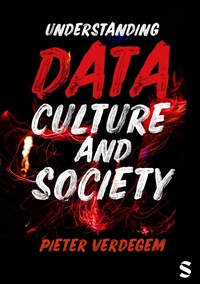
Understanding Data, Culture and Society
1st Edition
Published on 1. November 2024
256 pages
978-1-5297-0013-8 (ISBN)
Description

- How is data shaping our identities?
- What was the 'data revolution', and how did it happen?
- How will AI change our societies?
We live in the age of datafication: every aspect of our lives has been captured and transformed into data, from our sleeping patterns and step counts to our buying habits and political views. In this exciting new textbook, you will discover the intricate ways in which data and society are interwoven. Explaining key concepts such as 'big data' and putting theory into practice throughout, this book will make you a better expert in data and society, offering an interdisciplinary overview of a rapidly evolving field. This textbook tackles the implications of big data for democracy, identity and the global economy, showing how we cannot view our lives as separate from the technologies we have come to rely on. With learning objectives, case studies, further reading and extra resources provided in each chapter, this book is the ideal companion for students in the digital humanities and social sciences looking to deepen their understanding of data, culture and society.
- What was the 'data revolution', and how did it happen?
- How will AI change our societies?
We live in the age of datafication: every aspect of our lives has been captured and transformed into data, from our sleeping patterns and step counts to our buying habits and political views. In this exciting new textbook, you will discover the intricate ways in which data and society are interwoven. Explaining key concepts such as 'big data' and putting theory into practice throughout, this book will make you a better expert in data and society, offering an interdisciplinary overview of a rapidly evolving field. This textbook tackles the implications of big data for democracy, identity and the global economy, showing how we cannot view our lives as separate from the technologies we have come to rely on. With learning objectives, case studies, further reading and extra resources provided in each chapter, this book is the ideal companion for students in the digital humanities and social sciences looking to deepen their understanding of data, culture and society.
Reviews / Votes
How should we understand the relationship between data, culture and society? In this ambitious and comprehensive textbook, Pieter Verdegem provides an accessible entry-point into a set of complex debates on current digital developments. From capitalism to subjectivity, and from labour to justice, this is an invaluable book for any scholar wanting to understand the challenges of data infrastructures and what can be done about them. -- Lina Dencik Pieter Verdegem has written an accessible, enjoyable, and essential book. Anchored in political economy but in dialogue with neighboring disciplines, it makes a strong and provocative case for critically analyzing our everyday relations with data-driven technologies. It also illuminates recent debates on disinformation, mass surveillance, the rise of AI systems, and the gig economy. This book is a must-read for anyone interested in understanding-and challenging-the powerful actors shaping digital technology in our contemporary societies. -- Jean-Christophe Plantin Pieter Verdegem draws connections between concepts in technology, culture, and society with clarity and verve. Ranging from data journalism to data justice, campaigns to citizenship, this book covers all of the foundational knowledge that students need to think critically about and understand data and culture in today's world. -- Meredith Broussard Look no further if you need a critical and up-to-date survey of the theories, empirical analyses, and research methods developed in the burgeoning field of data and society. -- Alessandro Delfanti This is a rich and engaging overview of the ways data and technology are not merely computational artifacts but are deeply woven into the socio-cultural fabric. A useful resource for high-level undergraduate as well as graduate courses. -- Dr. Ryan BurnsMore details
Edition
1. Auflage
Language
English
Place of publication
London
United Kingdom
Publishing group
Sage Publications Ltd (Digital)
Target group
College/higher education
Product notice
Reflowable
File size
1,45 MB
ISBN-13
978-1-5297-0013-8 (9781529700138)
Copyright in bibliographic data and cover images is held by Nielsen Book Services Limited or by the publishers or by their respective licensors: all rights reserved.
Schweitzer Classification
Other editions
Additional editions
Pieter Verdegem
Understanding Data, Culture and Society
Book
11/2024
1st Edition
SAGE Publications Ltd
€71.30
Shipment within 15-20 days
Pieter Verdegem
Understanding Data, Culture and Society
Book
11/2024
1st Edition
SAGE Publications Ltd
€136.10
Shipment within 15-20 days
Person
Dr Pieter Verdegem is Reader in Technology and Society and a member of CAMRI (the Communication and Media Research Institute) at the University of Westminster. His research investigates the political economy of media and communication and the impact of digital technologies on society. He is a Senior Fellow of the Higher Education Academy (SFHEA) and teaches core undergraduate and postgraduate modules. He is the Course Leader of the interdisciplinary MA in Data, Culture and Society.
Content
PART 1. INTRODUCTION
CHAPTER 1. HOW TO STUDY DATA, CULTURE AND SOCIETY?
CHAPTER 2. DATA, ALGORITHMS AND SOCIETY
PART 2. STRUCTURES AND FOUNDATIONS
CHAPTER 3. CAPITALISM IN THE AGE OF DATA
CHAPTER 4. DATA, DEMOCRACY AND POLITICS
CHAPTER 5. DATA, IDENTITY AND SUBJECTIVITY
CHAPTER 6. DATA, MACHINE LEARNING AND AI
PART 3. APPLICATIONS AND CONTROVERSIES
CHAPTER 7. DATA, INDUSTRIES AND GLOBALISATION
CHAPTER 8. DATA, TECH AND INEQUALITIES
CHAPTER 9. DATA, JOURNALISM AND DISINFORMATION
CHAPTER 10. DATA, AUTOMATION AND WORK
PART 4. CONCLUSION
CHAPTER 11. DATA JUSTICE, ACTIVISM AND RESISTANCE
CHAPTER 1. HOW TO STUDY DATA, CULTURE AND SOCIETY?
CHAPTER 2. DATA, ALGORITHMS AND SOCIETY
PART 2. STRUCTURES AND FOUNDATIONS
CHAPTER 3. CAPITALISM IN THE AGE OF DATA
CHAPTER 4. DATA, DEMOCRACY AND POLITICS
CHAPTER 5. DATA, IDENTITY AND SUBJECTIVITY
CHAPTER 6. DATA, MACHINE LEARNING AND AI
PART 3. APPLICATIONS AND CONTROVERSIES
CHAPTER 7. DATA, INDUSTRIES AND GLOBALISATION
CHAPTER 8. DATA, TECH AND INEQUALITIES
CHAPTER 9. DATA, JOURNALISM AND DISINFORMATION
CHAPTER 10. DATA, AUTOMATION AND WORK
PART 4. CONCLUSION
CHAPTER 11. DATA JUSTICE, ACTIVISM AND RESISTANCE
