

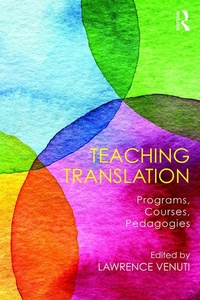
Teaching Translation
Programs, courses, pedagogies
Published on 5. August 2016
276 pages
978-1-317-22509-6 (ISBN)
Description

Over the past half century, translation studies has emerged decisively as an academic field around the world, and in recent years the number of academic institutions offering instruction in translation has risen along with an increased demand for translators, interpreters and translator trainers. Teaching Translation is the most comprehensive and theoretically informed overview of current translation teaching. Contributions from leading figures in translation studies are preceded by a substantial introduction by Lawrence Venuti, in which he presents a view of translation as the ultimate humanistic task - an interpretive act that varies the form, meaning, and effect of the source text. 26 incisive chapters are divided into four parts, covering:
certificate and degree programs
teaching translation practices
studying translation theory, history, and practice
surveys of translation pedagogies and key textbooks
The chapters describe long-standing programs and courses in the US, Canada, the UK, and Spain, and each one presents an exemplary model for teaching that can be replicated or adapted in other institutions. Each contributor responds to fundamental questions at the core of any translation course - for example, how is translation defined? What qualifies students for admission to the course? What impact does the institutional site have upon the course or pedagogy?
Teaching Translation will be relevant for all those working and teaching in the areas of translation and translation studies. Additional resources for Translation and Interpreting Studies are available on the Routledge Translation Studies Portal.
certificate and degree programs
teaching translation practices
studying translation theory, history, and practice
surveys of translation pedagogies and key textbooks
The chapters describe long-standing programs and courses in the US, Canada, the UK, and Spain, and each one presents an exemplary model for teaching that can be replicated or adapted in other institutions. Each contributor responds to fundamental questions at the core of any translation course - for example, how is translation defined? What qualifies students for admission to the course? What impact does the institutional site have upon the course or pedagogy?
Teaching Translation will be relevant for all those working and teaching in the areas of translation and translation studies. Additional resources for Translation and Interpreting Studies are available on the Routledge Translation Studies Portal.
Reviews / Votes
"Anyone interested in the teaching of translation-from experienced scholars andadministrators to graduate students to professional translators-will find much to
learn from in this collection. The research takes up current debates in writing that
is accessible to non-specialists. Faculty who want to integrate translation into their
teaching would do well to start here." Michael Gibbs Hill, College of William and Mary, USA
"The premise is very interesting: the less standardized methods found in the US leave
room for more innovative and humanistic approaches to teaching translation. This
is amply borne out by the detailed accounts of programmes and courses that this
volume contains. And while they map the state of the art in a single country, they
also demonstrate the more general importance of translation to the arts and human
sciences." Chris Rundle, University of Bologna, Italy
More details
Language
English
Place of publication
London
United Kingdom
Publishing group
Taylor & Francis Ltd
Target group
College/higher education
Product notice
Reflowable
File size
1,62 MB
ISBN-13
978-1-317-22509-6 (9781317225096)
Copyright in bibliographic data and cover images is held by Nielsen Book Services Limited or by the publishers or by their respective licensors: all rights reserved.
Schweitzer Classification
Other editions
Additional editions
Book
08/2016
1st Edition
Routledge
€207.90
Shipment within 10-20 days
Book
08/2016
1st Edition
Routledge
€63.50
Shipment within 10-20 days
Person
Lawrence Venuti, Professor Emeritus of English at Temple University, USA, is a translation theorist and historian as well as a translator from Italian, French, and Catalan. He is the author of The Translator's Invisibility (Translation Classics edition, 2018), The Scandals of Translation (1998), and Translation Changes Everything (2013) as well as the editor of Teaching Translation: Programs, Courses, Pedagogies (2017), all published by Routledge.
Content
Acknowledgements v
Notes on Contributors vii
Introduction: Translation, Interpretation, and the Humanities 1
Lawrence Venuti
Part I. Certificate and Degree Programs
Chapter 1. An Undergraduate Certificate in Translation Studies 27
Ben Van Wyke
Chapter 2. A Graduate Certificate in Translation Studies 41
Bill Johnston and Paul Losensky
Chapter 3. An MA in Translation 53
Francoise Massardier-Kenney
Chapter 4. An MFA in Literary Translation 66
Roger Sedarat
Chapter 5. A Doctoral Program in Translation Studies 78
Luise von Flotow
Part II. Teaching Translation Practices
Chapter 6. Teaching Translation to Foreign-Language Majors 90
Michael D. Hubert
Chapter 7. Teaching Translation through Text Types 104
Brian James Baer
Chapter 8. A Collaborative Pedagogy for Translation 118
Maria Gonzalez-Davies
Chapter 9. Teaching the Translation of Poetry 132
Reginald Gibbons
Chapter 10. A Multilingual Workshop in Poetry and Prose Translation 146
Peter Filkins
Chapter 11. Teaching Theater Translation 159
David Johnston
Chapter 12. Teaching Audiovisual Translation 172
Markus Nornes
Chapter 13. Translating a Canonical Author: C.P. Cavafy 186
Karen Van Dyck
Chapter 14. Translating a Literary Tradition: Modern Arabic Literature 198
Michelle Hartman
Part III. Studying Translation Theory, History, and Practice
Chapter 15. Translation Theory in a Translator Training Program 211
Anne Malena and Lynn Penrod
Chapter 16. Translation Theory in a Comparative Literature Department 224
Jane O. Newman
Chapter 17. Interdisciplinary Humanities: An Introduction through Translation 237
Sean Cotter
Chapter 18. Teaching Literature in Translation 250
Karen Emmerich
Chapter 19. Translation and World Literature: The One Thousand and One Nights 262
Sevinc Tuerkkan
Chapter 20. World-Wide Translation: Language, Culture, Technology 275
Ignacio Infante
Chapter 21. (Post)Colonial Translation 288
Shaden M. Tageldin
Chapter 22. Mirrored Texts: Bilingual Authorship and Translation 301
Jan Walsh Hokenson
Chapter 23. Folklore in Translation 314
Lee Haring
Chapter 24. Translation in the Human Sciences 325
Joshua Price
Part IV. Resources
Chapter 25. A Survey of Translation Pedagogies 337
Sonia Colina and Lawrence Venuti
Chapter 26. A Review of Textbooks in Translation Studies 360
Sarah Maitland
Bibliography 378
Index 426
Notes on Contributors vii
Introduction: Translation, Interpretation, and the Humanities 1
Lawrence Venuti
Part I. Certificate and Degree Programs
Chapter 1. An Undergraduate Certificate in Translation Studies 27
Ben Van Wyke
Chapter 2. A Graduate Certificate in Translation Studies 41
Bill Johnston and Paul Losensky
Chapter 3. An MA in Translation 53
Francoise Massardier-Kenney
Chapter 4. An MFA in Literary Translation 66
Roger Sedarat
Chapter 5. A Doctoral Program in Translation Studies 78
Luise von Flotow
Part II. Teaching Translation Practices
Chapter 6. Teaching Translation to Foreign-Language Majors 90
Michael D. Hubert
Chapter 7. Teaching Translation through Text Types 104
Brian James Baer
Chapter 8. A Collaborative Pedagogy for Translation 118
Maria Gonzalez-Davies
Chapter 9. Teaching the Translation of Poetry 132
Reginald Gibbons
Chapter 10. A Multilingual Workshop in Poetry and Prose Translation 146
Peter Filkins
Chapter 11. Teaching Theater Translation 159
David Johnston
Chapter 12. Teaching Audiovisual Translation 172
Markus Nornes
Chapter 13. Translating a Canonical Author: C.P. Cavafy 186
Karen Van Dyck
Chapter 14. Translating a Literary Tradition: Modern Arabic Literature 198
Michelle Hartman
Part III. Studying Translation Theory, History, and Practice
Chapter 15. Translation Theory in a Translator Training Program 211
Anne Malena and Lynn Penrod
Chapter 16. Translation Theory in a Comparative Literature Department 224
Jane O. Newman
Chapter 17. Interdisciplinary Humanities: An Introduction through Translation 237
Sean Cotter
Chapter 18. Teaching Literature in Translation 250
Karen Emmerich
Chapter 19. Translation and World Literature: The One Thousand and One Nights 262
Sevinc Tuerkkan
Chapter 20. World-Wide Translation: Language, Culture, Technology 275
Ignacio Infante
Chapter 21. (Post)Colonial Translation 288
Shaden M. Tageldin
Chapter 22. Mirrored Texts: Bilingual Authorship and Translation 301
Jan Walsh Hokenson
Chapter 23. Folklore in Translation 314
Lee Haring
Chapter 24. Translation in the Human Sciences 325
Joshua Price
Part IV. Resources
Chapter 25. A Survey of Translation Pedagogies 337
Sonia Colina and Lawrence Venuti
Chapter 26. A Review of Textbooks in Translation Studies 360
Sarah Maitland
Bibliography 378
Index 426
