

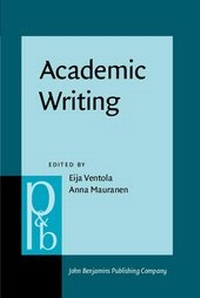
Academic Writing
Intercultural and textual issues
1st Edition
Published on 15. March 1996
XIV, 258 pages
978-90-272-8565-2 (ISBN)
Description

Writing is crucial to the academic world. It is the main mode of communication among scientists and scholars and also a means for students for obtaining their degrees. The papers in this volume highlight the intercultural, generic and textual complexities of academic writing. Comparisons are made between various traditions of academic writing in different cultures and contexts and the studies combine linguistic analyses with analyses of the social settings in which academic writing takes place and is acquired. The common denominator for the papers is writing in English and attention is given to native-English writers' and non-native writers' problems in different disciplines. The articles in the book introduce a variety of methodological approaches for analyses and search for better teaching methods and ways of improving the syllabi of writing curricula. The book as a whole illustrates how linguists strive for new research methods and practical applications in applied linguistics.
More details
Other editions
Additional editions
Book
03/1996
John Benjamins Publishing Co
€116.60
Shipment within 10-15 days
Persons
Content
- ACADEMIC WRITING INTERCULTURAL AND TEXTUAL ISSUES
- Editorial page
- Title page
- Copyright page
- Table of contents
- Preface
- Acknowledgements
- I. CONTEXT AND GENRE
- Strategic Vagueness in Academic Writing
- Abstract
- 1. Introduction
- 2. Patents, specificity, and innovation
- 3. Discovery and co-discovery
- 4. Implications
- Notes
- References
- Three Hypothetical Strategies in Philosophical Writing
- Abstract
- 1. Prologue
- Introduction
- 2. Tales
- 3. Twin-Earth fantasies
- 4. Imaginary conversations
- 5. Utilitarian explanations
- 6. Deeper explanations
- 7. Conclusion
- Notes
- Source texts
- References
- Occluded Genres in the Academy: The Case of the Submission Letter
- Abstract
- 1. Introduction
- 3. Analysis and results
- 4. Conclusions
- 5. Postscript
- References
- Academic Writing in Computer Science: A Comparison of Genres
- Abstract
- 1. Introduction
- 2. Background to the study
- 3. Writing in Computer Science
- 4. The First-Year Assignment
- 5. The final-year project
- 6. Network facilities and the newsgroup
- 6.1. Newsgroup interaction
- 6.2. Contributions to newsgroups: format and style
- 7. Conclusion
- Note
- Sources of Data (in addition to extracts from assignments)
- References
- Appendix 1
- Appendix 2
- The Hidden Curriculum of Technology for Academic Writing Toward a Research Agenda
- Abstract
- 1. Introduction: The problem
- 2. Backgrounds I: Needs analysis
- 2.1. Research processes
- 2.2. Writing processes
- 2.3. Notions of coherence
- 2.4. Notions of grounding
- 2.5. Sub-total: Academic writing as a form of reflection
- 3. Backgrounds II: Intellectual histories
- 3.1. The history of word processing
- 3.2. The history of idea processing
- 3.3. The history of hypertext
- 4. Empirical findings
- 5. Issues for research
- 6. Summary
- Note
- References
- II. CULTURE AND TEXTUALITY
- Look in thy Heart and Write" Students' Representations of Writing and Learning to Write in a Foreign Language
- Abstract
- 1. Introduction: 'representations'
- 2. Methodology for the investigation of representations
- 3. Categories for the description of learners' representations of writing and learning to write
- 3.1. Representations of the writing process
- 3.2. Representations of the speech-writing relationship
- 3.3. Representations of the relationship between writing and personal identity
- 3.4. Representations of different text-types and genres
- 3.5. Representations of the relationship between 'grammar' and writing
- 3.6. Representations of learning-to-write
- 3.7. Representations concerning the sociolinguistic status of writing in English
- 3.8. Representations of characteristics which are regarded as L2-specific
- 4. Why investigate learners' representations?
- 5. Pedagogical implications
- Notes
- References
- Academic Writing in Czech and English
- Abstract
- 1. Introduction
- 2. Speech community and discourse community
- 3. Discourse community and the language-and-culture problem
- 4. Reception of norms of a discourse community
- 5. Czech and English writing cultures
- 5.1. Writing in theoretical linguistics
- 5.2. Applied linguistics and pedagogical disciplines
- 5.3. Academic writing against the background of stylistics
- 5.4. Historical circumstances
- 5.5. Cultural inclinations
- 6. English research articles written by Czech scholars
- 7. Adigression
- 8. Conclusion
- References
- Packing and Unpacking of Information in Academic Texts
- Abstract
- 1. Introduction
- 2. Lexical denseness in texts
- 3. FL-writers' 'academic style' and lexical denseness
- 3.1. Lexical denseness: an example of a diffused text
- 3.2. Lexical denseness: an example of a dense text
- 3.3. Lexical denseness and readers 'judgements
- 4. Manipulating information in texts: packing and unpacking grammatical metaphors
- 4.1. Packing of information: simple, congruent coding
- 4. 2. Packing of information: complex, congruent coding
- 4. 3. Packing of information: incongruent, metaphorical coding
- 4. 4. Unpacking of information
- 5. Conclusion
- Notes
- References
- APPENDIX 1.
- Discourse Competence - Evidence from Thematic Development in Native and Non-native Texts
- Abstract
- 1. Introduction
- 2. Materials
- 3. Problems in L2 theme use and its description
- 3.1. Theme in a sentence
- 3.2. Theme in a passage
- 3.3. Theme and rheme in a passage
- 3.4. Variants of theme
- 4. Assumptions about thematic progression
- 4.1. Background
- 4.2. Hypotheses about thematic progression
- 5. Results
- 5.1. Breaking the patterns
- 6. Summary and conclusions
- References
- Learning Discipline-Specific Academic Writing: A Case Study of a Finnish Graduate Student in the United States
- Abstract
- 1. Overview
- 2. The Study
- 2.1. Overview
- 2.2. Research questions
- 2.3. The setting
- 2.4. The student
- 2.5. Method
- 2.6. Data analysis
- 2.7. Summary of findings
- 3. Conclusion
- References
- Appendix A
- Appendix B
- Appendix C
- Appendix D
- Name Index
- Subject Index
- The series Pragmatics & Beyond New Series
