

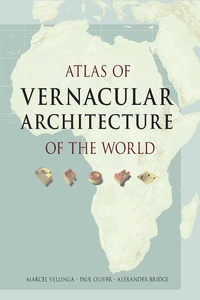
Atlas of Vernacular Architecture of the World
1st Edition
Published on 1. November 2024
180 pages
978-1-040-28659-3 (ISBN)
Description

The first world atlas ever compiled on vernacular architecture, this comprehensive work illustrates the variety and ingenuity of the world's vernacular building traditions from a multi-disciplinary, cross-cultural and comparative approach, using over sixty world and regional maps.
Mapping such diverse aspects as materials and resources, technologies, structural systems, symbolism, forms and service systems on a cross-cultural and comparative basis, the Atlas of Vernacular Architecture of the World reveals the distribution, diversity and relationships of the world's vernacular building traditions. Indicating geographical patterns, developments, lacunae and anomalies, it gives rise to new insights and understandings, stimulating new hypotheses, questions and research efforts.
Augmenting the award-winning Encyclopedia of Vernacular Architecture of the World, the Atlas of Vernacular Architecture of the World constitutes a unique and unparalleled resource for anyone involved in the growing field of vernacular architecture studies, including architects, geographers, art historians, planners, folklorists, conservationists, builders, and anthropologists as well as being of use to all those working in the fields of heritage conservation, architecture, regeneration, energy efficient building, resources management, development and sustainability.
Mapping such diverse aspects as materials and resources, technologies, structural systems, symbolism, forms and service systems on a cross-cultural and comparative basis, the Atlas of Vernacular Architecture of the World reveals the distribution, diversity and relationships of the world's vernacular building traditions. Indicating geographical patterns, developments, lacunae and anomalies, it gives rise to new insights and understandings, stimulating new hypotheses, questions and research efforts.
Augmenting the award-winning Encyclopedia of Vernacular Architecture of the World, the Atlas of Vernacular Architecture of the World constitutes a unique and unparalleled resource for anyone involved in the growing field of vernacular architecture studies, including architects, geographers, art historians, planners, folklorists, conservationists, builders, and anthropologists as well as being of use to all those working in the fields of heritage conservation, architecture, regeneration, energy efficient building, resources management, development and sustainability.
Reviews / Votes
'This is an invaluable guide to the global scatter of folk architectural traditions that shape today's most bracing sustainable designs.' - The Christian Science Monitor'The book comprises two parts and is beautifully illustrated and logically set out.' - Reference Reviews
'The AVAW is an enthralling read, even if your knowledge of the subject is limited.'- Reference Reviews
'Considering the subject matter and the lack of original research in this field, the book is good value...'- Reference Reviews 'The AVAW is an enthralling read, even if your knowledge of the subject is limited' - Reference Reviews
"A wonderful addition to the interdisciplinary field of vernacular architecture studies... [it] effectively brings to light interesting relationships and geographic patterns while highlighting gaps in our knowledge and generating new potential questions worth investigation within the field." - Spacing Vancouver
More details
Edition
1. Auflage
Language
English
Place of publication
London
United Kingdom
Publishing group
Taylor & Francis Ltd
Target group
College/higher education
ISBN-13
978-1-040-28659-3 (9781040286593)
Copyright in bibliographic data and cover images is held by Nielsen Book Services Limited or by the publishers or by their respective licensors: all rights reserved.
Schweitzer Classification
Other editions
Additional editions
Marcel Vellinga | Paul Oliver | Alexander Bridge
Atlas of Vernacular Architecture of the World
Book
01/2008
1st Edition
Routledge
€146.50
Shipment within 15-20 days
Persons
Marcel Vellinga is Director of the International Vernacular Architecture Unit at Oxford Brookes University. He is the author of Constituting Unity and Difference: Vernacular Architecture in a Minangkabau Village (2004) and co-editor of Vernacular Architecture in the 21st Century: Theory, Education and Practice. He has published various articles dealing with the anthropology of architecture, vernacular architecture and sustainable development.
Paul Oliver is a Visiting Professor at the International Vernacular Architecture Unit at Oxford Brookes University. He is the author of numerous books and articles on vernacular architecture, including, most recently, Built to Meet Needs: Cultural Issues in Vernacular Architecture (2006) and Dwellings: The Vernacular House World Wide (2003). He is the editor of the award-winning Encyclopedia of Vernacular Architecture of the World (1997).
Alexander Bridge is a cartographic designer and a graphic artist. Originally working purely in graphic design, he went on to qualify as a mountain leader where a fascination for maps was developed into a deep understanding. Upon completion of an honours degree in cartography, Alexander was presented with the award for outstanding performance by a student at higher level by the British Cartographic Society.
Paul Oliver is a Visiting Professor at the International Vernacular Architecture Unit at Oxford Brookes University. He is the author of numerous books and articles on vernacular architecture, including, most recently, Built to Meet Needs: Cultural Issues in Vernacular Architecture (2006) and Dwellings: The Vernacular House World Wide (2003). He is the editor of the award-winning Encyclopedia of Vernacular Architecture of the World (1997).
Alexander Bridge is a cartographic designer and a graphic artist. Originally working purely in graphic design, he went on to qualify as a mountain leader where a fascination for maps was developed into a deep understanding. Upon completion of an honours degree in cartography, Alexander was presented with the award for outstanding performance by a student at higher level by the British Cartographic Society.
Content
Introduction Part 1: Contexts 1. Nations 2. Topography 3. Water 4. Climate 5. Vegetation 6. Soils 7. Economy 8. Population 9. Language 10. Religion 11. Cultural Areas Part 2: Cultural and Material Aspects 12. Materials and Resources 13. Structural Systems and Technologies 14. Forms, Plans and Types 15. Services and Functions 16. Symbolism and Decoration 17. Development and Sustainability
