

The Complete Photo Guide to Perfect Fitting
Published on 1. January 2012
128 pages
978-1-61058-177-6 (ISBN)
Description

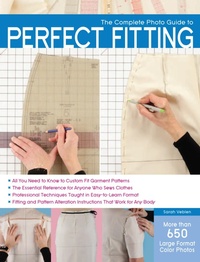
The Complete Photo Guide to Perfect Fitting is the ultimate reference for fitting test garments and transferring accurate adjustments to patterns.
No matter what size or shape you are, wearing garments that fit perfectly makes you look and feel better. Rather than making commonly accepted changes to a commercial pattern, the method presented in this guide focuses on the way a test garment fits the body. The fabric is manipulated to improve the fit, and then those specific changes are made to the pattern. The result: patterns that fit perfectly!
With The Complete Photo Guide to Perfect Fitting, you'll learn:
The importance of a fitting axis and how to use it during a fitting
How to recognize fitting issues, such as drag lines and folds
How to manipulate fabric to solve common and unusual fitting problems
How to transfer the fitting changes to your pattern easily
Basic pattern-making skills to ensure accurate alterations
See the fitting process from start to finish on basic garments, fitted on real people. Then follow fitting solutions on different body types. Hundreds of large color photos illustrate the techniques and concepts in simple step-by-step instructions. With these lessons, you will get the perfect fit for any body.
No matter what size or shape you are, wearing garments that fit perfectly makes you look and feel better. Rather than making commonly accepted changes to a commercial pattern, the method presented in this guide focuses on the way a test garment fits the body. The fabric is manipulated to improve the fit, and then those specific changes are made to the pattern. The result: patterns that fit perfectly!
With The Complete Photo Guide to Perfect Fitting, you'll learn:
The importance of a fitting axis and how to use it during a fitting
How to recognize fitting issues, such as drag lines and folds
How to manipulate fabric to solve common and unusual fitting problems
How to transfer the fitting changes to your pattern easily
Basic pattern-making skills to ensure accurate alterations
See the fitting process from start to finish on basic garments, fitted on real people. Then follow fitting solutions on different body types. Hundreds of large color photos illustrate the techniques and concepts in simple step-by-step instructions. With these lessons, you will get the perfect fit for any body.
More details
Series
Language
English
Place of publication
Beverly
United States
Publishing group
Quarto Publishing Group USA Inc
Illustrations
600 color photos
ISBN-13
978-1-61058-177-6 (9781610581776)
Copyright in bibliographic data and cover images is held by Nielsen Book Services Limited or by the publishers or by their respective licensors: all rights reserved.
Schweitzer Classification
Other editions
Additional editions
Sarah Veblen
The Complete Photo Guide to Perfect Fitting
Book
01/2012
Creative Publishing International, US
€24.00
Shipment within 3-4 weeks
Person
Sarah Veblen is a custom fashion designer who focuses on creating clothing for her clientele and on teaching and writing to promote the craft of garment-making. For more than 25 years, Sarah has been designing and making clothing for her private clientele, specializing in fit, innovative pattern design, and quality construction. Her focus is on helping women create a wardrobe that is comfortable and compatible with their lifestyle. Dedicated to promoting sewing at all levels, Sarah enjoys immersing herself into her students' learning process. She teaches in her studio and other classroom venues, as well as online through PatternReview.com. She is also a frequent guest lecturer and regularly holds workshops for sewing groups and organizations across the country.
Sarah has authored many articles and publications on sewing and design, including her books First Time Garment Fitting and The Complete Photo Guide to Perfect Fitting and writes her own blog. She has also made a series of instructional fitting DVDs, produced by Threads magazine, on skirt and bodice fitting and on making stylistic changes to a pattern. Sarah has a Certificate in Fashion Design from Baltimore City Community College and a BA from Stanford University. She is an active member of both the Association of Sewing and Design Professionals (ASDP) and the American Sewing Guild (ASG). She lives in Phoenix, Maryland. See more of her work at sarahveblen.com.
Sarah has authored many articles and publications on sewing and design, including her books First Time Garment Fitting and The Complete Photo Guide to Perfect Fitting and writes her own blog. She has also made a series of instructional fitting DVDs, produced by Threads magazine, on skirt and bodice fitting and on making stylistic changes to a pattern. Sarah has a Certificate in Fashion Design from Baltimore City Community College and a BA from Stanford University. She is an active member of both the Association of Sewing and Design Professionals (ASDP) and the American Sewing Guild (ASG). She lives in Phoenix, Maryland. See more of her work at sarahveblen.com.
Content
- Intro
- Title Page
- Contents
- Introduction
- Laying the Foundation
- Developing a Solid Approach to Fitting
- Why Fitting is Complicated
- Each Individual is Unique
- Pattern and Fitting Basics
- How Patterns are Developed
- Finding your way Around a Pattern
- Garment Silhouettes and Ease
- Choosing a Pattern Size
- Tools for Pattern Work and Fitting
- The Interrelationship Between Patterns and Fitting
- Overview of the Fitting Process
- Recognizing Fitting Issues
- A Framework for Fitting
- The Fitting Axis
- The Horizontal Balance Line
- Fundamentals of Fitting Muslins
- Learning to Look
- The Body as "Volume"
- Fitting Others and Yourself
- What to Wear for a Fitting
- Preparing the Test Muslin for a Fitting
- Clipping and Marking During a Fitting
- Pinning
- Keeping the Muslin Balanced
- Fitting Order
- Fitting Tips
- Assessing the Fit
- Fundamentals of Altering Patterns
- Glossary of Patternmaking Terms
- Making Flat Pattern Adjustments
- Transferring Muslin Markings to the Pattern
- Blending Seams, Using the Rulers, and Adding Seam Allowances
- Lengthening and Shortening Patterns, and Grainline Arrows
- Walking and Truing a Pattern
- Placing and Creating Notches
- Controlling Patterns with Built-in Ease
- Truing Difficult Seams
- Moving the Placement of a Seam
- Moving a Dart to a New Location
- Truing Dart Legs
- Scaling Patterns Up and Down
- Working in an Efficient Order
- Developing your Ability
- The Process of Fitting Garments
- Skirt
- Bodice with Darts
- Bodice with Shoulder Princess Line
- Jacket with Side Panel with Set-in Sleeve
- Tunic with Armscye Princess Line
- Bodice with Raglan Sleeve
- Fitting Solutions for Body Types and Related Pattern Alterations
- Bust
- Back
- Sides
- Shoulder Line and Neck
- Set-in Sleeves
- Raglan Sleeves
- Waist and Hips
- Fitting Pants
- Understanding Body Mass and Pants Volume
- Fine-tuning the Fit
- The Process of Fitting Pants
- Body Type Examples
- Typical Pants Pattern Alterations
- Going to the Next Level
- Correcting Pattern Elements Affected by Fitting Changes
- Waistbands
- Facings
- Collars
- Linings
- Get Creative
- Using Style Lines to Create Pleasing Proportions
- Dart Equivalents
- Collar Variations
- Cuffs and Sleeve Hems
- About the Author
- Index
- Dedication
- Acknowledgments
- Copyright
