

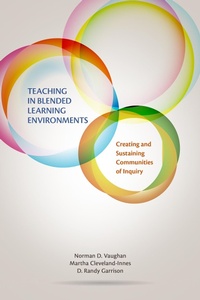
Teaching in Blended Learning Environments
Description

Teaching in Blended Leaning Environments provides a coherent framework in which to explore the transformative concept of blended learning. Blended learning can be defined as the organic integration of thoughtfully selected and complementary face-to-face and online approaches and technologies. A direct result of the transformative innovation of virtual communication and online learning communities, blended learning environments have created new ways for teachers and students to engage, interact, and collaborate. The authors argue that this new learning environment necessitates significant role adjustments for instructors and generates a need to understand the aspects of teaching presence required of deep and meaningful learning outcomes.
Built upon the theoretical framework of the Community of Inquiry - the premise that higher education is both a collaborative and individually constructivist learning experience - the authors present seven principles that provide a valuable set of tools for harnessing the opportunities for teaching and learning available through technology. Focusing on teaching practices related to the design, facilitation, direction and assessment of blended learning experiences, Teaching in Blended Learning Environments addresses the growing demand for improved teaching in higher education.
More details
Other editions
Additional editions
Person
Content
List of Tables
List of Figures
Preface
1. Conceptual Framework
2. Design
3. Facilitation
4. Direct Instruction
5. Assessment
6. Technology
7. Conclusion
Appendix / References / Index
