

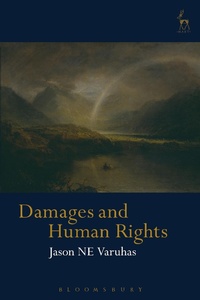
Damages and Human Rights
1st Edition
Published on 19. May 2016
552 pages
978-1-78225-280-1 (ISBN)
Description

Winner of the 2018 Inner Temple New Authors Book Prize and the 2016 SLS Peter Birks Prize for Outstanding Legal Scholarship.
Damages and Human Rights is a major work on awards of damages for violations of human rights that will be of compelling interest to practitioners, judges and academics alike. Damages for breaches of human rights is emerging as an important and practically significant field of law, yet the rules and principles governing such awards and their theoretical foundations remain underexplored, while courts continue to struggle to articulate a coherent law of human rights damages. The book's focus is English law, but it draws heavily on comparative material from a range of common law jurisdictions, as well as the jurisprudence of international courts.
The current law on when damages can be obtained and how they are assessed is set out in detail and analysed comprehensively. The theoretical foundations of human rights damages are examined with a view to enhancing our understanding of the remedy and resolving the currently troubled state of human rights damages jurisprudence. The book argues that in awarding damages in human rights cases the courts should adopt a vindicatory approach, modelled on those rules and principles applied in tort cases when basic rights are violated. Other approaches are considered in detail, including the current 'mirror' approach which ties the domestic approach to damages to the European Court of Human Rights' approach to monetary compensation; an interest-balancing approach where the damages are dependent on a judicial balancing of individual and public interests; and approaches drawn from the law of state liability in EU law and United States constitutional law.
The analysis has important implications for our understanding of fundamental issues including the interrelationship between public law and private law, the theoretical and conceptual foundations of human rights law and the law of torts, the nature and functions of the damages remedy, the connection between rights and remedies, the intersection of domestic and international law, and the impact of damages liability on public funds and public administration.
The book was the winner of the 2016 SLS Peter Birks Prize for Outstanding Legal Scholarship and the 2018 Inner Temple New Authors Book Prize.
Damages and Human Rights is a major work on awards of damages for violations of human rights that will be of compelling interest to practitioners, judges and academics alike. Damages for breaches of human rights is emerging as an important and practically significant field of law, yet the rules and principles governing such awards and their theoretical foundations remain underexplored, while courts continue to struggle to articulate a coherent law of human rights damages. The book's focus is English law, but it draws heavily on comparative material from a range of common law jurisdictions, as well as the jurisprudence of international courts.
The current law on when damages can be obtained and how they are assessed is set out in detail and analysed comprehensively. The theoretical foundations of human rights damages are examined with a view to enhancing our understanding of the remedy and resolving the currently troubled state of human rights damages jurisprudence. The book argues that in awarding damages in human rights cases the courts should adopt a vindicatory approach, modelled on those rules and principles applied in tort cases when basic rights are violated. Other approaches are considered in detail, including the current 'mirror' approach which ties the domestic approach to damages to the European Court of Human Rights' approach to monetary compensation; an interest-balancing approach where the damages are dependent on a judicial balancing of individual and public interests; and approaches drawn from the law of state liability in EU law and United States constitutional law.
The analysis has important implications for our understanding of fundamental issues including the interrelationship between public law and private law, the theoretical and conceptual foundations of human rights law and the law of torts, the nature and functions of the damages remedy, the connection between rights and remedies, the intersection of domestic and international law, and the impact of damages liability on public funds and public administration.
The book was the winner of the 2016 SLS Peter Birks Prize for Outstanding Legal Scholarship and the 2018 Inner Temple New Authors Book Prize.
More details
Edition
1. Auflage
Language
English
Place of publication
London
United Kingdom
Publishing group
Bloomsbury Publishing PLC
Target group
Professional and scholarly
College/higher education
ISBN-13
978-1-78225-280-1 (9781782252801)
Copyright in bibliographic data and cover images is held by Nielsen Book Services Limited or by the publishers or by their respective licensors: all rights reserved.
Schweitzer Classification
Other editions
Additional editions
Jason NE Varuhas
Damages and Human Rights
Book
11/2018
Hart Publishing
€112.84
Shipment within 15-20 days
Book
05/2016
1st Edition
Hart Publishing
€207.98
Shipment within 15-20 days
Person
Jason NE Varuhas is a Professor of Law at the University of Melbourne. He is also an Associate Fellow of the University of Cambridge Centre for Public Law. He was formerly Senior Lecturer, University of New South Wales, Junior Research Fellow, Christ's College and Affiliated Lecturer, Faculty of Law, University of Cambridge. He has published widely in the fields of public law, tort law and remedies, and his work has been cited by courts in the UK, Australia and New Zealand. His book Damages and Human Rights (Hart 2016) was awarded the 2016 UK Society of Legal Scholars Peter Birks Prize for Outstanding Legal Scholarship and the 2018 Inner Temple New Authors Book Prize.
Content
1. Introduction
Part 1: A Tort-Based Approach to Damages for Human Rights Breaches
2. The Tort Framework
3. A Tort-Based Approach to Human Rights Damages
Part 2: Human Rights Damages and the Public Law - Private Law Distinction
4. The Public Law - Private Law Distinction
SECTION 1. THE PUBLIC LAW - PRIVATE LAW DISTINCTION AS A TOOL FOR LEGAL DEVELOPMENT
SECTION 2. THE PUBLIC LAW - PRIVATE LAW DISTINCTION AND HUMAN RIGHTS DAMAGES
Part 3: Alternative Approaches to Damages for Human Rights Breaches
5. Human Rights Damages and 'Just Satisfaction' :
SECTION 1. THE TERMS OF THE HRA
SECTION 2. THE SUPRANATIONAL DIMENSION
SECTION 3. THE METHODOLOGY OF THE MIRROR APPROACH
SECTION 4. THE FUTURE OF THE MIRROR APPROACH POST- FAULKNER
SECTION 5. OVERVIEW
6. Interest-Balancing Approaches
SECTION 1: DOCTRINAL ANALYSIS OF THE INTEREST-BALANCING APPROACH
SECTION 2: NORMATIVE ANALYSIS OF THE INTEREST-BALANCING APPROACH
SECTION 3. CONCLUSIONS
7. Other Methods of Limiting Human Rights Damages
8. Conclusion
Part 1: A Tort-Based Approach to Damages for Human Rights Breaches
2. The Tort Framework
3. A Tort-Based Approach to Human Rights Damages
Part 2: Human Rights Damages and the Public Law - Private Law Distinction
4. The Public Law - Private Law Distinction
SECTION 1. THE PUBLIC LAW - PRIVATE LAW DISTINCTION AS A TOOL FOR LEGAL DEVELOPMENT
SECTION 2. THE PUBLIC LAW - PRIVATE LAW DISTINCTION AND HUMAN RIGHTS DAMAGES
Part 3: Alternative Approaches to Damages for Human Rights Breaches
5. Human Rights Damages and 'Just Satisfaction' :
SECTION 1. THE TERMS OF THE HRA
SECTION 2. THE SUPRANATIONAL DIMENSION
SECTION 3. THE METHODOLOGY OF THE MIRROR APPROACH
SECTION 4. THE FUTURE OF THE MIRROR APPROACH POST- FAULKNER
SECTION 5. OVERVIEW
6. Interest-Balancing Approaches
SECTION 1: DOCTRINAL ANALYSIS OF THE INTEREST-BALANCING APPROACH
SECTION 2: NORMATIVE ANALYSIS OF THE INTEREST-BALANCING APPROACH
SECTION 3. CONCLUSIONS
7. Other Methods of Limiting Human Rights Damages
8. Conclusion
