

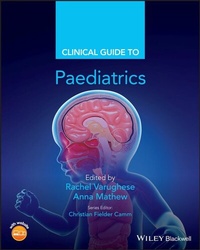
Clinical Guide to Paediatrics
Description

Clinical Guide to Paediatrics enables rapid reference to the common paediatric conditions, symptoms, and practical concerns seen in day-to-day practice. Focused on making differential diagnoses in acute settings, this comprehensive resource offers step-by-step guidance on clinical decision-making, investigations, and interventions. Junior doctors and medical students are provided with a clear and up-to-date evidence base supported by numerous diagnostic algorithms, diagrams, tables and bullet points throughout.
Organised into systems-based sections, the guide covers paediatric history taking, examination techniques, pharmacology, safeguarding, and a range of different diagnoses for presenting complaints in cardiology, infection and immunology, neurology, gastroenterology, accidents, poisoning, and more. Succinct chapters are logically structured to allow easy access to important concepts, key clinical details, and plans of investigation. Designed to complement the doctor-patient interaction in clinical practice, this valuable guide:
- Covers the most common presenting complaints encountered in acute paediatrics
- Provides evidence-based information on symptoms, disorders, and issues faced in paediatric medicine
- Addresses topics from the perspective of presenting complaints to provide a unique, highly practical approach to the subject
- Includes access to a companion website containing images and clinical photos, audio podcasts, clinical case studies, and self-assessment exercises
Clinical Guide to Paediatrics is essential reading for junior doctors, medical students, nurses and specialist trainees working on paediatric wards or emergency departments.
More details
Other editions
Additional editions
Persons
Rachel Varughese, Specialist Registrar in Paediatrics, Oxford University Hospitals NHS Foundation Trust, UK.
Anna Mathew, Consultant Paediatrician, Chair of MRCPCH Clinical Examinations, Western Sussex Hospitals NHS Foundation Trust, UK.
Series editor: Christian Fielder Camm is a Cardiology Specialist Registrar, Royal Berkshire Hospital, Reading, UK.
Content
List of Contributors vii
Acronyms and Abbreviations ix
About the Companion Website xiii
How to Use This Book xv
1.1 Wheeze 1
1.2 Stridor 15
1.3 Difficulty in Breathing 27
2.1 Cyanosis 37
2.2 Circulatory Collapse 53
2.3 Syncope 67
2.4 Chest Pain 79
2.5 Palpitations 93
3.1 Fever 107
3.2 Fever in the Returning Traveller 131
3.3 Lymphadenopathy 151
4.1 Bruising 165
4.2 Pallor 181
5.1 Abdominal Pain 203
5.2 Abdominal Mass 221
5.3 Vomiting 239
5.4 Diarrhoea 253
5.5 Jaundice 265
5.6 Faltering Growth 279
6.1 Haematuria 293
6.2 Oedema 303
6.3 Scrotal Swelling 317
7.1 Hypoglycaemia 329
7.2 Hyperglycaemia 343
8.1 Headache 353
8.2 Suspected Seizures 371
8.3 Acute Hemiparesis 387
8.4 Acute Lower-Limb Weakness 403
8.5 Delirium and Agitation 415
8.6 Decreased Level of Consciousness 427
8.7 Dizziness 441
9.1 Urticaria 451
9.2 Non-blanching Rash 461
9.3 Other Childhood Rashes 473
10.1 Limp 489
10.2 Swollen Joint 503
11.1 Neonatal Jaundice 513
11.2 The Unsettled Baby 527
11.3 Breastfeeding Advice 537
12.1 The A to E Assessment 543
12.2 Assessment of Consciousness 549
12.3 Tips for Fluid Prescribing 551
12.4 Childhood Immunisations 557
12.5 Safeguarding 561
13.1 Sepsis Management 569
13.2 Anaphylaxis Management 571
13.3 Acute Asthma Management 575
13.4 Prolonged Seizure Management 577
13.5 Raised Intracranial Pressure Management 579
Guidelines 581
Index 591
