

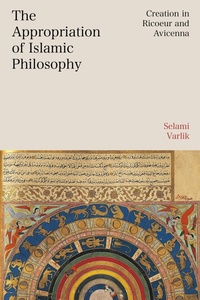
The Appropriation of Islamic Philosophy
Creation in Ricoeur and Avicenna
1st Edition
Published on 22. January 2026
248 pages
978-1-350-57053-5 (ISBN)
Description

Phenomenology and philosophical hermeneutics are deepening their dialogue with ancient and medieval metaphysics. Yet Islamic philosophy - typically relegated to a distant past - remains strikingly absent despite its recognized impact on European thought.
To counter this absence, The Appropriation of Islamic Philosophy revitalizes the work of Avicenna - the seminal Islamic thinker - for contemporary philosophy, making a case for a Ricoeurian hermeneutics of appropriation.
Selami Varlik brings Avicenna into dialogue with Ricoeur through their shared concern with putting belief in tension with rational discourse. The notion of creation, common to both Islam and Christianity, plays a pivotal role in this convergence - particularly through Avicenna's distinction between ontological creation and temporal creation.
By establishing a shared conceptual language between both traditions, this work makes a vital contribution to the development of a living Islamic philosophy, transcending the scope of the two thinkers examined here.
To counter this absence, The Appropriation of Islamic Philosophy revitalizes the work of Avicenna - the seminal Islamic thinker - for contemporary philosophy, making a case for a Ricoeurian hermeneutics of appropriation.
Selami Varlik brings Avicenna into dialogue with Ricoeur through their shared concern with putting belief in tension with rational discourse. The notion of creation, common to both Islam and Christianity, plays a pivotal role in this convergence - particularly through Avicenna's distinction between ontological creation and temporal creation.
By establishing a shared conceptual language between both traditions, this work makes a vital contribution to the development of a living Islamic philosophy, transcending the scope of the two thinkers examined here.
More details
Series
Edition
1. Auflage
Language
English
Place of publication
London
United Kingdom
Publishing group
Bloomsbury Publishing PLC
Target group
College/higher education
ISBN-13
978-1-350-57053-5 (9781350570535)
Copyright in bibliographic data and cover images is held by Nielsen Book Services Limited or by the publishers or by their respective licensors: all rights reserved.
Schweitzer Classification
Other editions
Additional editions
Book
approx. 02/2026
Bloomsbury Academic
€119.80
Not yet published
Person
Selami Varlik is Associate Professor of Philosophy at Istanbul 29 Mayis University, Türkiye.
Content
Introduction
Part I: Necessity and Difficulties of Appropriation
A. Need for a Hermeneutical Approach
1. The Problem of Appropriation of Islamic Philosophy
2. Need for a Hermeneutics of Appropriation
B. Difficulties in the Appropriation Process
1. The Appropriation Process in Ricoeur
2. The Religious Obstacles
Part II: A Double Solution in Form and Content
A. Possibility of a Common Language
1. Proximity in Religious Belonging
2. Conceptual Distanciation in Common
B. Creation Ex Nihilo as a Shared Notion
1. Creation in Ricoeur
2. Creation in Avicenna
Part III: Appropriation as Innovation and Transformation
A. Creation and Semantic Innovation
1. Creation and Innovation in Avicenna
2. Innovation and Appropriation of Avicenna
B. Creation and Transformation of the Subject
1. Concomitance of the Cause and Ontological Indigence
2. Causality Against the Domination of the Subject
Conclusion
Bibliography
Index
Part I: Necessity and Difficulties of Appropriation
A. Need for a Hermeneutical Approach
1. The Problem of Appropriation of Islamic Philosophy
2. Need for a Hermeneutics of Appropriation
B. Difficulties in the Appropriation Process
1. The Appropriation Process in Ricoeur
2. The Religious Obstacles
Part II: A Double Solution in Form and Content
A. Possibility of a Common Language
1. Proximity in Religious Belonging
2. Conceptual Distanciation in Common
B. Creation Ex Nihilo as a Shared Notion
1. Creation in Ricoeur
2. Creation in Avicenna
Part III: Appropriation as Innovation and Transformation
A. Creation and Semantic Innovation
1. Creation and Innovation in Avicenna
2. Innovation and Appropriation of Avicenna
B. Creation and Transformation of the Subject
1. Concomitance of the Cause and Ontological Indigence
2. Causality Against the Domination of the Subject
Conclusion
Bibliography
Index
