

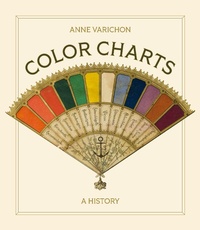
Color Charts
A History
1st Edition
Published on 6. February 2024
284 pages
978-0-691-25518-7 (ISBN)
Description

No detailed description available for "Color Charts".
More details
Other editions
Additional editions
Book
02/2024
Princeton University Press
€56.00
Shipment within 10-20 days
Persons
Anne Varichon is an anthropologist specializing in material cultures and ideas about color. She is the author of Colors: What They Mean and How to Make Them.
Content
- Cover
- Contents
- Introduction
- Grasping Color: Fifteenth to Seventeenth Centuries
- An Age-Old Interest in Color
- The Sample, a Tiny World
- In the Seventeenth Century, a Growing Range of Tools
- An Ideal System: Eighteenth Century to Mid-Nineteenth Century
- The Dyers' Drive to Innovate
- The Werner-Syme Nomenclature, a Color Chart for Understanding the World
- In the Early Nineteenth Century, Chemists Work with Textile Samples
- The Chaos of Synthetic Color: Mid- to Late Nineteenth Century
- Teaching Manuals in Chemistry Reflect the Transformation
- Continuing the Undertaking of Creating Order in the Sciences and the Arts
- A Revolution in Color: Late Nineteenth Century to World War I
- The Chemical Industry Uses the Color Chart to Promote the Dyeing of Raw Materials
- Silk Thread Dyers Orient Their Color Charts Toward Creativity
- The Retail Color Chart
- A Struggle with the Limitations of the Color Chart
- Bringing Color to the Masses: Between the World Wars
- The Color Charts of a Thriving Chemical Industry
- The Sewing and Fashion Industries: General Stability and a Few Innovations
- The Paint Color Chart Introduces Users to New Products, Customs, and Perceptions
- Fine Arts Color Charts Become Increasingly Decorative
- Cosmetics Color Charts Reflect an Artistic Approach to Reproductions
- Color Charts Appear Throughout the Household
- Jubilation of Color: 1950s-1980s
- The Color Chart in the Chemical Industry of the Trente Glorieuses
- Color Charts for Clothing That Became More Colorful
- In Interior Design, Color Charts for Increasingly Varied Applications
- Color Charts for Artists' Supplies: Teaching and Distancing
- Cosmetics Color Charts Evoke Enthusiasm
- The Color Chart: Multitude, Icon, Idol, 1990s to the Present
- Ordinary and Extraordinary Color Charts
- A Wide Range of Choices
- In the 2000s, the Color Chart Moves from Icon to Idol
- Color Charts and Artists
- Elegy or Epilogue?
- Notes
- Glossary
- Bibliography
- Credits
- Acknowledgments
