

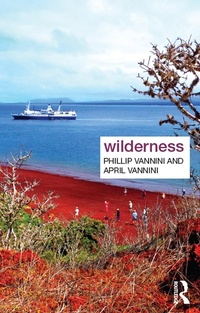
Wilderness
Published on 14. April 2016
252 pages
978-1-317-56828-5 (ISBN)
Description

Wilderness provides a multidisciplinary introduction into the diverse ways in which we make sense of wilderness: how we conceptualise it, experience it, interact with, and imagine it. Drawing upon key theorists, philosophers, and researchers who have contributed important knowledge to the topic, this title argues for a relational and process based notion of the term and understands it as a keystone for the examination of issues from conservation to more-than-human relations.
The text is organized around themed chapters discussing the concept of wilderness and its place in the social imagination, wilderness regulation and management, access, travel and tourism, representation in media and arts, and the use of wilderness for education, exploration, play, and therapy, as well as its parcelling out in parks, reserves, or remote "wastelands". The book maps out the historical transformation of the idea of wilderness, highlighting its intersections with notions of nature and wildness and teasing out the implications of these links for theoretical debate. It offers boxes that showcase important recent case studies ranging from the development of adventure travel and eco-tourism to the practice of trekking to the changing role of technology use in the wild. Summaries of key points, further readings, Internet-based resources, short videos, and discussion questions allow readers to grasp the importance of wilderness to wider social, cultural, political, economic, historical and everyday processes.
Wilderness is designed for courses and modules on the subject at both postgraduate and undergraduate levels. The book will also assist professional geographers, sociologists, anthropologists, environmental and cultural studies scholars to engage with recent and important literature on this elusive concept.
The text is organized around themed chapters discussing the concept of wilderness and its place in the social imagination, wilderness regulation and management, access, travel and tourism, representation in media and arts, and the use of wilderness for education, exploration, play, and therapy, as well as its parcelling out in parks, reserves, or remote "wastelands". The book maps out the historical transformation of the idea of wilderness, highlighting its intersections with notions of nature and wildness and teasing out the implications of these links for theoretical debate. It offers boxes that showcase important recent case studies ranging from the development of adventure travel and eco-tourism to the practice of trekking to the changing role of technology use in the wild. Summaries of key points, further readings, Internet-based resources, short videos, and discussion questions allow readers to grasp the importance of wilderness to wider social, cultural, political, economic, historical and everyday processes.
Wilderness is designed for courses and modules on the subject at both postgraduate and undergraduate levels. The book will also assist professional geographers, sociologists, anthropologists, environmental and cultural studies scholars to engage with recent and important literature on this elusive concept.
Reviews / Votes
"Phillip and April Vannini have written one of the better contemporary books on wilderness philosophy that I have seen. This book ranks as one of my favorite books on wilderness. The authors had my attention from the first page through to the last. Wilderness is ideal as a text in wilderness oriented courses. My students have consistently struggled with wilderness as a concept versus wilderness as a designated place that is protected from modern human encroachment. The authors make an excellent case by articulating the dilemma that we humans struggle with globally in wilderness management, wild lands protection, and defining what wilderness is. I highly recommend this book whether for a college course, for members of conservation organizations, or simply to better understand the concept of wilderness. It is superb!"Professor Ken Gilbertson, University of Minnesota Duluth, USA
'This is an excellent summary of the key ideas surrounding wilderness, presented in a very lucid manner. It should be essential reading for those who seek to understand how the controversial idea of wilderness has been studied within geography and allied disciplines.'
Dr George Holmes, School of Earth and Environment, University of Leeds, UK
More details
Series
Language
English
Place of publication
London
United Kingdom
Publishing group
Taylor & Francis Ltd
Target group
College/higher education
Illustrations
7 s/w Abbildungen, 4 s/w Tabellen, 7 s/w Photographien bzw. Rasterbilder
4 Tables, black and white; 7 Halftones, black and white; 7 Illustrations, black and white
File size
7,90 MB
ISBN-13
978-1-317-56828-5 (9781317568285)
Copyright in bibliographic data and cover images is held by Nielsen Book Services Limited or by the publishers or by their respective licensors: all rights reserved.
Schweitzer Classification
Other editions
Additional editions
Phillip Vannini | April Vannini
Wilderness
Book
04/2016
1st Edition
Routledge
€231.40
Shipment within 10-20 days
Phillip Vannini | April Vannini
Wilderness
Book
04/2016
1st Edition
Routledge
€78.10
Shipment within 10-20 days
Persons
Phillip Vannini is Canada Research Chair in Innovative Learning and Public Ethnography and a Professor in the School of Communication & Culture at Royal Roads University in Victoria, BC, Canada.
April Vannini received her PhD from the European Graduate School in Media and Communication and teaches at Royal Roads University in Victoria, BC, Canada in the School of Communication and Culture as an Associate Faculty member.
April Vannini received her PhD from the European Graduate School in Media and Communication and teaches at Royal Roads University in Victoria, BC, Canada in the School of Communication and Culture as an Associate Faculty member.
Content
1. Introduction 2. Thinking through wilderness 3. Representing wilderness 4. Experiencing and practicing wilderness 5. Conserving and managing wilderness 6. Utilizing and exploiting wilderness 7. Re-assembling wilderness References Index
