

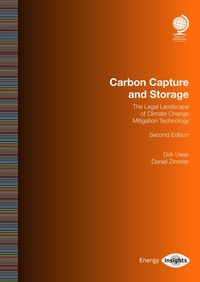
Carbon Capture and Storage
The Legal Landscape of Climate Change and Mitigation Technology, Second Edition
2nd Edition
Published on 18. March 2024
119 pages
978-1-83723-019-8 (ISBN)
Description

Carbon capture and storage (CCS) is a quickly evolving next generation technology which mitigates climate change by capturing and storing carbon dioxide (CO2) before it is released into the atmosphere. CCS technology reduces carbon emissions so plays an essential role in meeting global and regional temperature targets. This Special Report explores the most recent regulatory, political and economic trends and themes arising from CCS technologies and projects.
In its second edition, this Special Report provides a general update on these key features of the technical, political and regulatory aspects of CCS technologies by:
Focusing on recent changes to the regulatory frameworks for CCS in the European Union and Germany, but also on the international level;
Assessing the impact of emission trading systems on the economic viability of CCS technologies;
Providing an overview on recent public funding programmes for creating a market for CCS technologies; and
Exploring various recent CCS projects and national strategies in implementing CCS technologies.
Pilot CCS projects are successfully proliferating and this Special Report provides the regulatory and political insights to succeed in the rapidly changing CCS market. It will be an invaluable resource for in-house counsel, senior managers, engineers, consultants, researchers and policy makers with an interest in the energy sector and CCS technologies and projects.
In its second edition, this Special Report provides a general update on these key features of the technical, political and regulatory aspects of CCS technologies by:
Focusing on recent changes to the regulatory frameworks for CCS in the European Union and Germany, but also on the international level;
Assessing the impact of emission trading systems on the economic viability of CCS technologies;
Providing an overview on recent public funding programmes for creating a market for CCS technologies; and
Exploring various recent CCS projects and national strategies in implementing CCS technologies.
Pilot CCS projects are successfully proliferating and this Special Report provides the regulatory and political insights to succeed in the rapidly changing CCS market. It will be an invaluable resource for in-house counsel, senior managers, engineers, consultants, researchers and policy makers with an interest in the energy sector and CCS technologies and projects.
More details
Other editions
Additional editions
Dirk Uwer | Daniel Zimmer
Carbon Capture and Storage
The Legal Landscape of Climate Change and Mitigation Technology, Second Edition
Book
03/2024
2nd Edition
Globe Law and Business Ltd
€129.50
Shipment within 3-4 weeks
Content
I. Introduction. 7
II. Terminology. 9
III. Technological aspects and challenges. 11
1. Separation and capture. 11
1.1 Pre-combustion. 11
1.2 Post-combustion. 12
1.3 Oxy-fuel. 12
1.4 Direct air capture. 13
2. Transport. 14
3. Storage.15
3.1 Saline aquifers. 15
3.2 Depleted oil and gas reservoirs. 15
3.3 Basalt formations. 16
3.4 Storage capacity. 16
3.5 Monitoring. 16
4. Usage.17
IV. Economic viability. 19
1. Economic costs. 19
1.1 Capture costs. 20
1.2 Transport and storage costs. 21
1.3 Emissions trading: the EU Emissions Trading System. 23
1.4 Carbon contracts for difference. 26
1.5 Looking beyond 'first-of-a-kind' costs. 27
2. Public funding. 28
3. CCS/CCU project financing and bankability. 32
4. CCS risk profile and insurability. 32
V. Networks and initiatives. 33
1. International level. 33
2. European level. 34
VI. CCS/CCU projects and national strategies. 37
1. Scandinavia. 38
1.1 Sleipner and Snøhvit Projects. 38
1.2 Longship Project. 39
1.3 Project NOR-GE. 39
1.4 Norcem Brevik. 39
1.5 Project Greensand. 39
2. United Kingdom. 40
2.1 East Coast Cluster. 40
2.2 Acorn Project. 42
2.3 Caledonia Clean Energy Project. 42
2.4 Viking CCS. 42
3. Netherlands. 43
3.1 Porthos Project. 44
3.2 Aramis/Delta Rhine Corridor. 44
4. Eastern Europe. 45
5. United States. 46
5.1 Petra Nova. 48
5.2 Illinois Industrial CCS Project. 49
6. Canada.49
6.1 Boundary Dam CCS. 51
6.2 Quest. 51
6.3 Polaris. 51
7. Middle East. 52
VII. Sources of law. 53
1. International law. 54
1.1 UNCLOS. 54
1.2 London Protocol. 57
1.3 OSPAR Convention. 63
2. EU law.65
2.1 EU Carbon Storage Directive. 65
2.2 Hydrogen strategy. 76
2.3 Sustainable carbon cycles. 77
2.4 Carbon removal certification. 79
2.5 Net-Zero Industry Act. 81
2.6 Other EU legislation. 84
2.7 Assessment of the EU regulatory framework. 87
3. National laws. 90
3.1 Implementation of EU law. 90
3.2 German law. 91
4. Standard setting. 98
VIII. Conclusion. 99
Notes. 102
About the authors. 116
About Globe Law and Business. 119
II. Terminology. 9
III. Technological aspects and challenges. 11
1. Separation and capture. 11
1.1 Pre-combustion. 11
1.2 Post-combustion. 12
1.3 Oxy-fuel. 12
1.4 Direct air capture. 13
2. Transport. 14
3. Storage.15
3.1 Saline aquifers. 15
3.2 Depleted oil and gas reservoirs. 15
3.3 Basalt formations. 16
3.4 Storage capacity. 16
3.5 Monitoring. 16
4. Usage.17
IV. Economic viability. 19
1. Economic costs. 19
1.1 Capture costs. 20
1.2 Transport and storage costs. 21
1.3 Emissions trading: the EU Emissions Trading System. 23
1.4 Carbon contracts for difference. 26
1.5 Looking beyond 'first-of-a-kind' costs. 27
2. Public funding. 28
3. CCS/CCU project financing and bankability. 32
4. CCS risk profile and insurability. 32
V. Networks and initiatives. 33
1. International level. 33
2. European level. 34
VI. CCS/CCU projects and national strategies. 37
1. Scandinavia. 38
1.1 Sleipner and Snøhvit Projects. 38
1.2 Longship Project. 39
1.3 Project NOR-GE. 39
1.4 Norcem Brevik. 39
1.5 Project Greensand. 39
2. United Kingdom. 40
2.1 East Coast Cluster. 40
2.2 Acorn Project. 42
2.3 Caledonia Clean Energy Project. 42
2.4 Viking CCS. 42
3. Netherlands. 43
3.1 Porthos Project. 44
3.2 Aramis/Delta Rhine Corridor. 44
4. Eastern Europe. 45
5. United States. 46
5.1 Petra Nova. 48
5.2 Illinois Industrial CCS Project. 49
6. Canada.49
6.1 Boundary Dam CCS. 51
6.2 Quest. 51
6.3 Polaris. 51
7. Middle East. 52
VII. Sources of law. 53
1. International law. 54
1.1 UNCLOS. 54
1.2 London Protocol. 57
1.3 OSPAR Convention. 63
2. EU law.65
2.1 EU Carbon Storage Directive. 65
2.2 Hydrogen strategy. 76
2.3 Sustainable carbon cycles. 77
2.4 Carbon removal certification. 79
2.5 Net-Zero Industry Act. 81
2.6 Other EU legislation. 84
2.7 Assessment of the EU regulatory framework. 87
3. National laws. 90
3.1 Implementation of EU law. 90
3.2 German law. 91
4. Standard setting. 98
VIII. Conclusion. 99
Notes. 102
About the authors. 116
About Globe Law and Business. 119
