


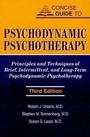
Concise Guide to Psychodynamic Psychotherapy
Description

Developing skills in psychodynamic psychotherapy and its techniques is a lifetime endeavor. The third edition of this volume from American Psychiatric Publishing's enduringly popular Concise Guides series serves as an excellent starting point for mastering these vital skills -- skills that can be applied to many other psychiatric treatment modalities, including other psychotherapies, medication management, consultation-liaison psychiatry, outpatient and emergency room assessment and evaluation, and inpatient treatment.
In a compact guide -- complete with glossary, indexes, tables, charts, and relevant references -- designed to fit into a lab coat pocket, the authors ¿ Provide the clinician with an updated introduction to the concepts and techniques of psychodynamic psychotherapy, describing their usefulness in other treatments. For example, psychodynamic listening and psychodynamic evaluation are best learned in the context of psychodynamic psychotherapy training but are applicable in many other psychiatric diagnostic and treatment methods.
¿ Convey the excitement and usefulness -- as well as the difficulties -- of psychodynamic psychotherapy and its techniques, including case examples.
¿ Show the efficacy and cost-effectiveness of psychotherapy in general, and of psychodynamic psychotherapy in particular -- issues of special importance in the evidence-based practice of medicine and mental health care.
¿ Explain the advantages -- and limitations -- of each form of psychodynamic psychotherapy: brief, long-term, and intermittent. For example, psychotherapists must be able to recognize patterns of interpersonal interaction without engaging in the "drama." Thus, they must learn to recognize and understand their own reactions as early indicators of events transpiring in the treatment and as potential roadblocks to a successful treatment.
Complementing more detailed, lengthier psychiatry texts, this volume's 15 densely informative chapters cover everything from basic principles to patient evaluation, resistance and defense, transference and countertransference, dreams, beginning and termination of treatment, management of practical problems, brief and supportive psychotherapy, and psychotherapy of borderline personality disorder and other severe character pathologies.
Mental health care professionals everywhere will turn to this practical guide again and again as an invaluable resource in creating and implementing effective treatment plans for their patients.
More details
Other editions
Additional editions
Persons
Content
About the AuthorsIntroduction to the Concise Guides SeriesPreface to the Third EditionChapter 1. Why Psychotherapy?Chapter 2. Basic PrinciplesChapter 3. Patient Evaluation, I: Assessment, Diagnosis, and the Prescription of PsychotherapyChapter 4. Patient Evaluation, II: Psychodynamic ListeningChapter 5. Patient Evaluation, III: Psychodynamic EvaluationChapter 6. Beginning TreatmentChapter 7. Resistance and DefenseChapter 8. TransferenceChapter 9. CountertransferenceChapter 10. DreamsChapter 11. TerminationChapter 12. Practical Problems and Their ManagementChapter 13. Brief PsychotherapyChapter 14. Psychotherapy for Borderline Personality Disorder and Other Severe Character PathologyChapter 15. Supportive PsychotherapyAppendix: A Brief History of Psychodynamic PsychotherapyGlossaryAuthor IndexSubject Index
