Mapping My Way Home
Description

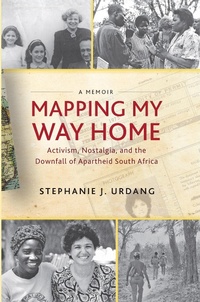
Stephanie Urdang was born in Cape Town, South Africa, into a white, Jewish family staunchly opposed to the apartheid regime. In 1967, at the age of twenty-three, no longer able to tolerate the grotesque iniquities and oppression of apartheid, she chose exile and emigrated to the United States. There she embraced feminism, met anti-apartheid and solidarity movement activists, and encountered a particularly American brand of racial injustice. Urdang also met African revolutionaries such as Amilcar Cabral, who would influence her return to Africa and her subsequent journalism. In 1974, she trekked through the liberation zones of Guinea-Bissau during its war of independence; in the 1980's, she returned repeatedly to Mozambique and saw how South Africa was fomenting a civil war aimed to destroy the newly independent country. From the vantage point of her activism in the United States, and from her travels in Africa, Urdang tracked and wrote about the slow, inexorable demise of apartheid that led to South Africa's first democratic elections, when she could finally return home. Urdang's memoir maps out her quest for the meaning of home and for the lived reality of revolution with empathy, courage, and a keen eye for historical and geographic detail. This is a personal narrative, beautifully told, of a journey traveled by an indefatigable exile who, while yearning for home, continued to question where, as a citizen of both South Africa and the United States, she belongs. "My South Africa!” she writes, on her return in 1991, after the release of Nelson Mandela, "How could I have imagined for one instant that I could return to its beauty, and not its pain?”
More details
Other editions
Additional editions