

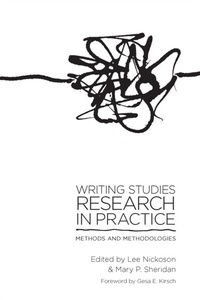
Writing Studies Research in Practice
Methods and Methodologies
1st Edition
Published on 10. September 2012
311 pages
978-0-8093-3115-4 (ISBN)
Description

An essential reference for students and scholars exploring the methods and methodologies of writing research. What does it mean to research writing today? What are the practical and theoretical issues researchers face when approaching writing as they do? What are the gains or limitations of applying particular methods, and what might researchers be overlooking? These questions and more are answered by the writing research field's leading scholars in Writing Studies Research in Practice: Methods and Methodologies. Editors Nickoson and Sheridan gather twenty chapters from leaders in writing research, spanning topics from ethical considerations for researchers, quantitative methods, and activity analysis to interviewing and communitybased and Internet research. While each chapter addresses a different subject, the volume as a whole covers the range of methodologies, technologies, and approaches-both old and new-that writing researchers use, and examines the ways in which contemporary writing research is understood, practiced, and represented. An essential reference for experienced researchers and an invaluable tool to help novices understand research methods and methodologies, Writing Studies Research in Practice includes established methods and knowledge while addressing the contemporary issues, interests, and concerns faced by writing researchers today.
More details
Other editions
Additional editions
Book
08/2012
Southern Illinois University Press
€62.09
Article not available at the moment
Content
- Cover
- Book Title
- Copyright
- Contents
- Foreword: New Methodological Challenges for Writing Studies Researchers by Gesa E. Kirsch
- Acknowledgments
- Introduction: Current Conversations on Writing Research by Mary P. Sheridan and Lee Nickoson
- Part One: Reimagining Traditional Research Practices
- 1. Narrative Turns in Writing Studies Research by Debra Journet
- 2. Reseeing and Redoing: Making Historical Research at the Turn of the Millennium by Liz Rohan
- 3. Exceeding the Bounds of the Interview: Feminism, Mediation, Narrative, and Conversations about Digital Literacy by Cynthia L. Selfe and Gail E. Hawisher
- 4. Analytic Strategies, Competent Inquiries, and Methodological Tensions in the Study of Writing by Christina Haas, Pamela Takayoshi, and Brandon Carr
- 5. A Complicated Geometry: Triangulating Feminism, Activism, and Technological Literacy by Kristine L. Blair
- 6. Making Ethnography Our Own: Why and How Writing Studies Must Redefine Core Research Practices by Mary P. Sheridan
- 7. Reclaiming the Mind: Eco-Cognitive Research in Writing Studies by Kristie Fleckenstein
- Part Two: Revisioning Research in Composition
- 8. Revisiting Teacher Research by Lee Nickoson
- 9. Autoethnography in the Study of Multilingual Writers by A. Suresh Canagarajah
- 10. Racial Methodologies for Composition Studies: Reflecting on Theories of Race in Writing Assessment Research by Asao B. Inoue
- 11. Writing Program Research: Three Analytic Axes by Douglas Hesse
- 12. Institutional Critique in Composition Studies: Methodological and Ethical Considerations for Researchers by Steve Lamos
- 13. Longitudinal Writing Research in (and for) the Twenty-First Century by Jenn Fishman
- Part Three: Reconceptualizing Methodologies and Sites of Inquiry
- 14. Quantitative Methods in Composition Studies: An Introduction to Their Functionality by Richard H. Haswell
- 15. Strategies and Passions in Empirical Qualitative Research by Bob Broad
- 16. Community-Based Research and theImportance of a Research Stance by Jeffrey T. Grabill
- 17. Conducting Writing Research Internationally by Karen J. Lunsford
- 18. The Role of Activity Analysis in Writing Research: Case Studies of Emerging Scholarly Communities by Mike Palmquist, Joan Mullin, and Glenn Blalock
- 19. The Ethics of Conducting Writing Research on the Internet: How Heuristics Help by Heidi A. McKee and James E. Porter
- After Words: Postmethodological Musings by Rebecca J. Rickly
- Contributors
- Index
- Back Cover
