


Modals and Conditionals
New and Revised Perspectives
1st Edition
Published on 12. January 2012
218 pages
978-0-19-163698-1 (ISBN)
Description

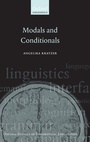
This book contains updated and substantially revised versions of Angelika Kratzer's classic papers on modals and conditionals. It represents some of the most important work on modals and conditionals and the semantics-syntax interface and will be of interest to linguists and philosophers of language of all theoretical persuasions.
More details
Other editions
Additional editions
Book
01/2012
Oxford University Press
€190.00
Shipment within 15-20 days
Content
- Cover
- Contents
- General Preface
- Preface and acknowledgments
- Introducing Chapter 1
- 1 What Must and Can Must and Can Mean
- 1.1 Must and can are relational
- 1.2 Must and can in a premise semantics
- 1.3 Inconsistent premise sets
- 1.4 Structuring premise sets
- Introducing Chapter 2
- 2 The Notional Category of Modality
- 2.1 Introduction
- 2.2 Expressing modality in German
- 2.3 Basic notions
- 2.4 Grades of possibility
- 2.5 Modals without duals
- 2.6 Root versus epistemic modals
- 2.7 Approaching norms and ideals with root modals
- 2.8 Practical reasoning
- 2.9 Conditionals
- 2.10 Conclusion
- Introducing Chapter 3
- 3 Partition and Revision: The Semantics of Counterfactuals
- 3.1 A straightforward analysis seems to fail
- 3.2 Escaping through atomism
- 3.3 Counterexamples and amendments
- 3.4 Back to the original analysis
- 3.5 Conclusion
- Introducing Chapter 4
- 4 Conditionals
- 4.1 Grice
- 4.2 Gibbard's proof
- 4.3 The decline of material implication
- 4.4 Probability conditionals
- 4.5 Epistemic conditionals
- 4.6 Gibbard's proof reconsidered: silent operators
- 4.7 Conditional propositions after all?
- Introducing Chapter 5
- 5 An Investigation of the Lumps of Thought
- 5.1 What lumps of thought are
- 5.2 How lumps of thought can be characterized in terms of situations
- 5.3 A semantics based on situations
- 5.3.1 A metaphysics for situations
- 5.3.2 Ingredients for a situation semantics
- 5.3.3 The logical properties and relations
- 5.3.4 Persistence
- 5.3.5 Sentence denotations
- 5.4 Counterfactual reasoning
- 5.4.1 Some facts about counterfactuals
- 5.4.2 Truth-conditions for counterfactuals
- 5.4.3 We forgot about lumps
- 5.4.4 The formal definitions
- 5.5 Representing non-accidental generalizations
- 5.5.1 Non-accidental generalizations: a first proposal
- 5.5.2 Hempel's Paradox and Goodman's Puzzle
- 5.6 Negation
- 5.6.1 In search of an accidental interpretation
- 5.6.2 Negation and restrictive clauses
- 5.6.3 Negation and counterfactual reasoning
- 5.7 Conclusion
- Introducing Chapter 6
- 6 Facts: Particulars or Information Units?
- 6.1 Worldly facts
- 6.2 Facts and the semantics of the verb to know
- 6.3 Facts that exemplify propositions
- 6.4 Reliability in knowledge ascriptions
- 6.5 Facts and counterfactuals
- 6.6 Propositional facts and natural propositions
- References
- Index
- A
- B
- C
- D
- E
- F
- G
- H
- I
- J
- K
- L
- M
- N
- O
- P
- Q
- R
- S
- T
- U
- V
- W
- Y
- Z
