

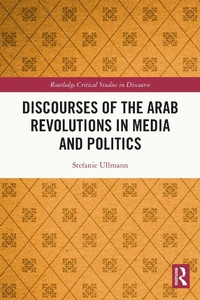
Discourses of the Arab Revolutions in Media and Politics
1st Edition
Published on 23. August 2021
266 pages
978-1-000-39894-6 (ISBN)
Description

Drawing on approaches from critical discourse analysis, corpus linguistics, and cognitive linguistics, this book critically examines metaphorical language used in global media coverage and political statements on the events of the Arab Spring.
The volume begins by summarising key events of the Arab Spring, tracing the development of protests from Tunisia and Egypt to Libya and Syria as well as the wider impact on the region. Ullmann builds on this foundation to lay out the theoretical frameworks to be applied to an extensive corpus of natural language and actual discourse highlighting Western, Middle Eastern, and North African perspectives which integrate theoretical work on metaphor, blending theory, and semantic prosodies. Methodological considerations on corpus selection and different conceptualisations of politics and mass media, generally and across countries, are discussed, with the final chapters outlining the overarching themes across metaphors in the corpus and how these metaphors were ultimately framed in the mass media and political landscape.
This book will be of particular interest to students and scholars interested in critical discourse analysis, language and politics, and corpus linguistics.
The volume begins by summarising key events of the Arab Spring, tracing the development of protests from Tunisia and Egypt to Libya and Syria as well as the wider impact on the region. Ullmann builds on this foundation to lay out the theoretical frameworks to be applied to an extensive corpus of natural language and actual discourse highlighting Western, Middle Eastern, and North African perspectives which integrate theoretical work on metaphor, blending theory, and semantic prosodies. Methodological considerations on corpus selection and different conceptualisations of politics and mass media, generally and across countries, are discussed, with the final chapters outlining the overarching themes across metaphors in the corpus and how these metaphors were ultimately framed in the mass media and political landscape.
This book will be of particular interest to students and scholars interested in critical discourse analysis, language and politics, and corpus linguistics.
More details
Series
Edition
1. Auflage
Language
English
Place of publication
London
United Kingdom
Publishing group
Taylor & Francis Ltd
Target group
College/higher education
Illustrations
17 Tables, black and white; 14 Line drawings, black and white; 14 Illustrations, black and white
ISBN-13
978-1-000-39894-6 (9781000398946)
Copyright in bibliographic data and cover images is held by Nielsen Book Services Limited or by the publishers or by their respective licensors: all rights reserved.
Schweitzer Classification
Other editions
Additional editions
Stefanie Ullmann
Discourses of the Arab Revolutions in Media and Politics
Book
05/2023
1st Edition
Routledge
€63.50
Shipment within 10-20 days
Stefanie Ullmann
Discourses of the Arab Revolutions in Media and Politics
Book
08/2021
1st Edition
Routledge
€206.60
Shipment within 15-20 days
Stefanie Ullmann
Discourses of the Arab Revolutions in Media and Politics
Book
08/2021
Routledge
Unfortunately, price unknown
Available (delivery time upon request)
Person
Stefanie Ullmann is a Research Associate at the University of Cambridge's Centre for Humanities and Social Change. She has done extensive research on the use of language in discourse on the Arab revolutions. Her other research interests and current work include the social and ethical impacts of harmful language on social media, as well as information and algorithmic biases.
Content
Table of Contents
Acknowledgements
Abbreviations
1. Introduction: A Watershed Moment
1.1. Why metaphor?
1.2. The language of the Arab Spring as a research area
1.3. Structure of the book
2. Unhinging the Old Order: The 'Arab Spring' Protests and Revolutions
2.1. Tunisia and Egypt
2.2. Libya and Syria
2.3. A movement affecting an entire region
3. Performing Critical Metaphor Analysis in a Conceptual Integration Framework
3.1. Critical approaches to metaphor
3.1.1. Critical discourse studies
3.1.2. Defining 'critical' and 'discourse'
3.1.3. Ideology
3.1.4. Critical metaphor analysis
3.2. Cognitive approaches to metaphor
3.2.1. Conceptual metaphor theory
3.2.2. Conceptual integration theory
3.3. Framing, construal and constructivism
3.4. Framing via conceptual integration
4. Corpus Approaches to Critical Cognitive Metaphor Analysis
4.1. Corpus-based metaphor analysis - common challenges
4.2. Automating metaphor research
4.3. Corpus linguistics and CDS
5. The 'Arab Spring' Corpus: Set-up and Design
5.1. On distinguishing political and media discourse
5.2. Regional distinctions
5.3. Media corpus
5.4. Political corpus
5.5. Strategies for corpus compilation
5.6. From rhetorical figure to conceptualisation: the label 'Arab Spring'
6. Using Contextual Information in a Large-Scale Study of Metaphor
6.1. Quantitative steps: metaphorical pattern analysis, conceptual categorisation and frequencies
6.2. Qualitative steps: critical metaphor and prosody analysis
6.3. Collocation and semantic prosody: how corpus linguistics can improve critical metaphor analysis
6.3.1. Defining 'collocation' and 'semantic prosody'
6.3.2. Developing an analytical framework for prosody evaluation of metaphors
7. The Metaphors of the Arab Revolutions
7.1. Seasons, plants and fruit
7.1.1. The revolution is seasonal spring
7.1.2. From summer to winter: the revolution throughout the seasons
7.1.3. The revolution is a plant
7.2. Birth, pregnancy and family
7.2.1. The revolution is a newborn child or a mother giving birth
7.2.2. The revolution is a stillborn or aborted child
7.2.3. The family metaphor
7.3. Natural forces and disasters
7.3.1. The revolution is fire
7.3.2. The revolution is a wave
7.3.3. The revolution is a volcanic eruption or an earthquake
7.3.4. The revolution is wind
7.4. Contagious diseases, healthy and unhealthy bodies
7.4.1. The revolution is a contagious disease
7.4.2. The case of 'spread' and its different prosodies
7.4.3. The revolution is a wounded or healing body
7.5. Buildings and foundations
7.5.1. The revolution is a building
7.5.2. The revolution is a foundation
7.6. Journeys
7.6.1. From autocracy to democracy: the revolution as journey
7.6.2. Different countries, different journeys
7.7. Possessions, products and goods
7.7.1. The revolution is a possession or a product
7.7.2. The case of 'deliver'
7.8. Bounded spaces and (hot) substances in containers
7.8.1. The nation is a bounded space or Syria as impenetrable fortress
7.8.2. Spill, pour, and simmer: on deciding between water and substance in container metaphors
7.8.3. The revolution is a (hot) liquid or a bursting container
7.9. Concepts of morality and immorality
7.9.1. The Arab revolutions and reverse morality
7.9.2. The revolution is moral, violence and oppression are immoral
7.9.3. The revolution is bright and pure, dictatorship is dark and rotten
7.9.4. A global moral order
8. Of Journeys and Natural Forces: The Arab Revolutions in Media Discourse
8.1. Most common metaphors with positive and negative prosodies
8.2. US liberal media
8.3. US conservative media
8.4. UK liberal media
8.5. UK conservative media
8.6. MENA independent media
8.7. MENA state-owned media
9. Of Journeys and Diseases: The Arab Revolutions in Political Discourse
9.1. US political discourse
9.2. UK political discourse
9.3. MENA political discourse
9.3.1. Tunisia
9.3.2. Egypt
9.3.3. Libya
9.3.4. Syria
10. Conclusion
Acknowledgements
Abbreviations
1. Introduction: A Watershed Moment
1.1. Why metaphor?
1.2. The language of the Arab Spring as a research area
1.3. Structure of the book
2. Unhinging the Old Order: The 'Arab Spring' Protests and Revolutions
2.1. Tunisia and Egypt
2.2. Libya and Syria
2.3. A movement affecting an entire region
3. Performing Critical Metaphor Analysis in a Conceptual Integration Framework
3.1. Critical approaches to metaphor
3.1.1. Critical discourse studies
3.1.2. Defining 'critical' and 'discourse'
3.1.3. Ideology
3.1.4. Critical metaphor analysis
3.2. Cognitive approaches to metaphor
3.2.1. Conceptual metaphor theory
3.2.2. Conceptual integration theory
3.3. Framing, construal and constructivism
3.4. Framing via conceptual integration
4. Corpus Approaches to Critical Cognitive Metaphor Analysis
4.1. Corpus-based metaphor analysis - common challenges
4.2. Automating metaphor research
4.3. Corpus linguistics and CDS
5. The 'Arab Spring' Corpus: Set-up and Design
5.1. On distinguishing political and media discourse
5.2. Regional distinctions
5.3. Media corpus
5.4. Political corpus
5.5. Strategies for corpus compilation
5.6. From rhetorical figure to conceptualisation: the label 'Arab Spring'
6. Using Contextual Information in a Large-Scale Study of Metaphor
6.1. Quantitative steps: metaphorical pattern analysis, conceptual categorisation and frequencies
6.2. Qualitative steps: critical metaphor and prosody analysis
6.3. Collocation and semantic prosody: how corpus linguistics can improve critical metaphor analysis
6.3.1. Defining 'collocation' and 'semantic prosody'
6.3.2. Developing an analytical framework for prosody evaluation of metaphors
7. The Metaphors of the Arab Revolutions
7.1. Seasons, plants and fruit
7.1.1. The revolution is seasonal spring
7.1.2. From summer to winter: the revolution throughout the seasons
7.1.3. The revolution is a plant
7.2. Birth, pregnancy and family
7.2.1. The revolution is a newborn child or a mother giving birth
7.2.2. The revolution is a stillborn or aborted child
7.2.3. The family metaphor
7.3. Natural forces and disasters
7.3.1. The revolution is fire
7.3.2. The revolution is a wave
7.3.3. The revolution is a volcanic eruption or an earthquake
7.3.4. The revolution is wind
7.4. Contagious diseases, healthy and unhealthy bodies
7.4.1. The revolution is a contagious disease
7.4.2. The case of 'spread' and its different prosodies
7.4.3. The revolution is a wounded or healing body
7.5. Buildings and foundations
7.5.1. The revolution is a building
7.5.2. The revolution is a foundation
7.6. Journeys
7.6.1. From autocracy to democracy: the revolution as journey
7.6.2. Different countries, different journeys
7.7. Possessions, products and goods
7.7.1. The revolution is a possession or a product
7.7.2. The case of 'deliver'
7.8. Bounded spaces and (hot) substances in containers
7.8.1. The nation is a bounded space or Syria as impenetrable fortress
7.8.2. Spill, pour, and simmer: on deciding between water and substance in container metaphors
7.8.3. The revolution is a (hot) liquid or a bursting container
7.9. Concepts of morality and immorality
7.9.1. The Arab revolutions and reverse morality
7.9.2. The revolution is moral, violence and oppression are immoral
7.9.3. The revolution is bright and pure, dictatorship is dark and rotten
7.9.4. A global moral order
8. Of Journeys and Natural Forces: The Arab Revolutions in Media Discourse
8.1. Most common metaphors with positive and negative prosodies
8.2. US liberal media
8.3. US conservative media
8.4. UK liberal media
8.5. UK conservative media
8.6. MENA independent media
8.7. MENA state-owned media
9. Of Journeys and Diseases: The Arab Revolutions in Political Discourse
9.1. US political discourse
9.2. UK political discourse
9.3. MENA political discourse
9.3.1. Tunisia
9.3.2. Egypt
9.3.3. Libya
9.3.4. Syria
10. Conclusion
