

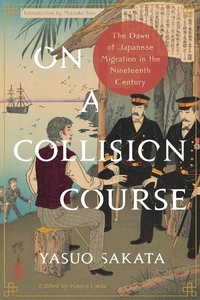
On a Collision Course
The Dawn of Japanese Migration in the Nineteenth Century
Published on 1. July 2020
305 pages
978-0-8179-2358-7 (ISBN)
Description

In five meticulously researched essays, Yasuo Sakata examines Japanese migration to the United States from an international and deeply historical perspective. Sakata argues the importance of using resources from both sides of the Pacific and taking a holistic view that incorporates US-Japanese diplomatic relationships, the mass media, the American view of Asian populations, and Japan's self-image as a modern, westernized nation. In his first essay, Sakata provides an overview of resources and warns against their gaps and biases; those that remain may reflect culturally based inaccuracies. In the other essays, Sakata examines Japanese migration through a multifaceted lens, incorporating an understanding of immigration, labor, working conditions, diplomatic relationships, and the effects of war and mass media. He further emphasizes the distinctions between the dekasegi period, the transition period, and the imin period. He also discusses the self-image among Japanese as distinct from the Chinese, more westernized and able to assimilate--a distinction lost on Americans, who tended to lump the Asian groups together, both in treatment and under the law. Japan's Meiji era brought the opening of Japanese ports to Western nations and Japan's eventual overseas expansion. This translated volume of Sakata's well-researched work brings a transnational perspective to this critical chapter of early Japanese American history.
More details
Other editions
Additional editions
Yasuo Sakata | Kaoru Ueda
On a Collision Course
The Dawn of Japanese Migration in the Nineteenth Century
Book
07/2020
Hoover Institution Press,U.S.
€33.00
Shipment within 10-20 days
Persons
Content
- On a Collision Course: The Dawn of Japanese Migration in the Nineteenth Century
- COPYRIGHT PAGE
- CONTENTS
- FOREWORD
- PREFACE
- EDITOR'S NOTE ON TRANSLATION AND ACKNOWLEDGMENTS
- Introduction
- Chapter 1: A Historical Study of Migration Research and Its Challenges
- Two Areas within Migration Studies: An Evaluation of Nikkei Research Resource Collections in America
- The Great Fire in San Francisco and Its Aftereffect
- The "Idaho Incident," a Rewritten History
- Missing and Confiscated Documents Due to the Forced Removal and Incarceration
- Collections of Documents of Nikkei Migration in North America: Background
- "Collection of Documents of Nikkei Migration," North America, Volume 1: Migration History in North America (Tsushi, the General History of Japan)
- The "Encouragement Theory" of Migration and Emigration
- Tobei Annai (Guides for Going to America)
- "Collection of Documents of Nikkei Migration," North America, Volume 2: Regional Histories of Japanese
- Zaibei Kenjinshi (History of Prefectural Associations in America)
- Documents and Directories Related to North American Immigrants (Meiji and Taisho Eras)
- The Collection of Documents at the Diplomatic Archives of the Ministry of Foreign Affairs of Japan
- Ryoji Hokoku (Consular Reports) Published in Kanpo (the Official Gazette) and Tsusho Isan
- Theses and Magazine Articles
- Notes
- Chapter 2: Unequal Treaties and Japanese Migrant Workers in the United States
- The Unequal Treaties and Provisions for the Employment of Japanese People
- Townsend Harris and Japanese Servants
- The Nichi-Bei Tsusho Joyaku (Treaty of Amity and Commerce between the United States and the Empire of Japan) and Regulations for the Hiring of Japanese People
- The Anglo-Japanese Treaty of Amity and Commerce and the Hiring Clause: Ulterior Motives
- Unequal Treaties and Government Approval of Overseas Contract Workers: A Case Study in China
- The Coolie Trade
- The Labor Shortage in British Colonies and the British Government's Policy toward Chinese Migrant Workers
- The Occupation of Canton and Overseas Contract Workers
- Trade Treaties and the Approval of Overseas Travel
- The Approval of Overseas Travel in Japan
- The Convention of Peking and Its Influence in Japan
- Stipulation of Japanese Employment and the Bakufu's Perspective
- Growing Dissatisfaction among Foreign Residents in Japan
- The London Protocol (1862) and Freedom of Employment
- The New Tariff Convention and Approval of Japanese Travel Abroad
- Unwelcome Interference
- The Passport System and Regulations on Overseas Dekasegi Laborers
- The Failed Recruitment of Contract Laborers at Japanese Open Ports
- The Gannenmono Incident
- The Japanese Contract Laborers Who Were Sent to Guam
- Why Further Incidents Did Not Occur
- The Gannenmono Incident and the US Minister
- The Treaty Nations' Responses to the Firm Position of the Japanese Government
- The Final Gesture: The Maria Luz Ship Incident
- "Disgraceful" Japanese in Foreign Countries: Absolute Guarantee of Return Home
- Troupes of Light Entertainers Deserted in a Foreign Land
- The Requirement for Passport Issuance for Overseas Japanese Hired by Foreigners in Early Meiji
- Travel Abroad with "Low-Class" Japanese and the Gesture of the New Nation
- Overseas Dekasegi and the Guaranteed Return Home
- Certificate for Return Trip by the Consulate General's Seal
- The Contract Labor System and Dekasegi of the Middle Meiji Era
- The Establishment of a Labor System and Its Significance
- Dekasegi in Middle Meiji
- The System of Keiyaku Dekasegi and the Imin Hogoho (Emigrant Protection Act)
- The Keiyaku Dekasegi System and Dekasegi Laborers Traveling to the United States
- Conclusion
- Immigrants and Dekasegi Laborers
- The Study of Dekasegi and Immigration: The History of Overseas Migration and Nikkei
- Agenda of Future Studies
- Notes
- Chapter 3: On a Collision Course: The Migration of Japanese Dekasegi Laborers to the United States during the Meiji Era (I)
- Theses That Attempt to Explain the Contradiction
- The "Regional Conspiracy" Thesis
- The "Undesirable Lower-Class Immigrant" Thesis
- Japanese Prejudice
- America as a White Republic
- Immigration History and Racial Prejudice
- Future Study Challenges
- Immigration Control over "Undesirable" Aliens in the United States
- The "Yellow Race" and the "Immigrants' Paradise"
- The First Step toward Chinese Exclusion: Revision of the Burlingame Treaty
- The Immigration Issue as a Domestic Affair
- The Chinese Exclusion Act and Its Significance
- An Attempt at "Quality" Control
- The Alien Contract Labor Law and Japanese Dekasegi Laborers
- Japanese Dekasegi Laborers in the United States
- Notes
- Chapter 4: On a Collision Course: The Migration of Japanese Dekasegi Laborers to the United States during the Meiji Era (II)
- The Enforcement of the New US Immigration Law and the Incident of "The Denial of Japanese Migrant Laborers' Entry into the United States"
- The Historical Significance of the Incident
- Enactment of the New Immigration Law and the Enforcement of Immigration Inspection
- Fair Immigration Law Articles and Its Prejudiced Applications
- Mismanagement by Japanese Government Officials
- The Concepts of Japanese Emigration Expansionism and Migrant Laborers Drawn from a Surplus Population
- The Reaction on the West Coast to the Japanese Promotion of Emigration to the United States
- Japan's Emigration Issue and the Treaty Revision Negotiations
- The Japanese Diplomats Stationed in the United States and the Issue of Japanese Migration
- The Denial of the Poor and Efforts for Mediation by the San Francisco Consulate
- The Article to Ban Contract Laborers and Its Application for Japanese Migrant Laborers
- Denial of Japanese Contract Laborers at Customs and the Reaction of Japanese Diplomats Stationed in the United States
- Emigration Agents and the Incident of the Contract Laborers' Denial of Entry
- The Meiji Elite's Biases: "Don't Repeat the Same Mistake as the Chinese"
- Notes
- Chapter 5: On a Collision Course: The Migration of Japanese Dekasegi Laborers to the United States during the Meiji Era (III)
- The End of the Sino-Japanese War and the Changing Nature of the Japanese-Labor Exclusion Movement on the West Coast
- The Reinvigorated Attacks on Japanese in San Francisco in English-Language Papers in May 1895
- Multiple Unfavorable Conditions: More New Immigrants from Europe, a Prolonged Recession, a Worsening Labor Conflict, and Japa
- The Sino-JapaneseWar and Reorienting the Exclusionist Argument: The Issue of Competitors and Low Wages
- The Investigation of Japanese Industry and Low-Wage Labor in Japan by the US House of Representatives
- Notes
- About the Contributors
- Index
