

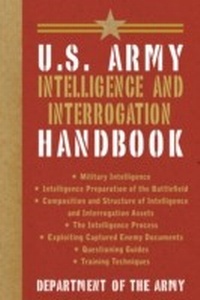
U.S. Army Intelligence and Interrogation Handbook
1st Edition
Published on 4. February 2014
384 pages
978-1-62873-926-8 (ISBN)
Description

The U.S. Army Intelligence and Interrogation Handbook provides doctrinal guidance, techniques, and procedures governing the use of interrogators as human intelligence collection agents in support of a commander's intelligence needs. It outlines the interrogator's role within the greater intelligence effort as well as the unit's day-to-day operations, and includes details on how interrogators accomplish their assigned missions. This handbook is intended for use by interrogators as well as commanders, staff officers, and military intelligence personnel charged with conducting interrogations, and applies to operations at all levels of conflict intensity, including conditions involving the use of electronic warfare or nuclear, biological, or chemical weapons.
The U.S. Army Intelligence and Interrogation Handbook builds upon existing doctrine and moves interrogation into the twenty-first century within the constraints of the Uniform Code of Military Justice and the Geneva Conventions. Principles, guidelines, and topics covered include:
The definition of interrogation
Interrogator capabilities and limitations
Warfighting doctrine
The intelligence cycle, and its disciplines and operations
Amphibious and airborne operations
The interrogation process
Exploiting captured enemy documents
A tactical questioning guide
And many more tactics and techniques used by the U.S. Army!
The U.S. Army Intelligence and Interrogation Handbook builds upon existing doctrine and moves interrogation into the twenty-first century within the constraints of the Uniform Code of Military Justice and the Geneva Conventions. Principles, guidelines, and topics covered include:
The definition of interrogation
Interrogator capabilities and limitations
Warfighting doctrine
The intelligence cycle, and its disciplines and operations
Amphibious and airborne operations
The interrogation process
Exploiting captured enemy documents
A tactical questioning guide
And many more tactics and techniques used by the U.S. Army!
More details
Other editions
Additional editions
U.S. Department of the Army
U.S. Army Intelligence and Interrogation Handbook
Book
02/2014
Skyhorse Publishing
€19.00
Shipment within 3-4 weeks
Person
The Department of the Army (DA) is one of the three military departments within the Department of Defense of the United States of America. Its mission is to fight and win our Nation' s wars by providing prompt, sustained land dominance across the full range of military operations and spectrum of conflict in support of combatant commanders.
Content
- Intro
- TITLE PAGE
- COPYRIGHT PAGE
- CONTENTS
- PREFACE
- PART ONE HUMINT SUPPORT, PLANNING, AND MANAGEMENT
- Chapter 1 INTRODUCTION
- Intelligence Battlefield Operating System
- Intelligence Process
- Human Intelligence
- HUMINT Source
- HUMINT Collection and Related Activities
- Traits of a HUMINT Collector
- Required Areas of Knowledge
- Capabilities and Limitations
- Chapter 2 HUMAN INTELLIGENCE STRUCTURE
- Organization and Structure
- HUMINT Control Organizations
- HUMINT Analysis and Production Organizations
- Chapter 3 HUMINT IN SUPPORT OF ARMY OPERATIONS
- Offensive Operations
- Defensive Operations
- Stability and Reconstruction Operations
- Civil Support Operations
- Military Operations in Urban Environment
- HUMINT Collection Environments
- EAC HUMINT
- Joint, Combined, and DOD HUMINT Organizations
- Chapter 4 HUMINT OPERATIONS PLANNING AND MANAGEMENT
- HUMINT and the Operations Process
- HUMINT Command and Control
- Technical Control
- Command and Support Relationships
- HUMINT Requirements Management
- HUMINT Mission Planning
- Task Organization
- Operational Considerations
- Operations Plans, Operations Orders, and Annexes
- Operational Coordination
- PART TWO HUMINT COLLECTION IN MILITARY SOURCE OPERATIONS
- Chapter 5 HUMINT COLLECTION
- HUMINT Collection Operations
- Human Source Contact Operations
- Debriefing Operations
- Liaison Operations
- Interrogation Operations
- Types of Interrogation Operations
- PART THREE THE HUMINT COLLECTION PROCESS
- Chapter 6 SCREENING
- Human Source Screening
- Screening Operations
- Screening Process
- Screening Methodologies
- Screening Requirements
- Initial Data and Observations
- Source Assessment
- Other Types of Screening Operations
- Chapter 7 PLANNING AND PREPARATION
- Collection Objectives
- Research
- HUMINT Collection Plan
- Final Preparations
- Chapter 8 APPROACH TECHNIQUES AND TERMINATION STRATEGIES
- Approach Phase
- Developing Rapport
- Approach Techniques
- Approach Strategies for Interrogation
- Approach Strategies for Debriefing
- Approach Strategies for Elicitation
- Termination Phase
- Chapter 9 QUESTIONING
- General Questioning Principles
- Direct Questions
- Elicitation
- Leads
- Detecting Deceit
- HUMINT Collection Aids
- Recording Techniques
- Questioning With an Analyst or a Technical Expert
- Third-Party Official and Hearsay Information
- Conducting Map Tracking
- Special Source Categories
- Chapter 10 REPORTING
- Reporting Principles
- Report Types
- Reporting Architecture
- Chapter 11 HUMINT COLLECTION WITH AN INTERPRETER
- Advantages and Disadvantages of Interpreter Use
- Methods of Interpreter Use
- Sources of Interpreters
- Interpretation Techniques
- Training and Briefing the Interpreter
- Placement of the Interpreter
- Interactions With and Correction of the Interpreter
- Interpreter Support in Report Writing
- Evaluating the Interpreter
- Managing an Interpreter Program
- PART FOUR ANALYSIS AND TOOLS
- Chapter 12 HUMINT ANALYSIS AND PRODUCTION
- Analytical Support to Operational Planning
- Operational Analysis and Assessment
- Source Analysis
- Single-Discipline HUMINT Analysis and Production
- HUMINT Source Selection
- Chapter 13 AUTOMATION AND COMMUNICATION
- Automation
- Collection Support Automation Requirements
- Analytical Automation Requirements
- Automation Systems
- Communications
- APPENDIX A GENEVA CONVENTIONS
- Section I. Geneva Conventions Relative to the Treatment of Prisoners of War (Third Geneva Convention)
- Section II. Geneva Conventions Relative to the Protection of Civilian Persons in Time of War (Fourth Geneva Convention)
- APPENDIX B SOURCE AND INFORMATION RELIABILITY MATRIX
- APPENDIX C PRE-DEPLOYMENT PLANNING
- APPENDIX D S2 GUIDE FOR HANDLING DETAINEES, CAPTURED ENEMY DOCUMENTS, AND CAPTURED ENEMY EQUIPMENT
- APPENDIX E EXTRACTS FROM ALLIED JOINT PUBLICATION (AJP)-2.5
- APPENDIX F NATO SYSTEM OF ALLOCATING INTERROGATION SERIAL NUMBERS
- APPENDIX G QUESTIONING QUICK REFERENCE
- APPENDIX H SALUTE REPORTING
- APPENDIX I DOCUMENT EXPLOITATION AND HANDLING
- APPENDIX J REFERENCES
- APPENDIX K CONTRACT INTERROGATORS
- APPENDIX L SAMPLE EQUIPMENT FOR HCT OPERATIONS
- APPENDIX M RESTRICTED INTERROGATION TECHNIQUE - SEPARATION
- GLOSSARY
- BIBLIOGRAPHY
