

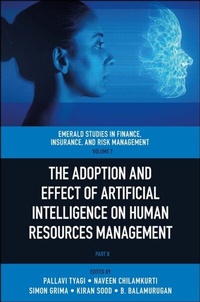
The Adoption and Effect of Artificial Intelligence on Human Resources Management
1st Edition
Published on 10. February 2023
288 pages
978-1-80455-662-7 (ISBN)
Description

Emerald Studies In Finance, Insurance, And Risk Management 7 explores how AI and Automation enhance the basic functions of human resource management.
The traditional framework of Human Resource Management (HRM) primarily consists of four functions: Human Resource Planning, Recruitment and Selection, Training and Development and Performance Management Systems which help businesses in hiring, motivating and retaining employees. The introduction of Artificial Intelligence (AI) has changed all of these aspects.
This second volume in The Adoption and Effect of Artificial Intelligence on Human Resources Management Series reflects upon: the accuracy of using AI to nominate candidates; the change readiness of employees; impacts and challenges on HRM practices; effects on upskilling; and the effects of the pandemic; concluding with an overall state of industry trends.
This book is ideal for HR managers, senior managers, researchers, and students planning a career in this field.
The traditional framework of Human Resource Management (HRM) primarily consists of four functions: Human Resource Planning, Recruitment and Selection, Training and Development and Performance Management Systems which help businesses in hiring, motivating and retaining employees. The introduction of Artificial Intelligence (AI) has changed all of these aspects.
This second volume in The Adoption and Effect of Artificial Intelligence on Human Resources Management Series reflects upon: the accuracy of using AI to nominate candidates; the change readiness of employees; impacts and challenges on HRM practices; effects on upskilling; and the effects of the pandemic; concluding with an overall state of industry trends.
This book is ideal for HR managers, senior managers, researchers, and students planning a career in this field.
More details
Series
Language
English
Place of publication
Bingley
United Kingdom
Target group
Professional and scholarly
File size
5,21 MB
ISBN-13
978-1-80455-662-7 (9781804556627)
Copyright in bibliographic data and cover images is held by Nielsen Book Services Limited or by the publishers or by their respective licensors: all rights reserved.
Schweitzer Classification
Persons
Pallavi Tyagi is an Associate Professor in the area of human resource management at Amity College of Commerce and Finance, Amity University Uttar Pradesh, Noida, India
Naveen Chilamkurti is a Professor and Head of the Cybersecurity discipline at La Trobe University, Melbourne, Australia
Simon Grima is the the Deputy Dean of the Faculty of Economics, Management and Accountancy, Associate Professor and the Head of the Department of Insurance and Risk Management, University of Malta and a Professor at the University of Latvia, Faculty of Business Management and Economics, Latvia
Kiran Sood is a Professor in Chitkara Business School, Chitkara University, Punjab, India
Dr. Balamurugan Balusamy is Associate Dean - Student Engagement at Shiv Nadar University, India
Naveen Chilamkurti is a Professor and Head of the Cybersecurity discipline at La Trobe University, Melbourne, Australia
Simon Grima is the the Deputy Dean of the Faculty of Economics, Management and Accountancy, Associate Professor and the Head of the Department of Insurance and Risk Management, University of Malta and a Professor at the University of Latvia, Faculty of Business Management and Economics, Latvia
Kiran Sood is a Professor in Chitkara Business School, Chitkara University, Punjab, India
Dr. Balamurugan Balusamy is Associate Dean - Student Engagement at Shiv Nadar University, India
Content
Chapter 1. Artificial Intelligence for Recruitment and Selection; Aashima Gupta and Mridula Mishra
Chapter 2. Change readiness of employees towards acceptance of Artificial Intelligence in Human Resource Practices; Meet Bhatt and Priyanka Shah
Chapter 3. Technology and Change Nature of Work; Impacts on HRM Practices, Protean Career, and Boundaryless-Career; Fatima Shaikh, Gul Afshan, and Kiran Sood
Chapter 4. AI Technology in HR practices: A challenge; Dhanashree Tharkude
Chapter 5. Adoption of Artificial Intelligence in HR practices: An empirical Analysis; RAnsumalini Panda, Srinivas Subbarao Pasumarti, and Suvarna Hiremath
Chapter 6. Implementing Artificial Intelligence in Human Resource Management: Analysis of Challenges; Laxmi Pandit Vishwakarma and Rajesh Kumar Singh
Chapter 7.Challenges of Adopting Artificial Technology in Human Resource Management Practices; Aradhana Sharma, Dhiraj Sharma, and Rajni Bansal
Chapter 8. Artificial Intelligence and Robotic Automation Hit by the Pandemic: Reality or Myth; Kiran Gehani Hasija, Karishma Desai, and Sopnamayee Acharya
Chapter 9. Deciphering the role of Artificial Intelligence in Healthcare, Learning and Development; Ryan Varghese, Abha Deshpande, Gargi Digholkar, and Dileep Kumar
Chapter 10. Reskilling & Upskilling the workforce for the Artificial Intelligence age: Challenges and way forward; Reskilling & Upskilling the workforce for the Artificial Intelligence age: Challenges and way forward
Chapter 11. HRM Digitalization: Exploring Success and Outcomes; Gurinder Singh, Pooja Tiwari, and Vikas Garg
Chapter 12. Role of Artificial Intelligence in Re-inventing Human Resource Management; Prateek Kalia and Geeta Mishra
Chapter 13. HR Analytics: Trends, Challenges and Prospects: A Review; Shraddha Awasthi, Devesh Bathla, and Sheetal Singh
Chapter 2. Change readiness of employees towards acceptance of Artificial Intelligence in Human Resource Practices; Meet Bhatt and Priyanka Shah
Chapter 3. Technology and Change Nature of Work; Impacts on HRM Practices, Protean Career, and Boundaryless-Career; Fatima Shaikh, Gul Afshan, and Kiran Sood
Chapter 4. AI Technology in HR practices: A challenge; Dhanashree Tharkude
Chapter 5. Adoption of Artificial Intelligence in HR practices: An empirical Analysis; RAnsumalini Panda, Srinivas Subbarao Pasumarti, and Suvarna Hiremath
Chapter 6. Implementing Artificial Intelligence in Human Resource Management: Analysis of Challenges; Laxmi Pandit Vishwakarma and Rajesh Kumar Singh
Chapter 7.Challenges of Adopting Artificial Technology in Human Resource Management Practices; Aradhana Sharma, Dhiraj Sharma, and Rajni Bansal
Chapter 8. Artificial Intelligence and Robotic Automation Hit by the Pandemic: Reality or Myth; Kiran Gehani Hasija, Karishma Desai, and Sopnamayee Acharya
Chapter 9. Deciphering the role of Artificial Intelligence in Healthcare, Learning and Development; Ryan Varghese, Abha Deshpande, Gargi Digholkar, and Dileep Kumar
Chapter 10. Reskilling & Upskilling the workforce for the Artificial Intelligence age: Challenges and way forward; Reskilling & Upskilling the workforce for the Artificial Intelligence age: Challenges and way forward
Chapter 11. HRM Digitalization: Exploring Success and Outcomes; Gurinder Singh, Pooja Tiwari, and Vikas Garg
Chapter 12. Role of Artificial Intelligence in Re-inventing Human Resource Management; Prateek Kalia and Geeta Mishra
Chapter 13. HR Analytics: Trends, Challenges and Prospects: A Review; Shraddha Awasthi, Devesh Bathla, and Sheetal Singh
