

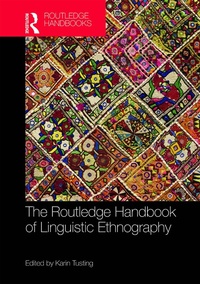
The Routledge Handbook of Linguistic Ethnography
1st Edition
Published on 30. August 2019
406 pages
978-1-317-38332-1 (ISBN)
Description

The Routledge Handbook of Linguistic Ethnography provides an accessible, authoritative and comprehensive overview of this growing body of research, combining ethnographic approaches with close attention to language use. This handbook illustrates the richness and potential of linguistic ethnography to provide detailed understandings of situated patterns of language use while connecting these patterns clearly to broader social structures.
Including a general introduction to linguistic ethnography and 25 state-of-the-art chapters from expert international scholars, the handbook is divided into three sections. Chapters cover historical, empirical, methodological and theoretical contributions to the field, and new approaches and developments.
This handbook is key reading for those studying linguistic ethnography, qualitative research methods, sociolinguistics and educational linguistics within English Language, Applied Linguistics, Education and Anthropology.
Including a general introduction to linguistic ethnography and 25 state-of-the-art chapters from expert international scholars, the handbook is divided into three sections. Chapters cover historical, empirical, methodological and theoretical contributions to the field, and new approaches and developments.
This handbook is key reading for those studying linguistic ethnography, qualitative research methods, sociolinguistics and educational linguistics within English Language, Applied Linguistics, Education and Anthropology.
Reviews / Votes
"In just two decades, a unique 'intellectual commons' has been created by researchers who are committed to combining ethnographic approaches with close analysis of language practices, on and offline. This handbook documents and interrogates, in rigorous and compelling detail, the different strands of theory and method that have formed the basis of this intellectual tradition. It brings together contributions from scholars who have played a key role in the development of linguistic ethnography with fresh input from scholars who are taking the work in new directions. As well as being an immensely good read, the handbook will constitute a key resource for all of us who are concerned with building an understanding of the specific, situated ways in which language and literacy practices are bound up with the changing conditions of contemporary social life."Marilyn Martin-Jones, University of Birmingham, UK
"This is an important text on the rich history as well as infinite applications of Linguistic Ethnography, including fresh discussions on topics such as discourse analysis, multimodalities, globalized language and situations, digital approaches, linguistic and ethnographic studies on youth language, classroom settings, faith communities and more! The collection of experts here is immense: this is simply the best collection of scholars in the field. This is a 'must-read' for all past, present and future scholars invested in the vital work of Linguistic Ethnography."
Allyson Jule, Trinity Western University, Canada
More details
Series
Edition
1. Auflage
Language
English
Place of publication
London
United Kingdom
Publishing group
Taylor & Francis Ltd
Target group
College/higher education
Product notice
Reflowable
Illustrations
6 Tables, black and white; 4 Line drawings, black and white; 20 Illustrations, black and white
ISBN-13
978-1-317-38332-1 (9781317383321)
Copyright in bibliographic data and cover images is held by Nielsen Book Services Limited or by the publishers or by their respective licensors: all rights reserved.
Schweitzer Classification
Other editions
Additional editions
Karin Tusting
The Routledge Handbook of Linguistic Ethnography
Book
01/2023
1st Edition
Routledge
€70.50
Shipment within 10-20 days
Karin Tusting
The Routledge Handbook of Linguistic Ethnography
Book
09/2019
Routledge
€364.52
Shipment within 10-20 days
Person
Karin Tusting is Senior Lecturer at the Department of Linguistics and English Language, Lancaster University. Her research has in recent years focussed on the literacies of the workplace, with a particular interest in issues of audit and accountability.
Content
List of figures
List of tables
Author biographies
1. GENERAL INTRODUCTION
ANTECEDENTS, RELATED AREAS AND KEY CONCEPTS
2. INTERACTIONAL SOCIOLINGUISTICS
3. DISCOURSE ANALYSIS
4. LITERACY STUDIES
5. SOCIOLINGUISTIC ETHNOGRAPHIES OF GLOBALISATION
6. SCALE
7. SOCIAL CLASS
8. HETEROGLOSSIA
9. STYLE AND STYLISATION
10. MULTIMODALITY
METHODS
11. PARTICIPANT OBSERVATION AND FIELDNOTES
12. THE ETHNOGRAPHIC INTERVIEW
13. MICRO-ANALYSIS OF SPOKEN INTERACTION
14. ETHICS
15. COLLABORATIVE ETHNOGRAPHY
16. REFLEXIVITY
17. DIGITAL APPROACHES IN LINGUISTIC ETHNOGRAPHY
18. MIXING METHODS? LINGUISTIC ETHNOGRAPHY AND LANGUAGE VARIATION
SITES AND SITUATIONS
19. YOUTH LANGUAGE
20. LANGUAGE DIVERSITY IN CLASSROOM SETTINGS
21. ELITE MULTILINGUALISM
22. LINGUA FRANCA SCENARIOS
23. FAITH COMMUNITIES
24. POLICY
25. SIGN LANGUAGES
26. ACADEMIC WRITING
Index
List of tables
Author biographies
1. GENERAL INTRODUCTION
ANTECEDENTS, RELATED AREAS AND KEY CONCEPTS
2. INTERACTIONAL SOCIOLINGUISTICS
3. DISCOURSE ANALYSIS
4. LITERACY STUDIES
5. SOCIOLINGUISTIC ETHNOGRAPHIES OF GLOBALISATION
6. SCALE
7. SOCIAL CLASS
8. HETEROGLOSSIA
9. STYLE AND STYLISATION
10. MULTIMODALITY
METHODS
11. PARTICIPANT OBSERVATION AND FIELDNOTES
12. THE ETHNOGRAPHIC INTERVIEW
13. MICRO-ANALYSIS OF SPOKEN INTERACTION
14. ETHICS
15. COLLABORATIVE ETHNOGRAPHY
16. REFLEXIVITY
17. DIGITAL APPROACHES IN LINGUISTIC ETHNOGRAPHY
18. MIXING METHODS? LINGUISTIC ETHNOGRAPHY AND LANGUAGE VARIATION
SITES AND SITUATIONS
19. YOUTH LANGUAGE
20. LANGUAGE DIVERSITY IN CLASSROOM SETTINGS
21. ELITE MULTILINGUALISM
22. LINGUA FRANCA SCENARIOS
23. FAITH COMMUNITIES
24. POLICY
25. SIGN LANGUAGES
26. ACADEMIC WRITING
Index
