

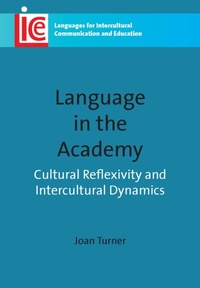
Language in the Academy
Cultural Reflexivity and Intercultural Dynamics
Published on 1. December 2010
240 pages
978-1-84769-490-4 (ISBN)
Description

This book takes a critical look at why issues of language in higher education are routinely marginalised, despite the growing internationalisation of universities. Through analyses of a variety of intercultural encounters, the book highlights the range of interpretative possibilities available for understanding these encounters, and suggests the role that the reality of the contemporary intercultural dynamic between the Socratic and Confucian pedagogic traditions can play in driving change to the pedagogic practices of higher education. Another important aim of the book is to examine language in the academy as an object of cultural theory. While rooted in the practical and empirical reality of teaching and using language in higher education, this book argues for the importance of examining the institutional interface between language and higher education, and of critically exploring the values inscribed in the pedagogy and evaluation of academic language.
Reviews / Votes
This is a stimulating and timely book which puts language as 'cultural object' at the heart of debates about the nature and purpose of higher education in the twenty first century. Drawing on extensive scholarship and many years of teaching in UK higher education, Joan Turner turns our gaze towards the taken-for-granted assumptions about language in the academy, not least in the contemporary context of 'intercultural communication', and calls for greater reflexivity about the practices in which we- as scholars, teachers and students- engage. This book will promote much needed discussion about assumptions and ideologies surrounding language use in the academy. -- Theresa Lillis, The Open University, UK This transformative treatment of the complex factors affecting language in higher education is an essential contribution to the growing field of intercultural and transnational communication. Resisting deficit discourses about students' language and entrenched "language vs. content" dichotomies, it provokes critical reflection on the role of longstanding invisible occidental assumptions and worldviews about language that permeate our assessments, pedagogy, and teaching. Drawing brilliantly from both classic and contemporary theory, Turner reinscribes language into the complex process of knowledge-making in the daily intercultural exchanges that are the mainstream of today's shifting university language interactions. -- Christiane Donahue, Dartmouth College, USA Given the rapid growth in numbers of South-East Asian students in universities in New Zealand, the examination of assumptions about university language which Turner's book offers is very valuable. It is likely to be of interest to writing teachers and EAP practitioners as well as tertiary teachers of international students more generally. The book provides a fascinating discussion of the nature of modern academic language. -- Christine Biebricher, The University of Auckland, New Zealand Studies * Applied Linguistics, Volume 18 (1) 2012 *More details
Series
Language
English
Place of publication
Bristol
United Kingdom
Publishing group
Channel View Publications Ltd
Target group
Professional and scholarly
Product notice
Reflowable
ISBN-13
978-1-84769-490-4 (9781847694904)
Copyright in bibliographic data and cover images is held by Nielsen Book Services Limited or by the publishers or by their respective licensors: all rights reserved.
Schweitzer Classification
Other editions
Additional editions
Book
12/2010
Multilingual Matters
€42.10
Shipment within 10-20 days
Person
Joan Turner is a Senior Lecturer and Director of the Centre for Language and Academic Writing at Goldsmiths, University of London. She has worked extensively with international students as they familiarise themselves with the demands of UK academic culture, as well as with home students getting to grips with academic writing. Her research interrogates the context of operation for this work. She has published in the fields of Academic Literacies, Conceptual Metaphor, Cross-cultural pragmatics, English for Academic Purposes, Higher Education, Intercultural Communication, and Writing Research.
Content
Chapter One Introductory Overview
Chapter Two Language, Language Pedagogies, and Intercultural Communication in Contemporary Higher Education
Chapter Three Language in the Academy: The Discourse of Remediation
Chapter Four Languaging in the Academy: Language as Dynamic Practice
Chapter Five Occidentalist Inscription: The Historical Construction of Contemporary Representations of Language in the Academy
Chapter Six Disciplining Language: Rhetorical Values and the Regulation of Academic Writing
Chapter Seven Power/Knowledge and the Construction of Rhetorical Subjects
Chapter Eight Subject to Confucian Rhetorical Culture
Chapter Nine The Power/Knowledge Effects of the Socratic Dialogue
Chapter Ten Socratic Subjects: The Western Tutor as Midwife
Chapter Eleven Resisting the Tao of Talk: Verbalisation in Intercultural Context
Chapter Twelve The Way of Learning: The Spatial Relations of Learning and Teaching in the Confucian/Taoist Tradition
Chapter Thirteen The Discursive Dance of the Intercultural
Chapter Fourteen The Critical Rhetoric of Being Critical
Chapter Two Language, Language Pedagogies, and Intercultural Communication in Contemporary Higher Education
Chapter Three Language in the Academy: The Discourse of Remediation
Chapter Four Languaging in the Academy: Language as Dynamic Practice
Chapter Five Occidentalist Inscription: The Historical Construction of Contemporary Representations of Language in the Academy
Chapter Six Disciplining Language: Rhetorical Values and the Regulation of Academic Writing
Chapter Seven Power/Knowledge and the Construction of Rhetorical Subjects
Chapter Eight Subject to Confucian Rhetorical Culture
Chapter Nine The Power/Knowledge Effects of the Socratic Dialogue
Chapter Ten Socratic Subjects: The Western Tutor as Midwife
Chapter Eleven Resisting the Tao of Talk: Verbalisation in Intercultural Context
Chapter Twelve The Way of Learning: The Spatial Relations of Learning and Teaching in the Confucian/Taoist Tradition
Chapter Thirteen The Discursive Dance of the Intercultural
Chapter Fourteen The Critical Rhetoric of Being Critical
