

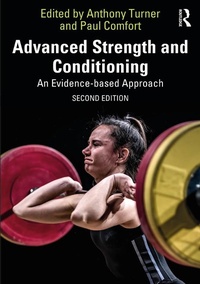
Advanced Strength and Conditioning
An Evidence-based Approach
2nd Edition
Published on 14. February 2022
436 pages
978-1-000-53413-9 (ISBN)
Description

Becoming an effective strength and conditioning practitioner requires the development of a professional skills set and a thorough understanding of the scientific basis of best practice. Aimed at advanced students and novice-to-expert practitioners, in this book the authors explore the latest scientific evidence and apply it to exercise selection and programming choices across the full range of areas in strength and conditioning, from strength and power, speed and agility, to aerobic conditioning. Since the first edition of this text was written extensive research has expanded the supporting evidence base that provides the theoretical foundation for each chapter. In addition, some areas that were previously under-researched have now been expanded and some key concepts have been further challenged. Each chapter is written by experts with experience in a wide variety of sports, including both applied and research experience, ensuring this concise but sophisticated textbook is the perfect bridge from introductory study to effective professional practice.
While advanced concepts are explored within the book, the coach must not forget that consistency in the application of the basic principles of strength and conditioning is the foundation of athletic development. Advanced Strength and Conditioning: An Evidence- based Approach is a valuable resource for all advanced students and practitioners of strength and conditioning and fitness training.
While advanced concepts are explored within the book, the coach must not forget that consistency in the application of the basic principles of strength and conditioning is the foundation of athletic development. Advanced Strength and Conditioning: An Evidence- based Approach is a valuable resource for all advanced students and practitioners of strength and conditioning and fitness training.
Reviews / Votes
"Advanced Strength and Conditioning: An Evidence-based Approach is a fantastic core text which students in particular should read. It covers all the key areas relating to developing your athlete, programming and monitoring your athletes and of course, coaching your athlete, which provides a great blend of theory and practice with a fantastic author line-up adding to the credibility of this book."Chris Bishop Programme Leader: MSc in Strength and Conditioning, Middlesex University, UK
More details
Edition
2nd edition
Language
English
Place of publication
London
United Kingdom
Publishing group
Taylor & Francis Ltd
Target group
College/higher education
Professional and scholarly
Illustrations
14 Tables, color; 39 Tables, black and white; 42 Line drawings, color; 32 Line drawings, black and white; 63 Halftones, color; 2 Halftones, black and white; 105 Illustrations, color; 34 Illustrations, black and white
ISBN-13
978-1-000-53413-9 (9781000534139)
Copyright in bibliographic data and cover images is held by Nielsen Book Services Limited or by the publishers or by their respective licensors: all rights reserved.
Schweitzer Classification
Other editions
Additional editions
Advanced Strength and Conditioning
An Evidence-Based Approach
Book
03/2022
Routledge
Unfortunately, price unknown
Available (delivery time upon request)
Book
02/2022
2nd Edition
Routledge
€120.90
Shipment within 15-20 days
Book
02/2022
2nd Edition
Routledge
€191.89
Shipment within 15-20 days
Persons
Anthony N. Turner is Associate Professor in Strength and Conditioning and the Director of Programmes for postgraduate studies in sport at the London Sport Institute, Middlesex University. Anthony is a consultant to numerous sports teams as well as the British Military. Anthony is Associate Editor for the Strength and Conditioning Journal, has published over 100 peer- reviewed journal articles and numerous book chapters, and has edited two textbooks.
Paul Comfort is Reader in Strength and Conditioning at the University of Salford (UK), where he leads the master's degree in Strength and Conditioning. He is Adjunct Professor at Edith Cowan University (Australia) and an honorary research fellow at Leeds Beckett University (UK). He regularly consults with numerous professional rugby and soccer teams and is a founder member and accredited member of the United Kingdom Strength and Conditioning Association (UKSCA). Paul is an editorial board member for the European Journal of Sport Science and Sports Biomechanics, associate editor for the Strength and Conditioning Journal, Senior Associate Editor of the Journal of Strength and Conditioning Research and has edited three textbooks.
Paul Comfort is Reader in Strength and Conditioning at the University of Salford (UK), where he leads the master's degree in Strength and Conditioning. He is Adjunct Professor at Edith Cowan University (Australia) and an honorary research fellow at Leeds Beckett University (UK). He regularly consults with numerous professional rugby and soccer teams and is a founder member and accredited member of the United Kingdom Strength and Conditioning Association (UKSCA). Paul is an editorial board member for the European Journal of Sport Science and Sports Biomechanics, associate editor for the Strength and Conditioning Journal, Senior Associate Editor of the Journal of Strength and Conditioning Research and has edited three textbooks.
Content
Introduction to the 2nd edition
1. Strength and Conditioning: Coach or Scientist?
Part 1: Developing Your Athlete
2. Developing Muscular Strength and Power
3. Stretch-shortening Cycle and Muscle-tendon Stiffness
4. Understanding and Developing Aerobic Fitness
5. Repeat Sprint Ability: Physiological Basis and Implications for Training
6. Concurrent Training
Part 2: Programming and Monitoring for Your Athlete
7. Periodisation
8. Strategies to Enhance Athlete Recovery
9. Priming Match Day Performance: Strategies for Team Sport Players
10. Fitness Testing and Data Analysis
11. Analysis and Presentation of Fitness Test Results
12. Eccentric Training: Scientific Background and Practical Applications
13. Cluster Sets: Scientific Background and Practical Applications
Part 3: Coaching Your Athlete
14. Movement Screening: A Systematic Approach to Assessing Movement Quality
15. Technical Demands of Strength Training
16. Weightlifting for Sports Performance
17. Plyometric Training
18. Training for Change of Direction and Agility
19. Speed and Acceleration Training
20. Applied Coaching Science
21. Developing as a Coach: Leadership, Culture and Purpose
1. Strength and Conditioning: Coach or Scientist?
Part 1: Developing Your Athlete
2. Developing Muscular Strength and Power
3. Stretch-shortening Cycle and Muscle-tendon Stiffness
4. Understanding and Developing Aerobic Fitness
5. Repeat Sprint Ability: Physiological Basis and Implications for Training
6. Concurrent Training
Part 2: Programming and Monitoring for Your Athlete
7. Periodisation
8. Strategies to Enhance Athlete Recovery
9. Priming Match Day Performance: Strategies for Team Sport Players
10. Fitness Testing and Data Analysis
11. Analysis and Presentation of Fitness Test Results
12. Eccentric Training: Scientific Background and Practical Applications
13. Cluster Sets: Scientific Background and Practical Applications
Part 3: Coaching Your Athlete
14. Movement Screening: A Systematic Approach to Assessing Movement Quality
15. Technical Demands of Strength Training
16. Weightlifting for Sports Performance
17. Plyometric Training
18. Training for Change of Direction and Agility
19. Speed and Acceleration Training
20. Applied Coaching Science
21. Developing as a Coach: Leadership, Culture and Purpose
