

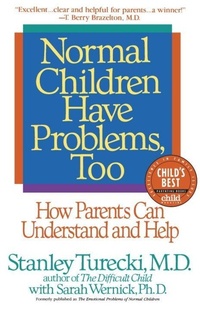
Normal Children Have Problems, Too
How Parents Can Understand and Help
Published on 17. February 2010
272 pages
978-0-307-57495-4 (ISBN)
Description

Lack of friends * poor self-image * sibling rivalry * hyperactivity * sadness and fearfulness * eating problems * nervous habits * aggressive behavior * defiance * sleep problems * lying * learning disabilities. . .
Even normal children can have problems.
And parents can help them.
That is the powerful assurance Dr. Stanley Turecki offers parents in this compassionate and practical book. Whatever the situation, Dr. Turecki shows you:
A new way to understand your child's difficulties and gain insights into causes and solutions
How to discuss problems without destructive arguments and win your child's cooperation
How to strengthen self-esteem by making the most of your child's individual temperament
How to improve discipline by focusing on planning and prevention rather than punishment
How to collaborate with teachers about school problems
What to do if you are told that your child should be tested for ADD or placed on medication
When to seek professional help
Including vivid vignettes illustrating a wide range of problems and how they were successfully resolved, this award-winning book is destined to become a parenting classic.
Even normal children can have problems.
And parents can help them.
That is the powerful assurance Dr. Stanley Turecki offers parents in this compassionate and practical book. Whatever the situation, Dr. Turecki shows you:
A new way to understand your child's difficulties and gain insights into causes and solutions
How to discuss problems without destructive arguments and win your child's cooperation
How to strengthen self-esteem by making the most of your child's individual temperament
How to improve discipline by focusing on planning and prevention rather than punishment
How to collaborate with teachers about school problems
What to do if you are told that your child should be tested for ADD or placed on medication
When to seek professional help
Including vivid vignettes illustrating a wide range of problems and how they were successfully resolved, this award-winning book is destined to become a parenting classic.
More details
Other editions
Additional editions
Stanley Turecki | Sarah Wernick
Normal Children Have Problems, Too
How Parents Can Understand and Help
Book
10/1995
Bantam Books
€25.00
Article exhausted; check different version
Persons
Stanley Turecki, M.D., is a psychiatrist, author, and lecturer. He is a diplomate of the American Board of Psychiatry and Neurology, certified in adult and child psychiatry, and Assistant Clinical Professor of Psychiatry at the Mount Sinai School of Medicine in New York City. He is also on the attending staff of Beth Israel Medical Center and Lenox Hill Hospital, and a member of several professional organizations. In 1983, he founded the Difficult Child Program at Beth Israel, and in 1985 the Difficult Child Center in Manhattan.
Since the publication of The Difficult Child in 1985 (revised edition, 1989), Dr. Turecki has become widely known for his expertise on children and families. His views have been featured in many professional and popular publications, including The New York Times, People, Redbook, Parents, Ladies' Home Journal and Working Mother. His many radio and television appearances include Good Morning America, The Today Show, CBS This Morning, Oprah Winfrey, and 20/20.
While maintaining an active practice in New York City, Dr. Turecki frequently lectures to parents, teachers, pediatricians, nurses, and mental-health professionals, speaks at professional association functions, and regularly participates in the T. Berry Brazelton National Seminar series.
Sarah Wernick, Ph.D., is a freelance writer based in Brookline, Massachusetts, who specializes in health and family issues. She is a contributing editor for Working Mother; her articles also have appeared in Woman's Day, Parents, Redbook, The New York Times, and other publications.
Since the publication of The Difficult Child in 1985 (revised edition, 1989), Dr. Turecki has become widely known for his expertise on children and families. His views have been featured in many professional and popular publications, including The New York Times, People, Redbook, Parents, Ladies' Home Journal and Working Mother. His many radio and television appearances include Good Morning America, The Today Show, CBS This Morning, Oprah Winfrey, and 20/20.
While maintaining an active practice in New York City, Dr. Turecki frequently lectures to parents, teachers, pediatricians, nurses, and mental-health professionals, speaks at professional association functions, and regularly participates in the T. Berry Brazelton National Seminar series.
Sarah Wernick, Ph.D., is a freelance writer based in Brookline, Massachusetts, who specializes in health and family issues. She is a contributing editor for Working Mother; her articles also have appeared in Woman's Day, Parents, Redbook, The New York Times, and other publications.
Content
- Intro
- Title Page
- Dedication
- Contents
- Acknowledgments
- Introduction
- Part I - Normal Children Can Have Problems
- Chapter One - Are You Concerned About Your Child?
- The Purpose of This Book
- Does Your Child Need Professional Help?
- Taking a Deeper Look
- A New Kind of Parental Leadership
- Chapter Two - A Philosophy That Respects Individuals
- A Troubled Child Is Not "Sick"
- Nature Is Just as Important as Nurture
- Different Is Not the Same as Abnormal
- Negative Behavior May Be an Effort to Adapt
- Problems Aren't Always Due to Faulty Parenting
- Parents Don't Need a Ph.D. in Psychology
- Compatibility Is Crucial
- A Child's Strengths Can Make the Difference
- Parents Don't Have to Be Perfect
- Children Are Resilient
- Chapter Three - How I Help Families: The Comprehensive Evaluation
- What Happens During an Evaluation
- A Close-up of One Family
- First Impressions
- Interview with the Parents
- Interlude in the Waiting Room
- Interview with the Child
- Putting It All Together
- Giving Feedback to the Parents
- The Follow-up Visit
- Part II - A New Way to Understand Your Child's Problems
- Introduction
- Chapter Four - Planned Communication
- Why Communication Goes Astray
- Recognizing Your Hidden Emotions
- Expressing Feelings Versus Venting Them
- Responding to Your Child's Feelings
- Encouraging Your Child to Talk
- Guidelines for a Planned Discussion
- Chapter Five - Your Child's Problems
- What Are Your Concerns?
- Is Self-Image a Factor?
- Decide Where to Start
- Describe the Problems Objectively
- Chapter Six - Your Child's Personality
- Describe Your Child's Temperament
- Consider Your Child's Development
- Are There Any Special Risk Factors?
- What Are Your Child's Strengths?
- Chapter Seven - Your Child at Home and at School
- Look at Yourself as a Parent and a Person
- Are There Family Difficulties?
- Is School an Issue?
- Are Peer Relationships a Factor?
- Part III - Adult Leadership
- Chapter Eight - Active Acceptance and Your Child's Self-Image
- Focus on Your Child's Assets
- Keep Your Own Issues Separate
- Adjust Your Expectations
- Give Your Child the Benefit of the Doubt
- Respect Your Child's Preferences
- Recruit Your Child's Strengths
- Schedule Positive Time Together
- Expect Appropriate Independence
- Don't Carry Praise to Excess
- Chapter Nine - Rethinking Discipline
- How Does Your Child Know You're Serious?
- Common Discipline Problems
- Why Parents Must Change First
- Chapter Ten - Discipline That Promotes Success
- Reclaim Adult Authority
- Establish a Clear Family Structure
- Plan Your Reactions to Misbehavior
- Part IV - Parents and Professionals Working Together
- Chapter Eleven - Dealing with School Problems
- Clarifying the Issues
- Collaborating with the Teacher
- Involving Your Child
- School Refusal
- ADHD (ADD, Hyperactivity)
- Learning Disabilities
- Chapter Twelve - Seeking Professional Help
- Reasons to See a Mental-Health Professional
- Finding the Right Professional
- Preparing Yourself and Your Child
- The First Session
- Forms of Treatment
- Ending Therapy
- Other Options
- A Few Final Words
- About the Authors
- Copyright
