

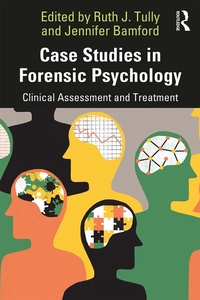
Case Studies in Forensic Psychology
Clinical Assessment and Treatment
1st Edition
Published on 13. March 2019
184 pages
978-0-429-01313-3 (ISBN)
Description

Case Studies in Forensic Psychology offers the reader a unique insight into the often-hidden world of psychological assessment and intervention with people who have committed serious crimes. The book contains a breadth of forensic case studies, and each chapter details the real forensic work that psychologists do in their clinical practice in prison, psychiatric, and community settings. Assessment and therapeutic approaches used in each case study are discussed, as well as the state of the literature in each area (e.g. sexual violence risk assessment, schema therapy).
Each chapter will take the reader through a variety of offender profiles, their personal background, any relevant psychiatric or psychological diagnoses, and assessments and/or treatment completed. Case studies offer valuable insight into the clinical practice and day-to-day role of a forensic psychologist, demonstrating the work undertaken that empirical research does not offer. Uniquely, Case Studies in Forensic Psychology brings together treatment models and forensic research, demonstrating how theory translates into practice and considering whether it is effective at an individual level.
It is ideal for students of forensic psychology and forensic mental health, as well as practitioners at any stage of their career in this rapidly expanding field.
Each chapter will take the reader through a variety of offender profiles, their personal background, any relevant psychiatric or psychological diagnoses, and assessments and/or treatment completed. Case studies offer valuable insight into the clinical practice and day-to-day role of a forensic psychologist, demonstrating the work undertaken that empirical research does not offer. Uniquely, Case Studies in Forensic Psychology brings together treatment models and forensic research, demonstrating how theory translates into practice and considering whether it is effective at an individual level.
It is ideal for students of forensic psychology and forensic mental health, as well as practitioners at any stage of their career in this rapidly expanding field.
Reviews / Votes
"This innovative text for professionals and students in the field of forensic psychology provides readers with a rare, in-depth view of the context and background to assessments and interventions used in clinical practice. I highly recommend these engaging case studies for those who wish to see how to apply peer-reviewed research in practice."- Jay P. Singh, PhD, Visiting Scholar, Institute of Criminology, University of Cambridge, UK"This book very helpfully explores the work and role of forensic psychologists in a variety of settings using a series of case-studies. Adopting this approach enables the reader to gain a deeper understanding of how forensic psychologists assess and formulate treatment options when assisting young people, those with personality or neurodevelopment disorders, learning disabilities or sexual deviancies. Organisational considerations are usefully factored into each chapter." - Professor Michael Brookes OBE, Professor of Forensic Psychology, Chartered and Registered Forensic Psychologist, UK
"This book provides key insights into the variety of work undertaken by forensic psychologists. The case studies provided are interesting to read and clearly presented. This book is a great read for those developing their assessment and formulation skills in forensic psychology." - Professor Theresa A. Gannon, Director of CORE-FP, University of Kent and Consultant Forensic Psychologist, Forensic Care Group, KMPT, UK
More details
Edition
1. Auflage
Language
English
Place of publication
London
United Kingdom
Publishing group
Taylor & Francis Ltd
Target group
College/higher education
Professional and scholarly
Illustrations
17 Tables, black and white; 2 Line drawings, black and white
File size
2,52 MB
ISBN-13
978-0-429-01313-3 (9780429013133)
Copyright in bibliographic data and cover images is held by Nielsen Book Services Limited or by the publishers or by their respective licensors: all rights reserved.
Schweitzer Classification
Other editions
Additional editions
Book
03/2019
1st Edition
Routledge
€60.90
Shipment within 10-20 days
Book
03/2019
1st Edition
Routledge
€207.30
Shipment within 10-20 days
Persons
Dr. Ruth J. Tully is a Forensic Psychologist in the UK. She is a Registered Practitioner Psychologist with the Health and Care Professions Council (HCPC) and is a Chartered Psychologist with the British Psychological Society (BPS).
Dr. Jennifer Bamford is a Health & Care Professionals Council (HCPC) Registered and British Psychological Society (BPS) Chartered Forensic Psychologist in the UK.
Dr. Jennifer Bamford is a Health & Care Professionals Council (HCPC) Registered and British Psychological Society (BPS) Chartered Forensic Psychologist in the UK.
Content
Introduction.
Dr Ruth J. Tully & Dr Jennifer Bamford
Young people: offending behaviour and community services. Dr Sara Northey
Sexual deviancy: assessment for court. Dr Ruth J. Tully
Male personality disorder: treatment approaches within a secure mental health setting. Dr Jamie Yapp
Neurodevelopmental disorder: learning disability in secure forensic psychiatric services. Lyn Shelton
Autism spectrum disorder: females in secure forensic psychiatric services. Dr Sarah Ashworth
Female sexual sadism: psychological assessment for prison parole review. Dr Jennifer Bamford
Mental health and violence: forensic risk assessment and formulation. Dr Ruth J. Tully
Conclusions. Dr Ruth J. Tully & Dr Jennifer Bamford
Dr Ruth J. Tully & Dr Jennifer Bamford
Young people: offending behaviour and community services. Dr Sara Northey
Sexual deviancy: assessment for court. Dr Ruth J. Tully
Male personality disorder: treatment approaches within a secure mental health setting. Dr Jamie Yapp
Neurodevelopmental disorder: learning disability in secure forensic psychiatric services. Lyn Shelton
Autism spectrum disorder: females in secure forensic psychiatric services. Dr Sarah Ashworth
Female sexual sadism: psychological assessment for prison parole review. Dr Jennifer Bamford
Mental health and violence: forensic risk assessment and formulation. Dr Ruth J. Tully
Conclusions. Dr Ruth J. Tully & Dr Jennifer Bamford
