

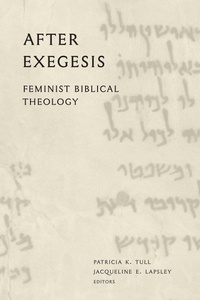
After Exegesis
Description

After Exegesis frames an inclusive feminist biblical theology, exploring creation, providence, divine judgment, salvation, praise, justice, authority, inclusion, the "other," moral agency, suffering, violence, reconciliation, flourishing, and hope. Each chapter places multiple related biblical texts in dialogue around a common theological concern. In so doing, this work exemplifies a central feminist claim: that bringing two or more texts, often born of different contexts, into conversation with each other generates a productive tension that transcends the dominant theological tradition.
After Exegesis thus underscores the fact that the context for feminist biblical theology must be understood more broadly than it has been traditionally construed. The volume demonstrates feminist theology fulfilling this promised breadth, while also staking a claim to the future: theology must attend to humanity's interdependent connectedness to the rest of creation and to such realities as human embodiment, suffering, oppression, hope, and the multivocal nature of truth.
More details
Other editions
Additional editions
Persons
Content
1. Introduction: Wisdom Rebuilds Her House Jacqueline E. Lapsley and Patricia K. Tull
2. Jobs and Benefits in Genesis 1 and 2: A Feminist Biblical Theology of Creation Patricia K. Tull
3. Women's Doings in Ruth: A Feminist Biblical Theology of Providence Eunny P. Lee
4. Job and the Hidden Face of God: A Feminist Biblical Theology of Divine Judgment Carleen Mandolfo
5. Embodiment in Isaiah 51-52 and Psalm 62: A Feminist Biblical Theology of Salvation Katie M. Heffelfinger
6. Reading Psalm 146 in the Wild: A Feminist Biblical Theology of Praise Jacqueline E. Lapsley
7. Woman Wisdom and Her Friends: A Feminist Biblical Theology of Justice Anne W. Stewart
8. When Esther and Jezebel Write: A Feminist Biblical Theology of Authority Cameron B. R. Howard
9. Miriam, Moses, and Aaron in Numbers 12 and 20: A Feminist Biblical Theology Concerning Exclusion Suzanne Boorer
10. Be Kind to Strangers, but Kill the Canaanites: A Feminist Biblical Theology of the Other Julie Galambush
11. Rahab and Esther in Distress: A Feminist Biblical Theology of Moral Agency Sarah J. Melcher
12. The Traumatized "I" in Psalm 102: A Feminist Biblical Theology of Suffering Amy C. Cottrill
13. "Missing Women" in Judges 19-21: A Feminist Biblical Theology Concerning Violence against Women Jo Ann Hackett
14. Zechariah's Gendered Visions: A Feminist Biblical Theology of Reconciliation Ingrid E. Lilly
15. Path and Possession in Proverbs 1-9: A Feminist Biblical Theology of Flourishing Christine Roy Yoder
16. Counterimagination in Isaiah 65 and Daniel 12: A Feminist Biblical Theology of Hope Amy C. Merrill Willis
