


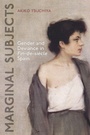
Marginal Subjects
Gender and Deviance in Nineteenth Century Spain
1st Edition
Published on 31. December 2011
256 pages
978-1-4426-9516-0 (ISBN)
Description

Late nineteenth-century Spanish fiction is populated by adulteresses, prostitutes, seduced women, and emasculated men - indicating an almost obsessive interest in gender deviance. In Marginal Subjects, Akiko Tsuchiya shows how the figure of the deviant woman-and her counterpart, the feminized man - revealed the ambivalence of literary writers towards new methods of social control in Restoration Spain.
Focusing on works by major realist authors such as Benito Perez Galdos, Emilia Pardo Bazan, and Leopoldo Alas (Clarin), as well as popular novelists like Eduardo Lopez Bago, Marginal Subjects argues that these archetypes were used to channel collective anxieties about sexuality, class, race, and nation. Tsuchiya also draws on medical and anthropological texts and illustrated periodicals to locate literary works within larger cultural debates. Marginal Subjects is a riveting exploration of why realist and naturalist narratives were so invested in representing gender deviance in fin-de-siecle Spain.
Focusing on works by major realist authors such as Benito Perez Galdos, Emilia Pardo Bazan, and Leopoldo Alas (Clarin), as well as popular novelists like Eduardo Lopez Bago, Marginal Subjects argues that these archetypes were used to channel collective anxieties about sexuality, class, race, and nation. Tsuchiya also draws on medical and anthropological texts and illustrated periodicals to locate literary works within larger cultural debates. Marginal Subjects is a riveting exploration of why realist and naturalist narratives were so invested in representing gender deviance in fin-de-siecle Spain.
Reviews / Votes
'Impeccably researched and illuminating study of representations of gender deviance in late nineteenth-century Spanish literature and culture... Marginal Subjects is an outstanding piece of scholarship and required reading for specialists in nineteenth-century Peninsular literature and culture, particularly those concerned with questions of gender.' - Jennifer Smith (Anales Galdosianos; vol 47:2012) 'The book also stands out for the thoroughness of the 'close readings' that brilliantly combine literary and cultural analysis, all of which is rendered in a prose that is both precise and elegant ... The author's reading always enriches the myriads of interpretation that are possible for each text.' - Toni Dorca, Revista Canadiense de Estudios HispAnicos 36.3 (2012) 'Tsuchiya's excellent study makes a thorough use of primary sources relating to nineteenth-century prostitution, hygiene, and other issues that impacted social perceptions of gender deviancy in nineteenth-century European society.' - Lou Charnon-Deutsch (Hispanic Review: winter 2012) 'Marginal Subjects constitutes an essential contribution to studies on Spanish modernity and is indispensable to specialists in Peninsular culture, gender studies and the nineteenth-century novel....Rare are books that offer academic and theoretical rigor, at the same time as the pleasure of a provocative reading which the reader faces under Akiko Tsuchiya's pen.'- Vialette, AurElie (Revista de Literatura (Madrid). Vol. 75: 149: 2013) 'Tsuchiya's style of writing is lucid, devoid of jargon, and negotiates the complicated steps from text to context with precision and finesse...This book will be indispensable to teaching and to research on the literature and culture of late nineteenth century Spain.'
- Harriet S. Turner (Arizona Journal of Hispanic Cultural Studies Volume 16, 2012)
More details
Language
English
Place of publication
Toronto
Canada
Target group
College/higher education
Professional and scholarly
Edition type
Digital original
File size
2,23 MB
ISBN-13
978-1-4426-9516-0 (9781442695160)
Copyright in bibliographic data and cover images is held by Nielsen Book Services Limited or by the publishers or by their respective licensors: all rights reserved.
Schweitzer Classification
Other editions
Additional editions
Book
04/2011
University of Toronto Press
€76.50
Shipment within 10-20 days
Person
Akiko Tsuchiya is a professor in the Department of Romance Languages and Literatures at Washington University.
Content
Acknowledgments
Credits
Notes on the Translations
List of Illustrations
Introduction: Discourses on Deviance in Nineteenth-Century Spain
The Deviant Female Body Under Surveillance: GaldOs?s La desheredada
"Las Micaelas por fuera y por dentro": Discipline and Resistance in Fortunata y Jacinta
Consuming Subjects: Female Reading and Deviant Sexuality in Late Nineteenth-Century Spain
Gender Trouble and the Crisis of Masculinity in the fin-de-siglo: ClarIn's Su Unico hijo and Pardo BazAn's Memorias de un solterOn
Gender, Orientalism, and the Performance of National Identity in Pardo BazAn's InsolaciOn
Taming the Prostitute's Body: Desire, Knowledge, and the Naturalist Gaze in LOpez Bago's La prostituta series
Female Subjectivity and Agency in Matilde Cherner's MarIa Magdalena
Conclusion
Works Cited
Credits
Notes on the Translations
List of Illustrations
Introduction: Discourses on Deviance in Nineteenth-Century Spain
The Deviant Female Body Under Surveillance: GaldOs?s La desheredada
"Las Micaelas por fuera y por dentro": Discipline and Resistance in Fortunata y Jacinta
Consuming Subjects: Female Reading and Deviant Sexuality in Late Nineteenth-Century Spain
Gender Trouble and the Crisis of Masculinity in the fin-de-siglo: ClarIn's Su Unico hijo and Pardo BazAn's Memorias de un solterOn
Gender, Orientalism, and the Performance of National Identity in Pardo BazAn's InsolaciOn
Taming the Prostitute's Body: Desire, Knowledge, and the Naturalist Gaze in LOpez Bago's La prostituta series
Female Subjectivity and Agency in Matilde Cherner's MarIa Magdalena
Conclusion
Works Cited
