

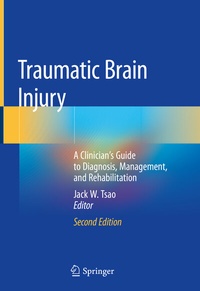
Traumatic Brain Injury
Description

This thoroughly revised and updated work covers numerous advances in traumatic brain injury diagnosis, evaluation, treatment, and pathophysiology. Since publication of the first edition in 2012, there has been greatly increased public awareness of the clinical consequences of even the mildest of head injuries, and the result has been a concerted effort of countries around the world to increase research funding. This second edition continues to focus on mild traumatic brain injury--or concussion--and contains updates to all the original chapters as well as adding new chapters addressing clinical sequelae, including pediatric concussion, visual changes, chronic traumatic encephalopathy, and blast-associated TBI. Traumatic Brain Injury: A Clinician's Guide to Diagnosis, Management, and Rehabilitation, Second Edition, is a comprehensive resource designed for neurologists, primary care clinicians, sports physicians, and other medical providers, including psychologists and neuropsychologists, as well as athletic trainers who may evaluate and care for individuals who have sustained a TBI. The book features summaries of the most pertinent areas of diagnosis and therapy, which can be readily accessed by the busy clinician/professional. In addition, the book's treatment algorithms provide a highly practical reference to cutting edge therapies, and an updated appendix of ICD codes is included. An outstanding contribution to the literature, Traumatic Brain Injury: A Clinician's Guide to Diagnosis, Management, and Rehabilitation, Second Edition, again offers an invaluable resource for all providers who treat patients with TBI.
More details
Other editions
Additional editions
Previous edition
Person
Jack W. Tsao, MD, DPhil
Professor of Neurology, Pediatrics, and Anatomy & Neurobiology
Department of Neurology
University of Tennessee Health Science Center
Memphis, TN
USA
jtsao@uthsc.edu
Content
1: Overview of Traumatic Brain Injury (TBI).- 2: Neuroradiological Imaging of Traumatic Brain Injury.- 3: Neuropsychological Assessment of mTBI in Adults.- 4: Management of Moderate and Severe TBI.- 5: Sports Concussion.- 6: Blast-Related Concussion.- 7: Sleep/Wake Disturbances in Mild Traumatic Brain Injury Patients.- 8: Vestibular Consequences of Mild Traumatic Brain Injury (mTBI).- 9: Post-Traumatic Headache.- 10: Epileptic and Non-Epileptic Seizures after Traumatic Brain Injury.- 11: Post-Traumatic Hypopituitarism: Neuroendocrine Dysfunction and Treatment.- 12: Visual Disturbances and Mild Traumatic Brain Injury (mTBI).- 13: Mild TBI and Co-Occurring PTSD Symptoms in Service Member Populations.- 14: Behavioral and Psychiatric Comorbidities of TBI.- 15: Chronic Effects of TBI in a Military Population.- 16: Rehabilitation Following TBI.- 17: Interventions to Improve Cognitive Functioning after Traumatic Brain Injury (TBI).- 18: Mild Traumatic Brain Injury (mTBI) Affects the Family, Not Just the Injured Individual.- 19: Pediatric Concussion Diagnosis, Management, and Rehabilitation.- 20: Chronic Traumatic Encephalopathy.- 21: Traumatic Brain Injury (TBI): Current Diagnostic and Therapeutic Challenges.- Appendix: TBI Diagnostic Coding Practices and Procedures.
