

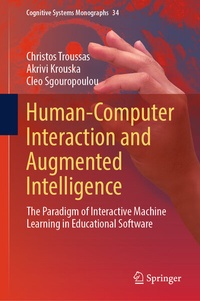
Human-Computer Interaction and Augmented Intelligence
Description

This book explores the transformative roles of human-computer interaction (HCI) and augmented intelligence (AI) in shaping intelligent systems. HCI focuses on designing interactive systems that enhance human-technology relationships, while AI empowers users with adaptive, data-driven tools that complement decision-making. Together, these fields drive innovation, creating systems that are efficient, intuitive, and inclusive, addressing diverse user needs across various domains.
Central to this work is the paradigm of interactive machine learning (IML), which builds on HCI and AI principles to create adaptive systems capable of evolving in real-time. The book highlights the application of IML in educational software, demonstrating how dynamic, personalized, and responsive learning environments can enhance student engagement and success. It provides detailed case studies and practical examples that showcase how IML aligns educational content, feedback, and interactions with learner behaviors and preferences. Additionally, it includes numerous Python code implementations and actionable design strategies, making these concepts accessible to practitioners and researchers alike.
Key topics include leveraging cognitive and communication styles to shape adaptive systems, integrating learning models to enhance personalization, and addressing ethical considerations such as data privacy and algorithmic fairness. Readers will also discover discussions on creating personalized tutoring systems, collaborative platforms, and immersive environments that redefine educational technology.
This book is a valuable resource for researchers, software developers, educators, instructional designers, and technologists at the intersection of human-computer interaction, augmented intelligence, and educational innovation. With its comprehensive framework and practical insights, it offers the tools to design adaptive, inclusive, and impactful learning systems for the future.
More details
Other editions
Additional editions
Content
Human-Computer Interaction in EducationHuman-Computer Interaction in Education.- The Role of Augmented Intelligence and Pedagogical Theories in Digital Learning.- Teaching methods and Online Instructional Design.- Cognitive Styles as a Factor of Effective Learning.
