

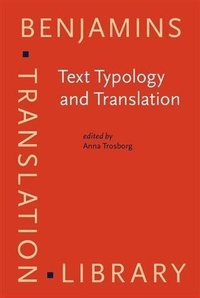
Text Typology and Translation
1st Edition
Published on 27. November 1997
XVI, 345 pages
978-90-272-8558-4 (ISBN)
Description

This book breaks new ground in translation theory and practice. The central question is: In what ways are translations affected by text types? The two main areas of investigation are: A. What are the advantages of focusing on text types when trying to understand the process of translation? How do translators tackle different text types in their daily practice? B. To what extent and in what areas are text types identical across languages and cultures? What similarities and dissimilarities can be observed in text types of original and translated texts?Part I deals with methodological aspects and offers a typology of translations both as product and as process. Part II is devoted to domain-specific texts in a cross-cultural perspective, while Part III is concerned with terminology and lexicon as well as the constraints of mode and medium involving dubbing and subtitling as translation methods. Sonnets, sagas, fairy tales, novels and feature films, sermons, political speeches, international treaties, instruction leaflets, business letters, academic lectures, academic articles, medical research articles, technical brochures and legal documents are but some of the texts under investigation.
In sum, this volume provides a theoretical overview of major problems and possibilities as well as investigations into a variety of text types with practical suggestions that deserve to be weighted by anyone considering the relation between text typology and translation. The volume is indispensable for the translator in his/her efforts to become a "competent text-aware professional".
In sum, this volume provides a theoretical overview of major problems and possibilities as well as investigations into a variety of text types with practical suggestions that deserve to be weighted by anyone considering the relation between text typology and translation. The volume is indispensable for the translator in his/her efforts to become a "competent text-aware professional".
More details
Other editions
Additional editions
Anna Trosborg
Text Typology and Translation
Book
11/1997
John Benjamins Publishing Co
€127.20
Shipment within 10-15 days
Person
Content
- TEXT TYPOLOGY AND TRANSLATION
- Editorial page
- Title page
- Copyright page
- Table of contents
- Introduction
- References
- Part I. Methodology
- Text Typology: Register, Genre and Text Type
- Introduction
- Text and discourse
- Register
- Genre
- Text types cutting across registers and genres
- Concluding comments
- Notes
- References
- Text Types and Translation
- Introduction
- The interpretations of "equivalence
- An approach to translation based on communication theory
- New types of translations and translation-related work
- A Typology of translations
- Notes
- References
- A Functional Typology of Translations
- Introduction: The crux of equivalence
- Functionalism + loyalty as an alternative model
- The notion of function
- Planning the translation process
- Conclusion
- References
- Text-Type Conventions and Translating: Some Methodological Issues
- Introduction
- Some basic concepts
- Macrostructures
- Microstructures
- By way of consclusion: Consequences for translation
- Bibliography
- Approaches to Literary Genres
- Text Types and Power Relations
- The power of the source
- Translation in context
- The case of the sonnet
- The Norse saga
- Difference and translation
- Notes
- References
- Description and Criticism: Some Approaches to the English Translations of Hans Christian Andersen
- The problems
- The translations
- Approaches
- Reading the text
- Pragmatics
- Puns
- Idioms
- Pseudo-idioms
- Conclusion: Description versus criticism
- Notes
- References
- Appendix 1
- Appendix 2
- Part II. Domain- and Genre-Specific Texts
- Strategies of Translating Political Texts
- Politics and translation
- Diplomatic discourse in multinational institutions
- Speeches and statements by politicians
- Politically relevant texts by non-politicians
- Conclusion
- Notes
- References
- Appendix: Analysed texts
- Translating Hybrid Political Texts
- Introduction
- EU documents
- Hybrid texts as primary communication
- Notes
- References
- Translation of Medical Research Articles
- Introduction
- Medical translation: Contrastive studies
- The medical research paper
- Conclusion
- References
- Translation of Technical Brochures
- Introduction
- LSP and translation
- Technical brochures seen from linguistics and marketing theory
- Speech acts and text functions in technical brochures
- Actional aspects in translation
- Conclusion
- References
- Translating Legal Genres
- Complexities of translation process
- Genre analysis
- A genre-based approach to translation
- Legislative discourse
- Easification as intra-lingual translation
- References
- Part III. Terminology and Lexicon
- Synonymy and Equivalence in Special-language Texts A Case Study in German and English Texts on Genetic Engineering
- Introduction
- Synonymy and Equivalence
- Terms and text
- Method
- Results and Analysis
- Notes
- References
- Reference Corpora and Lexicons for Translators and Translation Studies
- Introduction
- Electronic dictionaries
- Corpus linguistics and the development of reference corpora
- The bilingual lexical database system
- The bilingual text management and query system
- The workstation
- Notes
- References
- Dictionaries
- Texts Types and Medium
- Written to be Spoken: The Audio-Medial Text in Translation
- Text-type and translation method
- The poetic text: the radio play and the Bible as liturgy
- The academic lecture
- The audio-medial text and simultaneous interpreting
- Notes
- References
- Dubbing and the Dubbed Text - Style and Cohesion: Textual Characteristics of a Special Form of Translation
- Introduction
- Lip sync and nucleus sync as constraints in dubbing
- The scope of the analysis
- Film language as spoken language: text typological considerations
- The unnaturalness of dubbed text
- Stylistic features of dubbed text
- Cohesion in dubbed texts
- Anglicisms
- Textual characteristics of films dubbed into German
- The characteristics of dubbed text and the translation process
- Notes
- References
- Quality Revisited: The Rendering of English Idioms in Danish Television Subtitles vs. Printed Translations
- Subtitling in a historical perspective
- Subtitling defined
- Constraints, strengths, and intra-textuality
- Idioms at large
- How fixed are idioms?
- How opaque are idioms?
- Translating idioms
- A great divide: three modes of translation
- Typologies and strategies
- The pilot study
- Last Bus to Woodstock": One title, four texts
- Examples of strategies found in the novel translation and the TV subtitles
- LAST BUS TO WOODSTOCK": THE NOVEL
- LAST BUS TO WOODSTOCK": THE TV FILM
- Explanations to Table 4
- Facts and interpretations: individual texts
- General conclusion
- Idioms: Coming in from the cold
- Notes
- References
- Index
- The series Benjamins Translation Library
