


The Promise and Peril of Credit
What a Forgotten Legend about Jews and Finance Tells Us about the Making of European Commercial Society
1st Edition
Published on 20. May 2019
424 pages
978-0-691-18537-8 (ISBN)
Description

How an antisemitic legend gave voice to widespread fears surrounding the expansion of private credit in Western capitalism
The Promise and Peril of Credit takes an incisive look at pivotal episodes in the West's centuries-long struggle to define the place of private finance in the social and political order. It does so through the lens of a persistent legend about Jews and money that reflected the anxieties surrounding the rise of impersonal credit markets.
By the close of the Middle Ages, new and sophisticated credit instruments made it easier for European merchants to move funds across the globe. Bills of exchange were by far the most arcane of these financial innovations. Intangible and written in a cryptic language, they fueled world trade but also lured naive investors into risky businesses. Francesca Trivellato recounts how the invention of these abstruse credit contracts was falsely attributed to Jews, and how this story gave voice to deep-seated fears about the unseen perils of the new paper economy. She locates the legend's earliest version in a seventeenth-century handbook on maritime law and traces its legacy all the way to the work of the founders of modern social theory-from Marx to Weber and Sombart.
Deftly weaving together economic, legal, social, cultural, and intellectual history, Trivellato vividly describes how Christian writers drew on the story to define and redefine what constituted the proper boundaries of credit in a modern world increasingly dominated by finance.
The Promise and Peril of Credit takes an incisive look at pivotal episodes in the West's centuries-long struggle to define the place of private finance in the social and political order. It does so through the lens of a persistent legend about Jews and money that reflected the anxieties surrounding the rise of impersonal credit markets.
By the close of the Middle Ages, new and sophisticated credit instruments made it easier for European merchants to move funds across the globe. Bills of exchange were by far the most arcane of these financial innovations. Intangible and written in a cryptic language, they fueled world trade but also lured naive investors into risky businesses. Francesca Trivellato recounts how the invention of these abstruse credit contracts was falsely attributed to Jews, and how this story gave voice to deep-seated fears about the unseen perils of the new paper economy. She locates the legend's earliest version in a seventeenth-century handbook on maritime law and traces its legacy all the way to the work of the founders of modern social theory-from Marx to Weber and Sombart.
Deftly weaving together economic, legal, social, cultural, and intellectual history, Trivellato vividly describes how Christian writers drew on the story to define and redefine what constituted the proper boundaries of credit in a modern world increasingly dominated by finance.
All prices
More details
Other editions
Additional editions
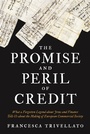
Francesca Trivellato
The Promise and Peril of Credit
What a Forgotten Legend about Jews and Finance Tells Us about the Making of European Commercial Society
Book
06/2021
Princeton University Press
€39.50
Shipment within 10-20 days
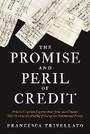
Francesca Trivellato
The Promise and Peril of Credit
What a Forgotten Legend about Jews and Finance Tells Us about the Making of European Commercial Society
Book
02/2019
Princeton University Press
€55.80
Shipment within 10-20 days
Person
Francesca Trivellato is professor in the School of Historical Studies at the Institute for Advanced Study in Princeton. She is the author of The Familiarity of Strangers: The Sephardic Diaspora, Livorno, and Cross-Cultural Trade in the Early Modern Period.
Content
- Cover
- Title Page
- Copyright Page
- Contents
- List of Illustrations
- Acknowledgments
- Preface
- Introduction
- 1 The Setting: Marine Insurance and Bills of Exchange
- 2 The Making of a Legend
- 3 The Riddle of Usury
- 4 Bordeaux, the Specter of Crypto- Judaism, and the Changing Status of Commerce
- 5 One Family, Two Bestsellers, and the Legend's Canonization
- 6 Between Usury and the "Spirit of Commerce"
- 7 Distant Echoes
- 8 A Legacy that Runs Deep
- Coda
- Appendix 1: Early Modern European Commercial Literature: Printed Bibliographies and Online Databases
- Appendix 2: The Legend's Earliest Formulation
- Appendix 3: Étienne Cleirac's Works: Titles, Editions, and Issues
- Appendix 4: The Legend in the Works of Jacques Savary and His Sons
- Appendix 5: Printed Books in French that Mention the Legend (1647-1800)
- Appendix 6: Printed Books in Languages Other than French that Mention the Legend (1676-1800)
- Appendix 7: Bibliographical References in Werner Sombart's Die Juden und das Wirtschaftsleben (1911)
- Notes
- Index

