

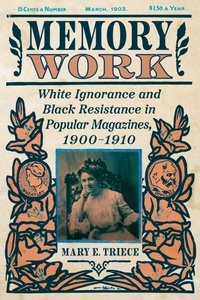
Memory Work
White Ignorance and Black Resistance in Popular Magazines, 1900-1910
Published on 23. October 2024
228 pages
978-1-4968-5417-9 (ISBN)
Description

In the early twentieth century, white-controlled magazines and Black magazines told very different stories about the dynamics of race, sex, and power in the United States. Memory Work: White Ignorance and Black Resistance in Popular Magazines, 1900-1910 examines how popular magazines employed rhetorical strategies to remember, forget, and frame America's racist past. White-controlled magazines such as the Independent, Outlook, Arena, and McClure's carried stories of southern nostalgia, union reconciliation, and white purity. Relying on willful ignorance to misremember past experiences of suffering, these texts severed violent histories from present-day policies and often simply remained silent. Meanwhile, in Black magazines such as the Colored American Magazine and the Voice of the Negro, women writers leveraged countermemory. Bringing Black women's accomplishments into focus, these writers inverted popular white narratives that erased and obscured Black women's experiences, including those of sexual violence.
Mary E. Triece traces how white and Black magazines-often in dialogue with one another-differently engaged memory work to either reinforce or upend white supremacy during a period of both Black advancement and white backlash. Further, the book suggests lines of connection between the construction of public memory in the past to those taking place today across an array of media platforms. Popular debates-whether appearing in early 1900s magazines or on twenty-first-century social media sites-shape a culture's collective knowledge of what counts as true, important, and worthy of attention.
Mary E. Triece traces how white and Black magazines-often in dialogue with one another-differently engaged memory work to either reinforce or upend white supremacy during a period of both Black advancement and white backlash. Further, the book suggests lines of connection between the construction of public memory in the past to those taking place today across an array of media platforms. Popular debates-whether appearing in early 1900s magazines or on twenty-first-century social media sites-shape a culture's collective knowledge of what counts as true, important, and worthy of attention.
More details
Other editions
Additional editions
Book
10/2024
University Press of Mississippi
€36.90
Shipment within 15-20 days
Book
10/2024
University Press of Mississippi
€113.10
Shipment within 15-20 days
Person
Mary E. Triece is professor in the School of Communication at the University of Akron. She is author of Urban Renewal and Resistance: Race, Space, and the City in the Late Twentieth to the Early Twenty-First Century and other books on women in the suffrage, labor, and welfare rights movements. Her research and teaching interests center on rhetorical theories and criticisms and social movement rhetorics.
