

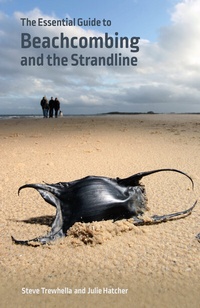
The Essential Guide to Beachcombing and the Strandline
1st Edition
Published on 8. June 2021
304 pages
978-0-691-23242-3 (ISBN)
Description

No detailed description available for "The Essential Guide to Beachcombing and the Strandline".
More details
Series
Language
English
Place of publication
Princeton
United States
Publishing group
De Gruyter
Target group
Professional and scholarly
Edition type
Digital original
Product notice
Fixed format
Illustrations
600+ color photographs
600+ color photographs
ISBN-13
978-0-691-23242-3 (9780691232423)
Schweitzer Classification
Other editions
Additional editions
Steve Trewhella | Julie Hatcher
The Essential Guide to Beachcombing and the Strandline
Book
09/2019
Wild Nature Press
€24.00
Shipment within 3-4 weeks
Persons
Steve Trewhella is a diver and photographer specialising in British marine life above and below the waves. He is a keen naturalist and when not diving enjoys beachcombing, rockpooling and recording strandline and coastal invertebrates. His beachcombing finds include new species records for the UK and new information about the distribution of wildlife endemic to strandlines. His images are used in publications all over the world and he has worked as a contributor on many natural history television features.
Julie Hatcher is a marine biologist working in marine conservation in Dorset. Her work involves raising awareness of the marine environment and marine and coastal wildlife in the UK, and she has written many articles for newspapers and magazines, as well as designing interpretation panels, posters and leaflets. She also leads guided rockpool rambles and seashore identification training courses, and has been a scuba diver for many years, mostly in the UK.
Steve and Julie met in 2004 since when they have jointly organised projects to record Pink Sea Fan skeletons, long-haul litter and strandline invertebrates as well as carrying out dive surveys for seahorses and stalked jellyfish. Their combined knowledge and interest in beachcombing has developed over many years, fuelled by inspirational characters along the way. A desire to share their understanding of this fascinating activity has led to this book.
Julie Hatcher is a marine biologist working in marine conservation in Dorset. Her work involves raising awareness of the marine environment and marine and coastal wildlife in the UK, and she has written many articles for newspapers and magazines, as well as designing interpretation panels, posters and leaflets. She also leads guided rockpool rambles and seashore identification training courses, and has been a scuba diver for many years, mostly in the UK.
Steve and Julie met in 2004 since when they have jointly organised projects to record Pink Sea Fan skeletons, long-haul litter and strandline invertebrates as well as carrying out dive surveys for seahorses and stalked jellyfish. Their combined knowledge and interest in beachcombing has developed over many years, fuelled by inspirational characters along the way. A desire to share their understanding of this fascinating activity has led to this book.
Content
- Cover Page
- Half-title Page
- Copyright Page
- Title Page
- Contents
- Acknowledgements
- Introduction
- What is the strandline?
- Where does the material come from?
- What can we learn from what is found?
- When is the best time for beachcombing?
- Why are there multiple strandlines?
- An extraordinary wildlife habitat
- Threats
- Kit list
- Collecting and recording your finds
- Keeping safe
- Beaches
- Sandy beaches
- Rocky or boulder beaches
- Shingle beaches
- Maerl beaches
- Seaweeds
- Brown seaweeds
- Green seaweeds
- Red seaweeds
- Eelgrass
- Shells
- Sandy shore
- Bivalves
- Gastropods
- Rocky shore
- Gastropods
- Bivalves
- Eggcases and eggs
- Mermaid's purses
- Shark eggcases
- Skate and ray eggcases
- Eggs
- Invertebrates and their remains
- Cuttlefish and squid
- Crab moults
- Other crustacean moults
- Carcasses, skulls and bones
- Seabirds and their remains
- Live strandings of cetaceans and turtles
- Dead strandings of cetaceans and turtles
- Marine mammal skeletal remains
- Fish
- Ocean drifters
- Driftwood
- Sea beans
- Jellyfish
- Animals of the ocean's surface
- Goose barnacles and associated animals
- Exotic non-natives on litter
- Pebbles with a difference
- Marine and beach litter
- Fishing litter
- Shipping litter
- Land-sourced litter
- Sewage-related debris
- Strandline wildlife
- Invertebrates
- Birds
- Mammals and amphibians
- Strandline plants
- Glossary
- Photographic credits
- Further reading
- Index
