


Living in Technical Legality
Description

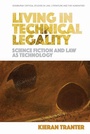
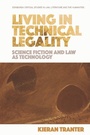
Through detailed readings of popular science fiction, including the novels of Frank Herbert and Octavia E. Butler and television's Battlestar Galactica and Doctor Who, this is the first sustained examination of legality in science fiction. Kieran Tranter includes substantive worked examples of the law and legal concepts projected by these science fiction texts, such as Australian car culture, legal responses to cloning and the relationship between legal theory and science fiction. By examining science fiction as the culture of our total technological world, it journeys with the partially-consumed human into the belly of the machine. What it finds is unexpected. Rather than a cold uniformity of exchangeable productive units, there is warmth, diversity and 'life' for the nodes in the networks. Through its science fiction focus it argues that this life generates a very different law of responsibility that can guide living well in technical legality.
More details
Other editions
Additional editions
Content
- Intro
- Living in Technical Legality
- Copyright
- Contents
- Figures
- Preface
- Introduction: Living in Technical Legality
- Part I Technical Legality
- 1 From Law and Technology to Law as Technology
- 2 Dune, Modern Law, and the Alchemy of Death and Time
- 3 Battlestar Galactica, Technology, and Life
- Part II Living in Technical Legality
- 4 Xenogenesis and the Technical Legal Subject
- 5 The Doctor and Technical Lawyering
- 6 Mad Max and Mapping the Monsters in the Networks
- 7 Deserts and Technical Legality
- Bibliography
- Index
