

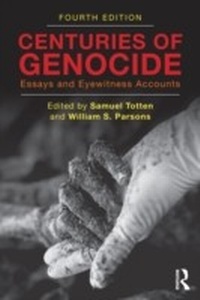
Centuries of Genocide
Essays and Eyewitness Accounts
4th Edition
Published on 10. September 2012
616 pages
978-1-135-24551-1 (ISBN)
Description

The fourth edition of Centuries of Genocide: Essays and Eyewitness Accounts addresses examples of genocides perpetrated in the nineteenth, twentieth, and twenty-first centuries. Each chapter of the book is written by a recognized expert in the field, collectively demonstrating a wide range of disciplinary perspectives. The book is framed by an introductory essay that spells out definitional issues, as well as the promises, complexities, and barriers to the prevention and intervention of genocide.
To help the reader learn about the similarities and differences among the various cases, each case is structured around specific leading questions. In every chapter authors address: Who committed the genocide? How was the genocide committed? Why was the genocide committed? Who were the victims? What were the outstanding historical forces? What was the long-range impact? What were the responses? How do scholars interpret this genocide? How does learning about this genocide contribute to the field of study?
While the material in each chapter is based on sterling scholarship and wide-ranging expertise of the authors, eyewitness accounts give voice to the victims. This book is an attempt to provoke the reader into understanding that learning about genocide is important and that we all have a responsibility not to become immune to acts of genocide, especially in the interdependent world in which we live today.
Revision highlights include:
New chapters on genocide of Native Americans in the nineteenth century, genocide in Australia, and genocide in the Nuba Mountains
New chapter authors on Herero genocide and Rwanda genocide
Consolidation of the 3 chapters on the Holocaust into one focused case
Several chapters from past editions that were omitted are now available on a companion website (Indonesia, Burundi, indigenous peoples)
To help the reader learn about the similarities and differences among the various cases, each case is structured around specific leading questions. In every chapter authors address: Who committed the genocide? How was the genocide committed? Why was the genocide committed? Who were the victims? What were the outstanding historical forces? What was the long-range impact? What were the responses? How do scholars interpret this genocide? How does learning about this genocide contribute to the field of study?
While the material in each chapter is based on sterling scholarship and wide-ranging expertise of the authors, eyewitness accounts give voice to the victims. This book is an attempt to provoke the reader into understanding that learning about genocide is important and that we all have a responsibility not to become immune to acts of genocide, especially in the interdependent world in which we live today.
Revision highlights include:
New chapters on genocide of Native Americans in the nineteenth century, genocide in Australia, and genocide in the Nuba Mountains
New chapter authors on Herero genocide and Rwanda genocide
Consolidation of the 3 chapters on the Holocaust into one focused case
Several chapters from past editions that were omitted are now available on a companion website (Indonesia, Burundi, indigenous peoples)
Reviews / Votes
"In this deeply humane book, fired by the passion of the editors and authors to understand the roots of genocides so that we can prevent this scourge of humanity, eminent experts give up-to-date accounts of 15 genocides. The scholarship of the authors is outstanding, the chapters in the book highly readable and compelling. While most of the chapters are about genocides in the 20th century, the book now contains chapters about genocides in the 19th century and the first genocide in the 21st Century. The personal accounts included truly reach the heart."-Ervin Staub, author of Overcoming Evil: Genocide, Violent Conflict and Terrorism, Founding Director of the Doctoral program in Psychology of Violence and Peace, University of Massachusetts at Amherst
"A welcome new edition to an already influential series, Centuries of Genocide adds new cases spanning the nineteenth to the twenty-first century and the four corners of the globe. Each chapter offers up-to-date research and analysis by some of the leading scholars in the field on the causes, processes, and aftermath of genocide, along with searing first-person eyewitness accounts that starkly illustrate the human experience, and tragic cost, of genocidal violence. A key text for scholars and students alike interested in understanding and preventing the 'crime of crimes.'"
-Maureen Hiebert, University of Calgary
"This book is outstanding because its scale enables us to start to compare genocides by the testimony of the eyewitness. These testimonies show us that genocide is not just a word: the data presented here narrates about the people who became victims. In this book we hear their cries, their bewilderment, their whispers, their groans, and their words. They come to us from many regions and periods. The book will make one aware that genocide is of all times: to listen to these voices and to read these pages is crucial for understanding and teaching genocide."
-Selma Leydesdorff, University of Amsterdam
"Survivors of genocide can shed light on the realities of genocidal violence in ways that no other sources can illuminate. This new edition of Centuries of Genocide throws the voices of victims from more than a dozen episodes of genocide into sharp relief, providing searing witness to the on-going inhumanity of man to men, women and children."
-Craig Etcheson, Genocide Investigator
"Authored by an impressive array of the most respected and knowledgeable practitioners in the field, this book is an indispensable tool for the study of how genocide actually happens and for the formidable challenge of preventing it. Its editors required from the authors a uniform methodology applied to broadly different case studies. The result allows for rigorous comparative analysis; lessons from each catastrophe thus become clearer and - hopefully - can be applied more effectively in future scenarios. The effort is all the more commendable because editors and authors have covered every one of the most significant episodes in the recent past."
-Juan E Mendez, UN Special Rapporteur on Torture and Other Cruel, Inhuman or Degrading Treatment or Punishment; Visiting Professor, Washington College of Law
More details
Edition
4th edition
Language
English
Place of publication
London
United Kingdom
Publishing group
Taylor & Francis Ltd
Target group
College/higher education
Edition type
Revised edition
Illustrations
17 s/w Photographien bzw. Rasterbilder
17 Halftones, black and white
File size
6,20 MB
ISBN-13
978-1-135-24551-1 (9781135245511)
Copyright in bibliographic data and cover images is held by Nielsen Book Services Limited or by the publishers or by their respective licensors: all rights reserved.
Schweitzer Classification
Other editions
Additional editions
Book
08/2012
4th Edition
Routledge
€217.50
Shipment within 15-20 days
Book
08/2012
4th Edition
Routledge
€77.50
Shipment within 15-20 days
Persons
Samuel Totten is a Professor at the University of Arkansas, Fayetteville, and co-founding editor of Genocide Studies and Prevention: An International Journal. He has also been a Fulbright Fellow at the Centre for Conflict Management, National University of Rwanda.
William S. Parsons is Chief of Staff for the United States Holocaust Memorial Museum in Washington, D.C.
William S. Parsons is Chief of Staff for the United States Holocaust Memorial Museum in Washington, D.C.
Content
Introduction - Samuel Totten and William S. Parsons
1. The Genocide of California's Yana Indians - Ben Madley
2. Genocide in Australia - Colin Tatz
3. The Genocide of the Herero and Nama in German South-West Africa, 1904-1907 - Dominik Schaller
4. The Armenian Genocide - Rouben Paul Adalian
5. Soviet Man-made Famine in Ukraine - James E. Mace
6. The Holocaust: Jews, Gypsies, and the Handicapped- Donald L. Niewyk
7. Genocide in Bangladesh - Rounaq Jahan
8. Genocide in East Timor - James Dunn
9. The Cambodian Genocide, 1975-1979 -- Ben Kiernan
10. Guatemala: Acts of Genocide and Scorched-Earth Counterinsurgency War - Susanne Jonas
11. The Anfal Operations in Iraqi Kurdistan - Michiel Leezenberg
12. The Nuba Mountains, Sudan - Alex De Waal
13. The 1994 Genocide of the Tutsi of Rwanda - Gerry Caplan
14. Genocidal Violence in the Former Yugoslavia: Bosnia Herzegovina -- Martin Mennecke
15. Genocide in Darfur, Sudan - Samuel Totten
1. The Genocide of California's Yana Indians - Ben Madley
2. Genocide in Australia - Colin Tatz
3. The Genocide of the Herero and Nama in German South-West Africa, 1904-1907 - Dominik Schaller
4. The Armenian Genocide - Rouben Paul Adalian
5. Soviet Man-made Famine in Ukraine - James E. Mace
6. The Holocaust: Jews, Gypsies, and the Handicapped- Donald L. Niewyk
7. Genocide in Bangladesh - Rounaq Jahan
8. Genocide in East Timor - James Dunn
9. The Cambodian Genocide, 1975-1979 -- Ben Kiernan
10. Guatemala: Acts of Genocide and Scorched-Earth Counterinsurgency War - Susanne Jonas
11. The Anfal Operations in Iraqi Kurdistan - Michiel Leezenberg
12. The Nuba Mountains, Sudan - Alex De Waal
13. The 1994 Genocide of the Tutsi of Rwanda - Gerry Caplan
14. Genocidal Violence in the Former Yugoslavia: Bosnia Herzegovina -- Martin Mennecke
15. Genocide in Darfur, Sudan - Samuel Totten
