

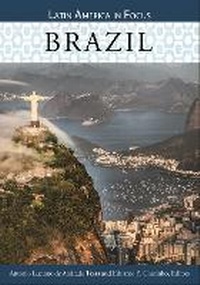
Brazil
1st Edition
Published on 14. December 2015
440 pages
978-1-61069-258-8 (ISBN)
Available for download
Description

Ideal for high school and undergraduate students, this one-stop reference explores everything that makes up modern Brazil, including its geography, politics, pop culture, social media, daily life, and much more.
Home to the 2014 FIFA World Cup and the 2016 Summer Olympic Games-and one of the world's fastest-growing economies-Brazil is quickly becoming a prominent player on the international stage. This book captures the essence of the nation and its people in a unique, topically organized volume. Narrative chapters written by expert contributors examine geography, history, government and politics, economics, society, culture, and contemporary issues, making Brazil an ideal one-stop reference for high school and undergraduate students.
Coverage on religion, ethnicity, marriage and sexuality, education, literature and drama, art and architecture, music and dance, food, leisure and sport, and media provides a comprehensive look at this giant South American country-the largest nation in Latin America as well as the fifth largest nation in the world. Students will be engaged by up-to-the-minute coverage of topics such as daily life, social media, and pop culture in Brazil. Sidebars and photos highlight interesting facts and people, while a glossary, a chart of holidays, and an annotated bibliography round out the work.
Home to the 2014 FIFA World Cup and the 2016 Summer Olympic Games-and one of the world's fastest-growing economies-Brazil is quickly becoming a prominent player on the international stage. This book captures the essence of the nation and its people in a unique, topically organized volume. Narrative chapters written by expert contributors examine geography, history, government and politics, economics, society, culture, and contemporary issues, making Brazil an ideal one-stop reference for high school and undergraduate students.
Coverage on religion, ethnicity, marriage and sexuality, education, literature and drama, art and architecture, music and dance, food, leisure and sport, and media provides a comprehensive look at this giant South American country-the largest nation in Latin America as well as the fifth largest nation in the world. Students will be engaged by up-to-the-minute coverage of topics such as daily life, social media, and pop culture in Brazil. Sidebars and photos highlight interesting facts and people, while a glossary, a chart of holidays, and an annotated bibliography round out the work.
More details
Series
Language
English
Place of publication
United States
Publishing group
Bloomsbury Publishing Plc
Illustrations
30 bw illus
ISBN-13
978-1-61069-258-8 (9781610692588)
Copyright in bibliographic data and cover images is held by Nielsen Book Services Limited or by the publishers or by their respective licensors: all rights reserved.
Schweitzer Classification
Other editions
Additional editions
Antonio Luciano de Andrade Tosta | Eduardo F. Coutinho
Brazil
Book
12/2015
ABC-CLIO
€110.40
Shipment within 3-4 weeks
Persons
Antonio Luciano de Andrade Tosta, PhD, is assistant professor of Brazilian literature and culture at the University of Kansas.
Eduardo F. Coutinho, PhD, is professor of comparative literature at the Federal University of Rio de Janeiro, Brazil.
Eduardo F. Coutinho, PhD, is professor of comparative literature at the Federal University of Rio de Janeiro, Brazil.
Content
Preface,
Introduction,
1 Geography,
Overview,
The Northeast,
Maranhão,
Piauí,
Ceará,
Rio Grande do Norte,
Paraíba,
Pernambuco,
Alagoas,
Sergipe,
Bahia,
The North Region,
Pará,
Amazonas,
Amapá,
Roraima,
Acre,
Rondônia,
Tocantins,
The South Region,
Paraná,
Santa Catarina,
Rio Grande do Sul,
The Midwest Region,
Mato Grosso,
Mato Grosso do Sul,
Goiás,
Distrito Federal,
The Southeast Region,
Minas Gerais,
Espírito Santo,
Rio de Janeiro,
São Paulo,
2 History,
Timeline of Events,
Colonization and Early History,
The Mature Colony,
The Brazilian Empire (1822-1889),
The First Republic (1889-1930),
The Vargas Era (1930-1945) and the Second Republic,
Military Dictatorship (1964-1985),
Democratic Brazil (1985-Present),
3 Government and Politics,
Introduction: Consolidating a Young and Vibrant Democracy,
History: From the Empire to the New Republic,
The Empire,
The Proclamation of the Republic,
Getúlio Vargas and His Legacy,
National Parties and Competitive Elections,
Vargas Returns to Power as an Elected President,
Developmentalism and the Creation of Brasília,
The Political Crisis of the 1960s,
Brazil's Military Dictatorship (1964-1985),
Democratization and a New Constitution,
Government Today,
A Multiparty Presidential Democracy in a Federative System,
The Electoral System,
Government Levels: The Federal Government, States, and Municipalities,
Main Parties,
Corruption,
Foreign Relations,
Conclusion,
4 Economy,
Introduction,
Colonization: An Export-Led Economy,
Industrialization,
Democratization,
Washington Consensus,
Globalization,
Development,
Conclusion,
5 Society,
Religion and Thought,
Religious Life, Moral Values, and Belief Systems in Brazil: An Overview,
Native Brazilian Tribes and Nations,
Catholicism,
Protestantism,
The Irmandades (Lay Brotherhoods),
Religious Syncretism,
Judaism,
Islam,
The Religious Scenario in Brazil Today,
Social Classes and Ethnicity,
The Intersection of Class and Ethnicity in Contemporary Brazil,
Colonization,
The Post-Independence Period,
The 1930s-1960s,
Brazil after Re-Democratization,
Gender, Marriage, and Sexuality,
The Patriarchal Family,
The 19th Century and the Sentimentalizing of the Family,
Post-World War II Women: The Full-Time Mother,
Divided and Multiplied: Nowadays Wonder-Women,
Women Today,
Education,
Introduction,
Organization of Brazilian Education: Structure and Functioning,
Childhood Education,
Elementary Education,
Secondary Education or High School,
University Education,
Education Programs,
Educational Policies in Brazil,
Important Policies,
Basic Education-Specific Programs Supported by the Ministry of Education,
National Education Plan (PNE),
Democratic School Management in Brazilian Education,
Principles of Participative School Management and Organization,
Basic Education Financing: FNDE and FUNDEB,
National Educational Development Fund (FNDE),
Basic Education Development Fund (FUNDEB),
Assessment of Basic Education According to MEC,
Higher Education Expansion and Evaluation,
REUNI,
SINAES-Higher Education National Evaluation System,
6 Culture,
Language,
Brazil: A Multilingual Country,
Indigenous Languages,
Immigrant Languages,
History of Brazilian Portuguese,
Portuguese around the World,
The Different Portuguese Languages,
Brazilian Portuguese Diversity,
The Role of Brazil in Promoting Portuguese,
Teaching of Portuguese Language as a Nonnative Language,
Foreign-Language Education in Brazil,
Portuguese on the Internet and Social Media,
English and Brazilian Portuguese: Cognates and False Cognates,
Family and Etiquette,
Introduction,
The First Brazilians,
The Formation of the Brazilian Family,
Taboo Matters,
Extending the Family, Changing Roles,
The Single-Parent Families,
The Safe Port,
Open Doors, Plentiful Tables,
Solidarity within the Family,
Families Getting Old,
Family and Faith,
The Fantasy of the Racial Democracy,
Conclusion,
Literature and Drama,
First Manifestations,
The Baroque and Arcadian Periods,
Romanticism,
The Realist Era,
Machado de Assis,
The Transition Phase: Symbolism and Impressionism,
The Modernist Movement,
João Guimarães Rosa,
Clarice Lispector,
The Modernist Legacy and Postmodernism,
The Brazilian Drama,
Art,
Indigenous Arts of the Brazilian Region,
Dutch Artistic Influence in Colonial Brazil,
Baroque and Rococo: The 17th and 18th Centuries in Brazil,
Nineteenth-Century Brazil: The French Mission and the Roots of Modernity,
The Rise of the Modern: The 20th and 21st Centuries in Brazil,
Architecture,
Colonial Brazil,
Civil Architecture,
Religious Architecture,
Military Architecture,
Imperial Brazil,
Neoclassical,
The Republic of Brazil,
Eclecticism,
Art Nouveau,
Art Deco,
Modernism,
Postmodernism,
Contemporaneous,
Music,
Introduction,
History and Geography: Some Background,
Brazil-United States?,
The Myth of the Three Races,
Music Comes on the Scene,
Sources and Technologies,
Taking Brazilian Music Seriously,
Concepts and Problems,
Orchestras, Bands, and Ensembles,
Entering the Ring: Batuques, Jongos, Sambas, and Umbigadas,
... Still in the Ring: Afro-Brazilian Religions,
Leaving the Ring: Capoeira, Maracatu, and the Boi,
Music and Poetry,
Discovering Indigenous Musics,
The Arrival of Technology: Radio Programs, Cinema, and "Jazes,"
The Strength of the Urban Music Scene: MPB, Rock, and Reggae,
The Romantic Audience: Sertanejo, Vanerão, and Arrocha,
Youth Audiences: Funk, Rap, Pagode, and Tecnobrega,
Conclusion,
Food,
Brazilian Cuisine(s) and Its Origins,
Brazilian Staple Food and Everyday Eating Habits,
What's in the Brazilian Plate?,
Rice and Beans,
Meat, Poultry, Pork, Fish, and Shellfish,
Fruits and Vegetables,
Brazilian Regional Cuisine,
Sharing a Meal,
Leisure and Sports,
Introduction,
Indigenous Sporting Traditions,
Martial Arts,
Capoeira,
Brazilian Jiu-Jitsu,
Modern Sports,
European Influence,
Soccer,
Internationally Competitive Sports,
Women and Sports,
Spotlight on Brazilian Athletes,
Recreational Sports/Games,
Leisure,
Cinema,
Early Films,
Cinema Novo,
Cinema in the Late 20th Century,
Post-Retomada Films,
7 Contemporary Issues,
Introduction,
Abortion and Family Planning,
Affirmative Action,
Catholic Church,
Drugs,
Cannabis or Marijuana,
Cocaine,
Opiates,
Hosting Big Events,
Latin America,
Nationalism in Brazil,
Racism,
Television as a Civil Society Group in Brazil,
Brazil-Developing or Forever the "Country of the Future"?,
Glossary,
Facts and Figures,
Major Brazilian Holidays and Festivals,
Country-Related Organizations,
Selected Bibliography,
About the Editors and Contributors,
Index,
Introduction,
1 Geography,
Overview,
The Northeast,
Maranhão,
Piauí,
Ceará,
Rio Grande do Norte,
Paraíba,
Pernambuco,
Alagoas,
Sergipe,
Bahia,
The North Region,
Pará,
Amazonas,
Amapá,
Roraima,
Acre,
Rondônia,
Tocantins,
The South Region,
Paraná,
Santa Catarina,
Rio Grande do Sul,
The Midwest Region,
Mato Grosso,
Mato Grosso do Sul,
Goiás,
Distrito Federal,
The Southeast Region,
Minas Gerais,
Espírito Santo,
Rio de Janeiro,
São Paulo,
2 History,
Timeline of Events,
Colonization and Early History,
The Mature Colony,
The Brazilian Empire (1822-1889),
The First Republic (1889-1930),
The Vargas Era (1930-1945) and the Second Republic,
Military Dictatorship (1964-1985),
Democratic Brazil (1985-Present),
3 Government and Politics,
Introduction: Consolidating a Young and Vibrant Democracy,
History: From the Empire to the New Republic,
The Empire,
The Proclamation of the Republic,
Getúlio Vargas and His Legacy,
National Parties and Competitive Elections,
Vargas Returns to Power as an Elected President,
Developmentalism and the Creation of Brasília,
The Political Crisis of the 1960s,
Brazil's Military Dictatorship (1964-1985),
Democratization and a New Constitution,
Government Today,
A Multiparty Presidential Democracy in a Federative System,
The Electoral System,
Government Levels: The Federal Government, States, and Municipalities,
Main Parties,
Corruption,
Foreign Relations,
Conclusion,
4 Economy,
Introduction,
Colonization: An Export-Led Economy,
Industrialization,
Democratization,
Washington Consensus,
Globalization,
Development,
Conclusion,
5 Society,
Religion and Thought,
Religious Life, Moral Values, and Belief Systems in Brazil: An Overview,
Native Brazilian Tribes and Nations,
Catholicism,
Protestantism,
The Irmandades (Lay Brotherhoods),
Religious Syncretism,
Judaism,
Islam,
The Religious Scenario in Brazil Today,
Social Classes and Ethnicity,
The Intersection of Class and Ethnicity in Contemporary Brazil,
Colonization,
The Post-Independence Period,
The 1930s-1960s,
Brazil after Re-Democratization,
Gender, Marriage, and Sexuality,
The Patriarchal Family,
The 19th Century and the Sentimentalizing of the Family,
Post-World War II Women: The Full-Time Mother,
Divided and Multiplied: Nowadays Wonder-Women,
Women Today,
Education,
Introduction,
Organization of Brazilian Education: Structure and Functioning,
Childhood Education,
Elementary Education,
Secondary Education or High School,
University Education,
Education Programs,
Educational Policies in Brazil,
Important Policies,
Basic Education-Specific Programs Supported by the Ministry of Education,
National Education Plan (PNE),
Democratic School Management in Brazilian Education,
Principles of Participative School Management and Organization,
Basic Education Financing: FNDE and FUNDEB,
National Educational Development Fund (FNDE),
Basic Education Development Fund (FUNDEB),
Assessment of Basic Education According to MEC,
Higher Education Expansion and Evaluation,
REUNI,
SINAES-Higher Education National Evaluation System,
6 Culture,
Language,
Brazil: A Multilingual Country,
Indigenous Languages,
Immigrant Languages,
History of Brazilian Portuguese,
Portuguese around the World,
The Different Portuguese Languages,
Brazilian Portuguese Diversity,
The Role of Brazil in Promoting Portuguese,
Teaching of Portuguese Language as a Nonnative Language,
Foreign-Language Education in Brazil,
Portuguese on the Internet and Social Media,
English and Brazilian Portuguese: Cognates and False Cognates,
Family and Etiquette,
Introduction,
The First Brazilians,
The Formation of the Brazilian Family,
Taboo Matters,
Extending the Family, Changing Roles,
The Single-Parent Families,
The Safe Port,
Open Doors, Plentiful Tables,
Solidarity within the Family,
Families Getting Old,
Family and Faith,
The Fantasy of the Racial Democracy,
Conclusion,
Literature and Drama,
First Manifestations,
The Baroque and Arcadian Periods,
Romanticism,
The Realist Era,
Machado de Assis,
The Transition Phase: Symbolism and Impressionism,
The Modernist Movement,
João Guimarães Rosa,
Clarice Lispector,
The Modernist Legacy and Postmodernism,
The Brazilian Drama,
Art,
Indigenous Arts of the Brazilian Region,
Dutch Artistic Influence in Colonial Brazil,
Baroque and Rococo: The 17th and 18th Centuries in Brazil,
Nineteenth-Century Brazil: The French Mission and the Roots of Modernity,
The Rise of the Modern: The 20th and 21st Centuries in Brazil,
Architecture,
Colonial Brazil,
Civil Architecture,
Religious Architecture,
Military Architecture,
Imperial Brazil,
Neoclassical,
The Republic of Brazil,
Eclecticism,
Art Nouveau,
Art Deco,
Modernism,
Postmodernism,
Contemporaneous,
Music,
Introduction,
History and Geography: Some Background,
Brazil-United States?,
The Myth of the Three Races,
Music Comes on the Scene,
Sources and Technologies,
Taking Brazilian Music Seriously,
Concepts and Problems,
Orchestras, Bands, and Ensembles,
Entering the Ring: Batuques, Jongos, Sambas, and Umbigadas,
... Still in the Ring: Afro-Brazilian Religions,
Leaving the Ring: Capoeira, Maracatu, and the Boi,
Music and Poetry,
Discovering Indigenous Musics,
The Arrival of Technology: Radio Programs, Cinema, and "Jazes,"
The Strength of the Urban Music Scene: MPB, Rock, and Reggae,
The Romantic Audience: Sertanejo, Vanerão, and Arrocha,
Youth Audiences: Funk, Rap, Pagode, and Tecnobrega,
Conclusion,
Food,
Brazilian Cuisine(s) and Its Origins,
Brazilian Staple Food and Everyday Eating Habits,
What's in the Brazilian Plate?,
Rice and Beans,
Meat, Poultry, Pork, Fish, and Shellfish,
Fruits and Vegetables,
Brazilian Regional Cuisine,
Sharing a Meal,
Leisure and Sports,
Introduction,
Indigenous Sporting Traditions,
Martial Arts,
Capoeira,
Brazilian Jiu-Jitsu,
Modern Sports,
European Influence,
Soccer,
Internationally Competitive Sports,
Women and Sports,
Spotlight on Brazilian Athletes,
Recreational Sports/Games,
Leisure,
Cinema,
Early Films,
Cinema Novo,
Cinema in the Late 20th Century,
Post-Retomada Films,
7 Contemporary Issues,
Introduction,
Abortion and Family Planning,
Affirmative Action,
Catholic Church,
Drugs,
Cannabis or Marijuana,
Cocaine,
Opiates,
Hosting Big Events,
Latin America,
Nationalism in Brazil,
Racism,
Television as a Civil Society Group in Brazil,
Brazil-Developing or Forever the "Country of the Future"?,
Glossary,
Facts and Figures,
Major Brazilian Holidays and Festivals,
Country-Related Organizations,
Selected Bibliography,
About the Editors and Contributors,
Index,

