

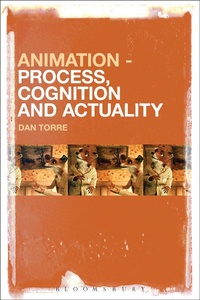
Animation - Process, Cognition and Actuality
1st Edition
Published on 24. August 2017
312 pages
978-1-5013-0815-4 (ISBN)
Description

Animation - Process, Cognition and Actuality presents a uniquely philosophical and multi-disciplinary approach to the scholarly study of animation, by using the principles of process philosophy and Deleuzian film aesthetics to discuss animation practices, from early optical devices to contemporary urban design and installations. Some of the original theories presented are a process-philosophy based theory of animation; a cognitive theory of animation; a new theoretical approach to the animated documentary; an original investigative approach to animation; and unique considerations as to the convergence of animation and actuality. Numerous animated examples (from all eras and representing a wide range of techniques and approaches - including television shows and video games) are examined, such as Fantastic Mr. Fox (2009), Madame Tutli-Putli (2007), Gertie the Dinosaur (1914), The Peanuts Movie (2015), Grand Theft Auto V (2013) and Dr. Katz: Professional Therapist (1995-2000).
Divided into three sections, each to build logically upon each other, Dan Torre first considers animation in terms of process and process philosophy, which allows the reader to contemplate animation in a number of unique ways. Torre then examines animation in more conceptual terms in comparing it to the processes of human cognition. This is followed by an exploration of some of the ways in which we might interpret or 'read' particular aspects of animation, such as animated performance, stop-motion, anthropomorphism, video games, and various hybrid forms of animation.
He finishes by guiding the discussion of animation back to the more tangible and concrete as it considers animation within the context of the actual world. With a genuinely distinctive approach to the study of animation, Torre offers fresh philosophical and practical insights that prompt an engagement with the definitions and dynamics of the form, and its current literature.
Divided into three sections, each to build logically upon each other, Dan Torre first considers animation in terms of process and process philosophy, which allows the reader to contemplate animation in a number of unique ways. Torre then examines animation in more conceptual terms in comparing it to the processes of human cognition. This is followed by an exploration of some of the ways in which we might interpret or 'read' particular aspects of animation, such as animated performance, stop-motion, anthropomorphism, video games, and various hybrid forms of animation.
He finishes by guiding the discussion of animation back to the more tangible and concrete as it considers animation within the context of the actual world. With a genuinely distinctive approach to the study of animation, Torre offers fresh philosophical and practical insights that prompt an engagement with the definitions and dynamics of the form, and its current literature.
Reviews / Votes
In this book focusing on animation processes, Dan Torre makes a significant contribution to animation philosophy and theory. Its value is enhanced by the clarity of Torre's writing style, his useful references to animation history, and the applicability of his analysis to animated methods of all types. It should be of interest to not only theorists, but also practitioners seeking a deeper view of their art. * Maureen Furniss, Director of Experimental Animation, California Institute of the Arts, USA * Animation: Process, Cognition, and Actuality brilliantly applies pressure to the question of 'how something became' in order to track process in the inverse direction, to reconsider the initial conditions for animation. Torre's tour de force lies in the discovery of a fundamental bifurcation between movement and form at the heart of the animation process, which enables a far-reaching discussion of a dazzling array of procedures of animating and forms of animation. Animation, after Torre, is neither illusion nor representation; it is experimentation and transformation of actuality. * Thomas Lamarre, Professor, East Asian Studies and Communication Studies, McGill University, Canada *More details
Edition
1. Auflage
Language
English
Place of publication
New York
United States
Publishing group
Bloomsbury Publishing PLC (Digital)
Target group
Professional and scholarly
Illustrations
55 bw illus
ISBN-13
978-1-5013-0815-4 (9781501308154)
Copyright in bibliographic data and cover images is held by Nielsen Book Services Limited or by the publishers or by their respective licensors: all rights reserved.
Schweitzer Classification
Other editions
Additional editions
Book
02/2019
Bloomsbury Academic USA
€65.79
Shipment within 15-20 days
Book
08/2017
Bloomsbury Academic USA
€193.13
Shipment within 15-20 days
Person
Dan Torre is a lecturer in the School of Media and Communication at RMIT University in Melbourne, Australia. He has written widely on animation, media and popular culture.
Content
List of Illustrations
Acknowledgements
Note on Text
Introduction
Part One: Process and Animation
1. Processing Animation
2. Cycled and Recycled Animation
Part Two: Cognition and Animation
3. Cognitive Animation Theory
4. Reading Animation
Part Three: Animation and Actuality
5. Non-Fictional Animation and the Transformation of Actuality
6. Investigative Animation
7. Animating the Real World
Conclusion
Notes
Bibliography
Animation/Filmography/Other Media
Index
Acknowledgements
Note on Text
Introduction
Part One: Process and Animation
1. Processing Animation
2. Cycled and Recycled Animation
Part Two: Cognition and Animation
3. Cognitive Animation Theory
4. Reading Animation
Part Three: Animation and Actuality
5. Non-Fictional Animation and the Transformation of Actuality
6. Investigative Animation
7. Animating the Real World
Conclusion
Notes
Bibliography
Animation/Filmography/Other Media
Index
