Alles über E-Books | Antworten auf Fragen rund um E-Books, Kopierschutz und Dateiformate finden Sie in unserem Info- & Hilfebereich.
An exciting contribution to the field,
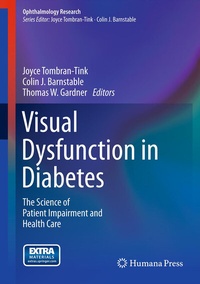
Visual Dysfunction in Diabetes: The Science of Patient Impairment and Improvement
is designed with two overriding objectives: to help readers understand the impact of vision impairment in people living daily with diabetes rather than considering diabetic retinopathy solely as a medical problem, and to explore what we know and don't know about the ways diabetes affect the eye. With the plethora of new information being generated, there are still a series of fundamental questions that must be addressed if effective treatments for diabetic retinopathy are to be found and applied. Developed by a renowned group of authorities,
Visual Dysfunction in Diabetes: The Science of Patient Impairment and Improvement
offers responses and context for a range of questions, such as: do metabolic factors beyond glucose contribute to vision-threatening diabetic retinopathy? If so, how do these lead to vision impairment? Is diabetic retinopathy a response to systemic metabolic abnormalities or are there unique ocular problems related to insulin resistance? What is the relationship between the neural, vascular, and inflammatory abnormalities in diabetic retinopathy? Do they represent a pathological cascade induced sequentially or simultaneous responses to one or more metabolic perturbations? The authors note that if we do not address these types of questions, it is possible that the long process of developing new therapeutic
s will target only one arm of the pathology and leave the retina open to damaging consequences of the others. State-of-the-art, comprehensive, and an invaluable addition the research and clinical literature,
Visual Dysfunction in Diabetes: The Science of Patient Impairment and Improvement
offers guidance and a significant step toward new scientific approaches that can lessen the devastating vision impairment associated with diabetes.
Reviews / Votes
"It succeeds in summarizing recent advancements in our knowledge in the field with a well illustrated presentation, up-to-date references, and an authorship selected from an international group of respected investigators with proven contributions to the field. . It could be recommended as a reference for anyone interested in the basic mechanisms of the disease, its ocular manifestations, and treatment options." (Radouil Tzekov, Graefe's Archive for Clinical and Experimental Ophthalmology, Vol. 253 (6), June, 2015)
Series
Language
Place of publication
Publishing group
Target group
Professional and scholarly
Product notice
Illustrations
XV, 379 p. 72 illus., 51 illus. in color.
File size
ISBN-13
978-1-60761-150-9 (9781607611509)
DOI
10.1007/978-1-60761-150-9
Schweitzer Classification
Introduction.- Diabetic Retinopathy - what we know, don't know, and need to know.- A Patient's viewpoint.- What patients with diabetes see-and don't see: subjective and objective visual function changes.- How do I know I have diabetic retinopathy - a clinician's view?.- Epidemiology & Economics.- Correlation between the presence and severity of diabetic retinopathy in families with diabetes.- Increasing public awareness of the diabetes endemic.- Nutrition and diabetes.- Diabetic retinopathy screening - progress and complications.- Measurements of retinal blood flow, vascular leakage, and oxygenation.- Optical imaging - Confocal microscopy to detect retinal vasculature.- Structural imaging - OCT.- Functional imaging - ERG.- Clinical phenotypes (reclassification).- Vascular changes.- Neuronal changes.- Inflammatory changes.- Other Ocular Complications of Diabetes.- New insights in the pathogenesis of diabetic retinopathy using a proteomic approach - Retina.- Vitreous proteomics.- Genomics.- Genome-wide linkage analyses to identify Loci for diabetic retinopathy.- Risk Factors.- Diabetic retinopathy correlates with increased incidence of cardiovascular events.- Pregnancy and rate of progression of diabetic retinopathy.- Molecular Mechanisms that Could Trigger Visual Dysfunction in Diabetes.- Introduction.- Inflammation in the early pathogenesis of diabetic retinopathy -beauty and beast.- Oxidative stress and diabetic retinopathy.- Glucose induced cellular signaling in diabetic retinopathy.- The AGE/RAGE axis in early diabetic retinopathy.- Proteases and the retinal vasculature (and maybe the whole retina!).- IGFBP3 and retinal vessel growth.- PEDF, VEGF, CTGF review.- A decrease in the expression of somatostatin is an early event in diabetic retinopathy.- Connective tissue and connective tissue growth factor in diabetic retinopathy.- Molecular regulation of endothelial cell tight junctions and the blood retinal barrier.- Pericytes and diabetic retinopathy.- Leukostasis.- Adhesion molecules (ICAM-1 and VCAM-1) and diabetic retinopathy in type 2 diabetes.- Azurocidin as a Permeability Factor in the Retina.- Retinal arteriolar hemodynamic response to a combined isocapnic hyperoxia and glucose.- Provocation in early sight-threatening diabetic retinopathy.- Urinary 8-hydroxydeoxyguanosine (8-OHdG) levels in diabetic retinopathy patients.- Tyrosine nitration in the molecular mechanisms of diabetic retinopathy.