

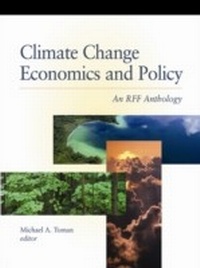
Climate Change Economics and Policy
An RFF Anthology
1st Edition
Published on 30. September 2010
292 pages
978-1-136-52515-5 (ISBN)
Description

What are the potential adverse impacts of climate change? How can society determine the amount of protection against climate change that is warranted, given the benefits and costs of various policies? In concise, informative chapters, Climate Economics and Policy considers the key issues involved in one of the most important policy debates of our time. Beginning with an overview and policy history, it explores the potential impact of climate change on a variety of domains, including water resources, agriculture, and forests. The contributors then provide assessments of policies that will affect greenhouse gas emissions, including electricity restructuring, carbon sequestration in forests, and early reduction programs. In considering both domestic and international policy options, the authors examine command and control strategies, energy efficiency opportunities, taxes, emissions trading, subsidy reform, and inducements for technological progress.
Both policymakers and the general public will find this volume to be a convenient and authoritative guide to climate change risk and policy. It is a useful resource for professional education programs, and an important addition for college courses in environmental economics and environmental studies. Climate Economics and Policy is a collection of Issue Briefs, prepared by the staff of Resources for the Future (RFF) and outside experts. Many are adapted from pieces originally disseminated on Weathervane, RFF's acclaimed web site on global climate change.
Both policymakers and the general public will find this volume to be a convenient and authoritative guide to climate change risk and policy. It is a useful resource for professional education programs, and an important addition for college courses in environmental economics and environmental studies. Climate Economics and Policy is a collection of Issue Briefs, prepared by the staff of Resources for the Future (RFF) and outside experts. Many are adapted from pieces originally disseminated on Weathervane, RFF's acclaimed web site on global climate change.
Reviews / Votes
'It will be an invaluable resource for teaching, and it will be useful to environmental professionals who seek a thoughtful treatment of the many policy dimensions of global climate change.'Charles D. Kolstad, University of California, Santa Barbara
More details
Language
English
Place of publication
London
United Kingdom
Publishing group
Taylor & Francis Ltd
Target group
Professional and scholarly
File size
1,95 MB
ISBN-13
978-1-136-52515-5 (9781136525155)
Copyright in bibliographic data and cover images is held by Nielsen Book Services Limited or by the publishers or by their respective licensors: all rights reserved.
Schweitzer Classification
Other editions
Additional editions
Book
08/2017
1st Edition
Routledge
€282.25
Shipment within 10-20 days
Book
03/2001
Resources for the Future Press (RFF Press)
€70.10
Shipment within 3-4 weeks
Person
Michael A. Toman is a senior fellow and the director of the Energy and Natural Resources division at Resources for the Future. He is the coauthor, coeditor, and editor of several books, including Pollution Abatement Strategies in Central and Eastern Europe, Assessing Surprises and Nonlinearities in Greenhouse Warming, and Technology Options for Electricity Generation.
Content
Preface
Michael A. Toman
1. Climate Change Economics and Policies: An Overview
Michael A. Toman
Part One: Introduction
2. How the Kyoto Protocol Developed: A Brief History
J. W. Anderson
3. The Energy-CO2 Connection: A Review of Trends and Challenges
Joel Darmstadter
4. How Much Climate Change Is Too Much? An Economics Perspective
Jason F. Shogren and Michael A. Toman
Appendix A: The Costs of the Kyoto Protocol
Sarah A. Cline
Part Two: Impacts of Greenhouse Gas Emissions
5. Agriculture and Climate Change
Pierre Crosson
6. Water Resources and Climate Change
Kenneth D. Frederick
7. Forests and Climate Change
Roger A. Sedjo and Brent Sohngen
8. 'Ancillary Benefits' of Greenhouse Gas Mitigation Policies
Dallas Burtraw and Michael A. Toman
Appendix B: Climate Change, Health Risks, and Economics
Alan J. Krupnick
Part Three: Policy Design and Implementation Issues
9. Choosing Price or Quantity Controls for Greenhouse Gases
William A. Pizer
10. Using Emissions Trading to Regulate National Greenhouse Gas Emissions
Carolyn Fischer, Suzi Kerr, and Michael A. Toman
11. Revenue Recycling and the Costs of Reducing Carbon Emissions
Ian W.H. Parry
12. Confronting the Adverse Industry Impacts of CO2 Abatement Policies: What Does It Cost?
Lawrence H. Goulder
13. Carbon Sinks in the Post-Kyoto World
Roger A. Sedjo, Brent Sohngen, and Pamela Jagger
14. Environmentally and Economically Damaging Subsidies: Concepts and Illustrations
Carolyn Fischer and Michael A. Toman
15. Electricity Restructuring: Shortcut or Detour on the Road to Achieving Greenhouse Gas Reductions?
Karen L. Palmer
16. The Role of Renewable Resources in U.S. Electricity Generation: Experience and Prospects
Joel Darmstadter
17. Energy-Efficient Technologies and Climate Change Policies: Issues and Evidence
Adam B. Jaffe, Richard G. Newell, and Robert N. Stavins
18. Climate Change Policy Choices and Technical Innovation
Carolyn Fischer
19. Greenhous Gas 'Early Reduction' Programs: A Critical Appraisal
Ian W.H. Parry and Michael A. Toman
Appendix C: Climate Policy and the Economics of Technical Advance: Drawing on Inventive Activity
Raymond J. Kopp
Part Four: International Considerations
20. Policy Design for International Greenhouse Gas Control
Jonathan Baert Wiener
21. Establishing and Operating the Clean Development Mechanism
Michael A. Toman
22. Allocating Liability in International Greenhouse Gas Emissions Trading and the Clean Development Mechnism
Suzi Kerr
23. International Equity and Climate Change Policy
Marina V. Cazorla and Michael A. Toman
24. The Economics of Climate-Friendly Technology Diffusion in Developing Countries
Allen Blackman
25. Including Developing Countries in Global Efforts for Greenhouse Gas Reduction
Ram?n L?pez
Conclusion
26. Moving Ahead with Climate Policy
Michael A. Toman
Glossary
Index
Michael A. Toman
1. Climate Change Economics and Policies: An Overview
Michael A. Toman
Part One: Introduction
2. How the Kyoto Protocol Developed: A Brief History
J. W. Anderson
3. The Energy-CO2 Connection: A Review of Trends and Challenges
Joel Darmstadter
4. How Much Climate Change Is Too Much? An Economics Perspective
Jason F. Shogren and Michael A. Toman
Appendix A: The Costs of the Kyoto Protocol
Sarah A. Cline
Part Two: Impacts of Greenhouse Gas Emissions
5. Agriculture and Climate Change
Pierre Crosson
6. Water Resources and Climate Change
Kenneth D. Frederick
7. Forests and Climate Change
Roger A. Sedjo and Brent Sohngen
8. 'Ancillary Benefits' of Greenhouse Gas Mitigation Policies
Dallas Burtraw and Michael A. Toman
Appendix B: Climate Change, Health Risks, and Economics
Alan J. Krupnick
Part Three: Policy Design and Implementation Issues
9. Choosing Price or Quantity Controls for Greenhouse Gases
William A. Pizer
10. Using Emissions Trading to Regulate National Greenhouse Gas Emissions
Carolyn Fischer, Suzi Kerr, and Michael A. Toman
11. Revenue Recycling and the Costs of Reducing Carbon Emissions
Ian W.H. Parry
12. Confronting the Adverse Industry Impacts of CO2 Abatement Policies: What Does It Cost?
Lawrence H. Goulder
13. Carbon Sinks in the Post-Kyoto World
Roger A. Sedjo, Brent Sohngen, and Pamela Jagger
14. Environmentally and Economically Damaging Subsidies: Concepts and Illustrations
Carolyn Fischer and Michael A. Toman
15. Electricity Restructuring: Shortcut or Detour on the Road to Achieving Greenhouse Gas Reductions?
Karen L. Palmer
16. The Role of Renewable Resources in U.S. Electricity Generation: Experience and Prospects
Joel Darmstadter
17. Energy-Efficient Technologies and Climate Change Policies: Issues and Evidence
Adam B. Jaffe, Richard G. Newell, and Robert N. Stavins
18. Climate Change Policy Choices and Technical Innovation
Carolyn Fischer
19. Greenhous Gas 'Early Reduction' Programs: A Critical Appraisal
Ian W.H. Parry and Michael A. Toman
Appendix C: Climate Policy and the Economics of Technical Advance: Drawing on Inventive Activity
Raymond J. Kopp
Part Four: International Considerations
20. Policy Design for International Greenhouse Gas Control
Jonathan Baert Wiener
21. Establishing and Operating the Clean Development Mechanism
Michael A. Toman
22. Allocating Liability in International Greenhouse Gas Emissions Trading and the Clean Development Mechnism
Suzi Kerr
23. International Equity and Climate Change Policy
Marina V. Cazorla and Michael A. Toman
24. The Economics of Climate-Friendly Technology Diffusion in Developing Countries
Allen Blackman
25. Including Developing Countries in Global Efforts for Greenhouse Gas Reduction
Ram?n L?pez
Conclusion
26. Moving Ahead with Climate Policy
Michael A. Toman
Glossary
Index
