

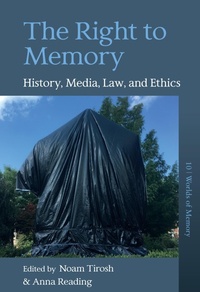
The Right to Memory
Description

The field of memory studies has typically focused on everyday memory and commemoration practices through which we construct meaning and identities. The Right to Memory looks beyond these everyday practices, focusing instead on how memory relates to human rights and socio-legal constructs in order to legitimize and protect groups and individuals. With case studies including Polish Holocaust Law, the Indian origins of Amartya Sen's capability theory approach, and the right to memory through digital technologies in Brazilian and British museums, this collected volume seeks to establish the right to memory as a foundational topic in memory studies.
More details
Other editions
Additional editions

Persons
Noam Tirosh is a senior lecturer in the department of Communication Studies at Ben-Gurion University of the Negev. He is the author of many journal articles and book chapters covering topics ranging from the European right to be forgotten to the memory rights of the Palestinian minority in Israel, refugees and asylum seekers, and Jews deported from Arab countries.
Content
List of Tables
Preface
Noam Tirosh and Anna Reading
Introduction: A Right to Memory
Noam Tirosh and Anna Reading
Chapter 1. Antigone's Shadow: Human rights, Memory and the Two World Wars
Jay Winter
Chapter 2. Framing Memory Rights in International Law
Anna Reading
Chapter 3. The 'Duty to Remember' and the 'Right to Memory': Memory Politics and the Neoliberal Logic
Lea David
Chapter 4. Memory, Rights and Sen's "Capabilities Approach"
Noam Tirosh and Amit Schejter
Chapter 5. "The memory belongs to no one and it belongs to everyone": An analysis of a grassroots claim to the right to memory
Rebecca Kook
Chapter 6. Using and abusing memory laws in search for "historical truth" - the case of the 2018 Amendments to the Polish Institute of National Remembrance Act
Aleksandra Gliszczynska-Grabias and Grazyna Baranowska
Chapter 7. The Right to Produce Memory: Social Memory Technology as Cultural Work
Karen Worcman and Joanne Garde-Hansen
Chapter 8. Beyond A Human Right to Memory
Anna Reading
Conclusion
Index
